Place · Caribbean coast
Capurganá and Sapzurro
Capurganá and Sapzurro, car-free villages where the jungle meets the Caribbean by Panama: boat from Necoclí, flights to Acandí, La Miel, costs and safety.
In this guide
- How Capurganá is laid out
- Is Capurganá safe? Travel advice in 2026
- How to get to Capurganá
- Things to do in Capurganá and Sapzurro
- Where to stay in Capurganá: the areas
- How many days in Capurganá: itinerary
- Best time to visit Capurganá: weather and sea
- Practical tips: cash, power, internet and health
- How much does Capurganá cost
- Mistakes to avoid
- FAQ
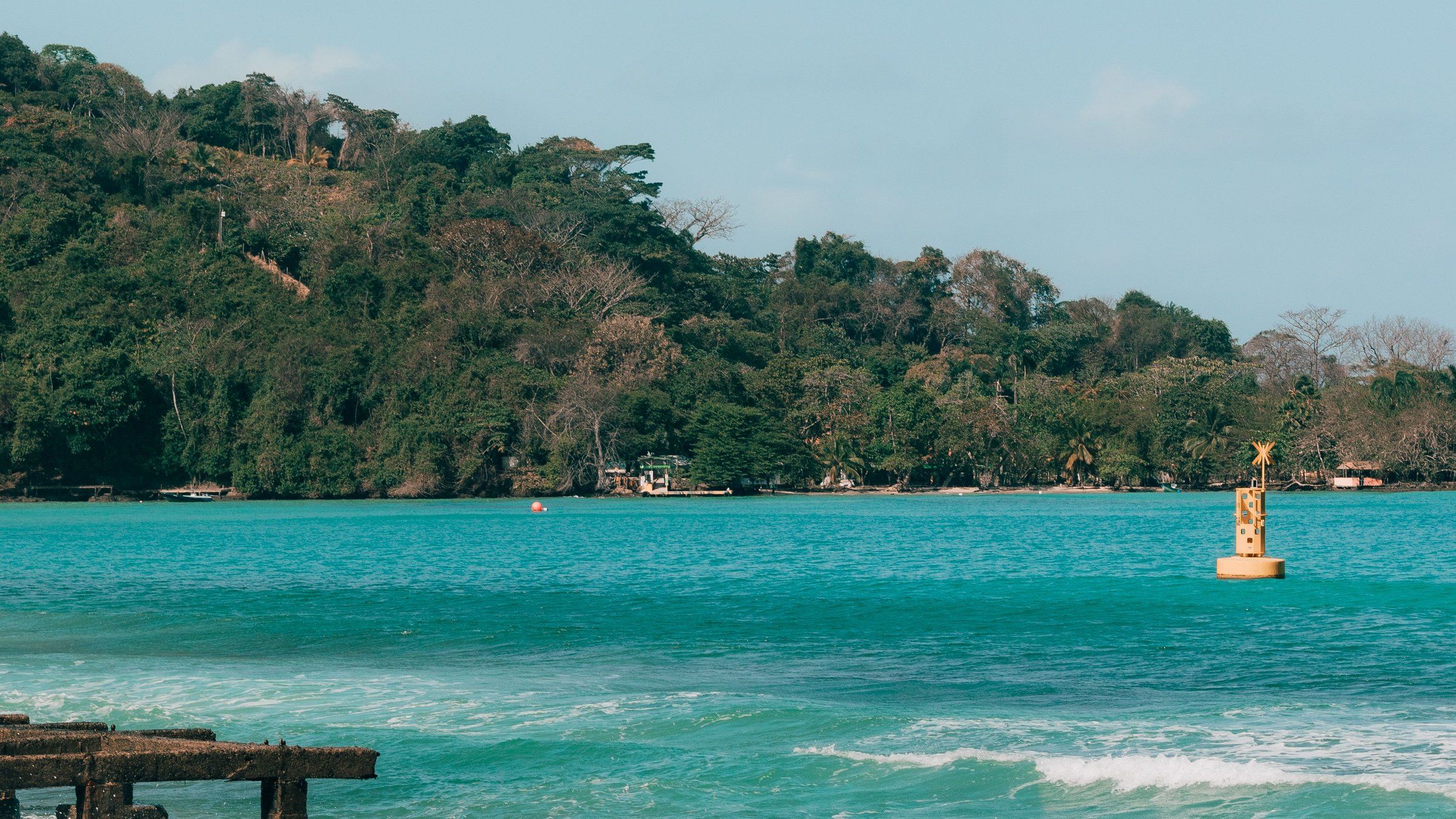
Capurganá is a village of fishermen and small guesthouses in the far north-west corner of Colombia, in Chocó department, where the Darién rainforest runs down to the Caribbean. No road reaches it and there are no cars: you arrive by speedboat or small plane, then get around on foot or by boat. A couple of hours’ walk through the forest, or a short boat ride, away is Sapzurro, even smaller, and from there a flight of steps climbs to the border and down to La Miel, the first beach in Panama. I think you need 4-5 days plus travel time, and it’s a place for clear water, jungle trails and diving, not nightlife. Below: the safety situation, how to get there with times and prices, things to do, where to stay and an itinerary.
How Capurganá is laid out
Capurganá and Sapzurro are corregimientos (rural districts) of the municipality of Acandí, on the western shore of the Gulf of Urabá. The area was home to the Guna (or Kuna) people, who moved towards Panama’s San Blas islands in the early 20th century; Afro-descendant settlers from the Cartagena area and fishermen followed. Tourism began in the 1970s, when the little airstrip named after Narcisa Navas, the woman who pushed for it, was built. On 12 December 1999 a guerrilla attack stopped visitors coming for several years; today the village lives off tourism again, mostly Colombian.
- Capurganá: the main village, with the pier, guesthouses, restaurants, dive centres and nearly all services. You can walk across it in minutes.
- Sapzurro: a more enclosed, quieter bay west of Capurganá, with a few houses, a handful of guesthouses and the path to La Miel. You get there through the forest on foot or by boat.
- La Miel: a Panamanian village just over the border hill from Sapzurro.
- To the east: the coves of Aguacate and La Piscina, the isolated Playa Soledad and, further on, Triganá and Acandí, the municipal town, with the airport and the beaches where leatherback turtles nest.
Is Capurganá safe? Travel advice in 2026
Capurganá is one of the tourist spots in Chocó that foreign governments treat separately, but the whole Panama border area is controlled by armed groups, so it’s worth knowing exactly where the exceptions end:
- UK (FCDO), updated 23 November 2026: advises against all but essential travel to Chocó except Quibdó, Nuquí, Bahía Solano and Capurganá, but also advises against all but essential travel to the Urabá and Bajo Cauca regions of Antioquia, which include Necoclí and Turbo, the ports the boats leave from. Sapzurro isn’t named in the exception. The FCDO also says to avoid crossing between Panama and Colombia by land. Check whether your travel insurance covers areas under this kind of advice.
- US State Department: Colombia is at Level 3, Reconsider Travel (since 31 March 2026). Chocó and Urabá aren’t on the Level 4 “Do Not Travel” list, but the Level 3 warnings about armed groups and kidnapping apply.
- Defensoría del Pueblo (Colombia’s ombudsman): early warning 013 of 2025, in force since September 2025, rates Acandí and neighbouring Unguía at “priority” risk; an earlier 2023 warning covered Turbo, Necoclí, Acandí, Unguía and Juradó.
The dominant armed group here is the Clan del Golfo (Gulf Clan), which also controls trafficking and the movement of migrants towards Panama. There are no recent reports of incidents against tourists in the village, but the group’s presence is real: in 2022, for example, one of its paros armados (armed strikes) shut down roads and transport across Urabá for days.
Migrants: for years, migrants heading north through the Darién left from Necoclí and Capurganá; since 2025 the flow has reversed, and many people now return from Panama to South America by sea via Capurganá, then Necoclí and Turbo. According to one monitoring report, about 2,800 did so between January and March 2026. You may see groups waiting at the pier: never accept a boat ride to Panama or from strangers, and only use the scheduled boats with a ticket.
In practice: arrive in daylight, book your accommodation before you go, stay within the area of Capurganá, Sapzurro, La Miel and the nearby beaches, and don’t head into the forest inland or towards the border without a local guide. If the FCDO advice matters for your insurance, consider flying to Acandí, which avoids Necoclí and Turbo. The bigger picture is in my guide to safety in Colombia.
How to get to Capurganá
No road reaches Capurganá. Your options are a speedboat from Necoclí or Turbo, on the Antioquia side of the Gulf of Urabá, or a flight to Acandí or to the village’s own airstrip.
| How | From | Time | Typical price |
|---|---|---|---|
| Speedboat | Necoclí | 1.5-2 hours | 85,000-95,000 pesos each way |
| Speedboat | Turbo | 2-3 hours | 75,000-95,000 pesos each way |
| Satena flight + boat | Medellín Olaya Herrera, via Acandí | about 1 hour flying + 30-40 min by boat | flight varies; boat 55,000-90,000 pesos |
| Charter flight | Medellín Olaya Herrera, to Capurganá | about 1-1.25 hours | often sold as a package |
By boat from Necoclí
This is the most popular route and the one I’d recommend if you’re coming overland: the crossing is shorter and usually less rough than from Turbo.
- Times: boats leave in the morning, from around 7am, and fill up in order of arrival; there are usually no afternoon departures. Aim to be at the pier by 6:30am. Return boats from Capurganá also leave in the morning.
- Price: 2026 sources give 85,000-95,000 pesos each way, about 190,000 return; it can go up in Colombian holiday periods. You also pay a small port tax at Necoclí (between 2,500 and 4,500 pesos depending on the source) and another at Capurganá (about 2,000 pesos).
- Luggage: the most commonly quoted limit is 10 kg (22 lb) per person, with a surcharge above that. Bring a soft backpack and pack everything in dry bags: you’ll get splashed.
- The sea: the Gulf of Urabá is often rough, especially from December to March when the trade winds blow. In strong winds the maritime authorities suspend departures, as happened in July 2024, for example. If you get seasick, sit at the back, where the boat bounces less, and take something before you board.
Getting to Necoclí: from Medellín, buses leave the Terminal del Norte with Gómez Hernández, Cootransuroccidente and others, taking about 7 hours 45 minutes on paper (often 8-10) with tickets from around 103,000-110,000 pesos on booking sites. From Cartagena there are few direct buses: Sotracor runs the route (about 80,000-85,000 pesos on ticket sites, 7-10 hours), otherwise you change in Montería. Travel by day and spend the night before in Necoclí.
By boat from Turbo
Turbo is Urabá’s main port and has boats to Capurganá every morning, but the crossing is longer, 2-3 hours, over a more open stretch of the gulf. It costs about 75,000-95,000 pesos each way according to sources, with the same 10 kg limit. It only makes sense if you’re already in the Apartadó and Turbo area.
By air: Acandí or the Capurganá airstrip
- Satena to Acandí: from Olaya Herrera, Medellín’s in-town airport (not José María Córdova in Rionegro, where international flights land), Satena flies to Alcides Fernández airport in Acandí. In September 2026 it added a Saturday flight, bringing the route to six flights a week on small Twin Otter planes. From Acandí, a boat takes you to Capurganá in 30-40 minutes for 55,000-90,000 pesos depending on the source.
- Charter flights to Capurganá: small airlines such as Searca and Pacífica de Aviación land directly on the Narcisa Navas airstrip, a few minutes’ walk from the village, mostly as part of packages sold by Medellín travel agencies. Prices vary a lot by season.
- What’s new: on 21 November 2026, according to local media, Satena ran a test flight from Apartadó to the Capurganá airstrip to assess a scheduled route. There’s no start date yet.
Luggage is limited on small planes and packages often say 10 kg; on the way back, agencies mention an airport tax of about 10,000-17,000 pesos paid separately. Flying costs more than the boat but saves you a whole day of bus and boat.
Community fee and taxes on arrival
On top of the port taxes, in July 2026 the Afro-Colombian community council Cocomanorte was asking visitors for a voluntary contribution of 50,000 pesos to enter its collective territory and wanted to make it compulsory; the Acandí municipality and several neighbourhood boards (Juntas de Acción Comunal) disputed its legality. I couldn’t find a final decision: ask your guesthouse whether it’s still being collected and keep the cash handy. According to a 2026 travel blog, Sapzurro and La Miel also charge small entry fees of about 3,000 pesos each.
Things to do in Capurganá and Sapzurro
| What | Time | Typical price |
|---|---|---|
| Capurganá-Sapzurro trail | 1.5-2.5 hours each way | contributions of about 10,000 pesos along the way |
| La Miel (Panama) | half a day with Sapzurro | about 3,000 pesos entry; passport needed |
| El Cielo waterfalls and pools | half a day | 5,000 pesos |
| Aguacate and La Piscina | half a day | boat about 15,000 pesos each way |
| Playa Soledad | 1 day | by boat, often on a tour with Aguacate (about 110,000 pesos) |
| Diving | half a day | 370,000-400,000 pesos for a two-dive trip |
| Leatherback turtles in Acandí | one night | with a guide, February to June |
The trail to Sapzurro
The eco-trail between Capurganá and Sapzurro is the best walk here: about 3.5 km (2 miles) through the forest, with a steep climb to a mirador over Sapzurro bay, then down into the village. Sources give 1.5 to 2.5 hours each way depending on your pace and the mud; it’s slippery after rain. You’ll probably hear howler monkeys along the way.
The trail crosses private land and, according to sources, you may be asked for a contribution of about 10,000 pesos for maintenance at two points. Set off early, with water, closed shoes and no valuables on show, ideally in company or with a local guide, who doesn’t cost much. You can come back by boat: one traveller puts it at about 30,000 pesos return between the two villages.
La Miel: walking into Panama
From Sapzurro a flight of steps climbs the hill between the two bays. At the top is the border post, staffed by Colombian and Panamanian soldiers, and from there you walk down to La Miel, a small Panamanian village with a white-sand beach, a few restaurants and some duty-free shops.
- Documents: bring your original passport, not a photocopy or a photo. Sources disagree about stamps: some say the soldiers only log your entry and exit, others that they stamp your passport.
- Cost: a small entry fee, about 3,000 pesos according to a 2026 travel blog. Bring cash.
- Hours: according to one guide the crossing closes around 6pm: head back well before sunset.
- How far: La Miel is a trip of a few hours. You can’t continue from here to the rest of Panama: there are no roads, and the coast towards Puerto Obaldía is the migrant route that every travel advisory warns against. To go to Panama, fly from Medellín or Cartagena.
El Cielo, Aguacate and La Piscina
- El Cielo: a nature reserve in the forest behind Capurganá, with a path along a stream, small waterfalls and pools to swim in. You can walk there from the village in about an hour; entry costs 5,000 pesos according to the most recent sources. It’s the right outing for a rough-sea day.
- Aguacate: a cove east of the village with a couple of guesthouses and calm water. Get there by boat (about 15,000 pesos each way according to one source) or on foot along the coast, over rocks and small beaches.
- La Piscina: near Aguacate, a pool of sea water enclosed by rocks where the water stays calm and clear: good for snorkelling and for weaker swimmers.
Playa Soledad and Cabo Tiburón
Playa Soledad is the most isolated beach in the area, pale sand and palm trees with no village behind, reachable only by boat. You usually go for the day on a trip that also stops at Aguacate and La Piscina: one operator charges about 110,000 pesos per person, but it depends on how many people share the boat. Always ask whether lunch and entry fees are included.
Cabo Tiburón is the headland between Sapzurro and La Miel, with rocky reefs that the dive centres love. You get there by boat with a dive centre, not on foot: it sits right on the border line.
Diving and snorkelling
The water around Capurganá is often clear, with coral reefs, caves and rock walls. The village’s dive centres are PADI affiliated and run trips and courses: one operator charges 370,000-400,000 pesos for a two-dive trip for certified divers, and another quotes about 1,650,000 pesos for the Open Water course. The calmer sea, and therefore better visibility, is usually from April to November. For snorkelling, a mask and fins are enough at La Piscina, Aguacate or in Sapzurro bay.
Leatherback turtles in Acandí
Every year hundreds of leatherback turtles (caná), the largest turtles in the world, come ashore to nest on the beaches of Acandí (El Playón and La Playona, protected by the Acandí, Playón y Playona Wildlife Sanctuary). According to Colombia’s National Parks they arrive between February and June (operators say March to May is best) and, according to the regional environmental authority Codechocó, the last hatchlings return to the sea in July and August.
Turtle watching is done at night with a local guide, with torches covered in cellophane, no flash and keeping your distance. In 2023 the environmental authority restricted visitor access to El Playón between 23 March and 31 May because too many people turned up during Holy Week: check whether there are limits when you go. You get there by boat from Capurganá, almost always on an organised tour.
What to eat
In Capurganá you eat the day’s fish and seafood with coconut rice, patacones (fried green plantain) and salad; many guesthouses include dinner or offer a set menu. Try pescado frito with coconut rice and the coconut sweets sold in the street. La Miel serves similar fish dishes, priced in dollars or pesos. More dishes from the coast are in my guide to Colombian food.
Where to stay in Capurganá: the areas
- Capurganá village: hostels, guesthouses and small hotels a short walk from the pier, close to restaurants and dive centres. Pros: handy for boats and trips, more choice and lower prices. Cons: crowded on Colombian long weekends, with music late into the night.
- Around the village: cabañas and small hotels in the forest or on nearby beaches, 10-20 minutes’ walk away. Quieter, but you’ll walk home in the dark: bring a torch.
- Sapzurro: a few guesthouses on a silent bay, ideal if you just want sea, forest and La Miel next door. Cons: fewer restaurants and services, and every trip means walking or taking a boat.
- Aguacate and Playa Soledad: isolated lodges reachable only by boat, often full board. Pros: total seclusion. Cons: you depend on the boat for everything.
Booking sites often show prices in dollars, and they vary a lot by season. Medellín agencies sell 3-night packages with flights from about 2,080,000-2,400,000 pesos per person according to their 2026 price lists, with accommodation, breakfasts and some trips; going by bus and boat and choosing a simple guesthouse costs much less. Over Christmas and New Year, Holy Week and June-July, book well ahead.
How many days in Capurganá: itinerary
You need 4-5 days there, plus a day to reach Necoclí and one to get back. With 3 days you’ll see Sapzurro and La Miel and take one boat trip; with a week you can add diving, Playa Soledad and, in season, the Acandí turtles.
- Day 1: morning boat from Necoclí, or flight to Acandí and boat. Afternoon in the village and a swim near the pier.
- Day 2: early walk to Sapzurro, then the steps to La Miel with your passport. Boat back in the afternoon.
- Day 3: boat trip to Aguacate, La Piscina and Playa Soledad, with snorkelling.
- Day 4: El Cielo in the morning, diving or a lazy afternoon.
- Day 5: morning boat to Necoclí or flight from Acandí, then on to Medellín or Cartagena.
Fitting it into your trip: Capurganá works at the end of a route between Medellín and the coast, or as a beach break if you come from Medellín and then carry on to Cartagena via Necoclí and Montería. Don’t squeeze it into a short trip: with the bus, a night in Necoclí and the boat, getting there alone takes almost two days.
Best time to visit Capurganá: weather and sea
Capurganá is hot and humid all year. Sources don’t fully agree, but most point to January-April as the driest period, while May to December is wetter, often with afternoon or night-time storms.
- December-March: little rain, but the trade winds blow and the crossing from Necoclí and Turbo is rougher; in strong winds the boats can be suspended.
- April-November: calmer sea and better visibility for diving, but more rain.
- Sargassum: in 2025, and again in March 2026, large amounts of sargassum seaweed washed up on Capurganá’s beaches; Codechocó issued advice for visitors and residents. Ask your guesthouse about the situation before you go.
- Colombian holidays (mid-December to mid-January, Holy Week, June-July): the village fills up and prices rise.
How this compares with the rest of the country is in my guide to the best time to visit Colombia.
Practical tips: cash, power, internet and health
- Cash: ATMs in Capurganá are few and unreliable, and many places don’t take cards. Bring all the pesos you’ll need for boats, entry fees, contributions and meals from Medellín or Necoclí. Cards and fees are covered in my guide to money in Colombia.
- Power and internet: the village is on the grid, but there can be outages; phone signal is weak and guesthouse wifi is slow. Bring a power bank and download maps and documents before you go.
- Health: Chocó has more malaria cases than any other Colombian department, and dengue and yellow fever are also present. Colombian authorities recommend the yellow fever vaccine for Chocó: get it at least 10 days before you travel and ask your doctor whether you need malaria tablets. Use a strong repellent and sleep under a mosquito net. Capurganá only has a basic health centre: anything serious means a transfer to Medellín, so insurance with medical evacuation is essential. Entry requirements and vaccines are in my guide to Colombia’s entry requirements.
- What to pack: swimwear, light hiking shoes or closed sandals for the trails, water shoes for the rocks, a rain jacket, dry bags for your phone and documents, and a head torch.
How much does Capurganá cost
| Item | Typical price |
|---|---|
| Bus Medellín-Necoclí | from about 103,000-110,000 pesos |
| Boat Necoclí-Capurganá | 85,000-95,000 pesos each way |
| Port taxes | about 2,000-4,500 pesos per pier |
| Boat Acandí-Capurganá | 55,000-90,000 pesos each way |
| Cocomanorte contribution (July 2026) | 50,000 pesos, voluntary |
| El Cielo entry | 5,000 pesos |
| Sapzurro and La Miel entry | about 3,000 pesos each |
| Two-dive trip | 370,000-400,000 pesos |
| 3-night package with flights from Medellín | from about 2,080,000 pesos per person |
Mistakes to avoid
- Arriving in Necoclí the same morning on the night bus: if you’re late the boats are full and the next one is the following day.
- Going over 10 kg of luggage or travelling with a hard suitcase: you pay the surcharge and your case gets soaked.
- Booking a flight out of Medellín or Cartagena on the same day as your boat back.
- Arriving without cash: you need pesos for taxes, contributions and guesthouses, and the ATMs aren’t reliable.
- Forgetting your passport on La Miel day.
- Accepting boat rides from strangers, especially towards Panama, or walking alone in the forest away from the marked trails.
- Forgetting the yellow fever jab and repellent.
FAQ
How do you get to Capurganá?
By speedboat from Necoclí (about 1.5-2 hours, 85,000-95,000 pesos each way) or Turbo (2-3 hours), with morning departures only. Alternatively, fly Satena from Medellín’s Olaya Herrera airport to Acandí and take a 30-40 minute boat, or take a charter flight to Capurganá’s airstrip.
Is Capurganá safe for tourists?
The UK FCDO makes an exception for Capurganá within Chocó but advises against all but essential travel to the Urabá region of Antioquia, where Necoclí and Turbo are; the US rates Colombia Level 3 overall. In the village and on the tourist trails a visit is possible with normal precautions: arrive in daylight, use only scheduled boats and stay in busy areas.
Can you go to Panama from Capurganá?
Yes, but only as far as La Miel: from Sapzurro you climb the steps to the border post and walk down to the Panamanian village with your original passport. It’s a trip of a few hours; you can’t continue overland from La Miel to the rest of Panama.
How many days do you need in Capurganá?
Plan 4-5 days there, plus a day to reach Necoclí and one to get back. That gives you time for Sapzurro and La Miel, a boat trip to Aguacate and Playa Soledad, El Cielo and some diving.
Should I stay in Capurganá or Sapzurro?
Capurganá is more convenient, with more guesthouses, restaurants, dive centres and boats; Sapzurro is smaller and quieter, with La Miel a few minutes’ walk away. Pick Capurganá if you want to get around, Sapzurro if you just want sea and peace.
Some links are affiliate links: if you buy through them I earn a small commission, at no extra cost to you. How it works
You might also like
Caribbean coast
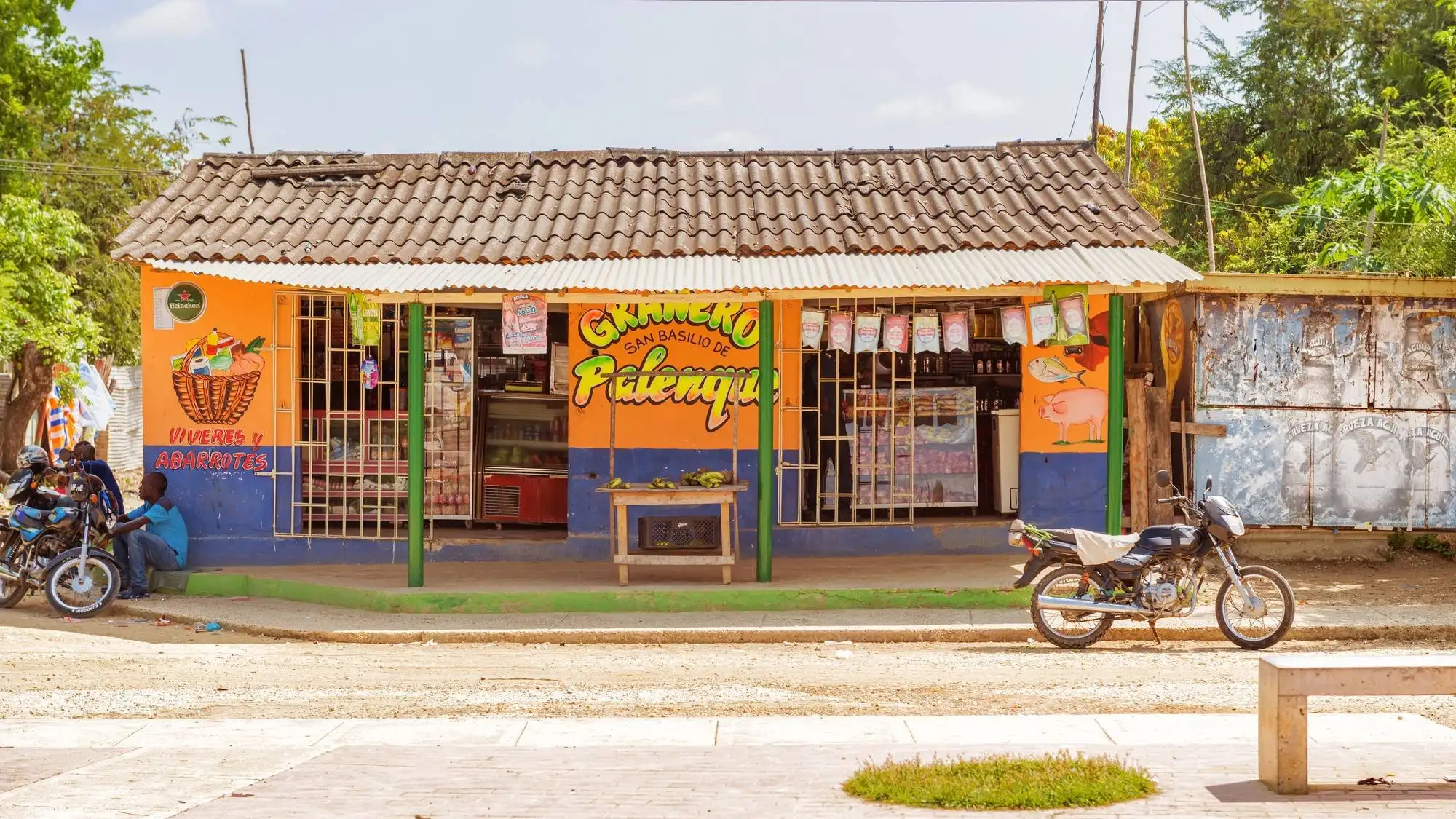
San Basilio de Palenque
San Basilio de Palenque, the first free town in the Americas, with its own language and drums: day trip from Cartagena by tour or bus, costs and etiquette.
Caribbean coast
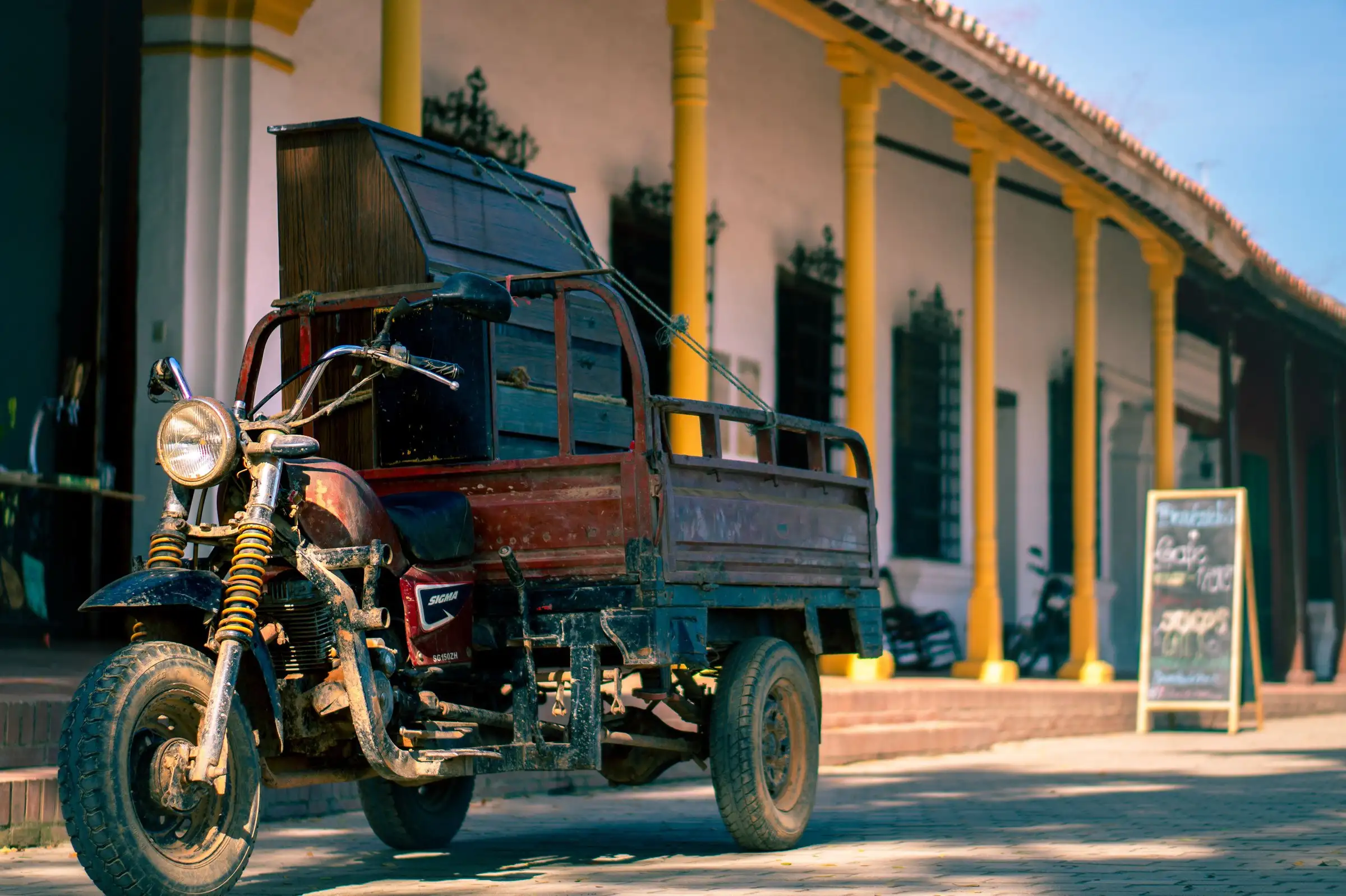
Mompox
Mompox, the UNESCO-listed filigree town on the Magdalena River: how to get there from Cartagena, things to do, Holy Week 2027 and where to stay.
Pacific coast
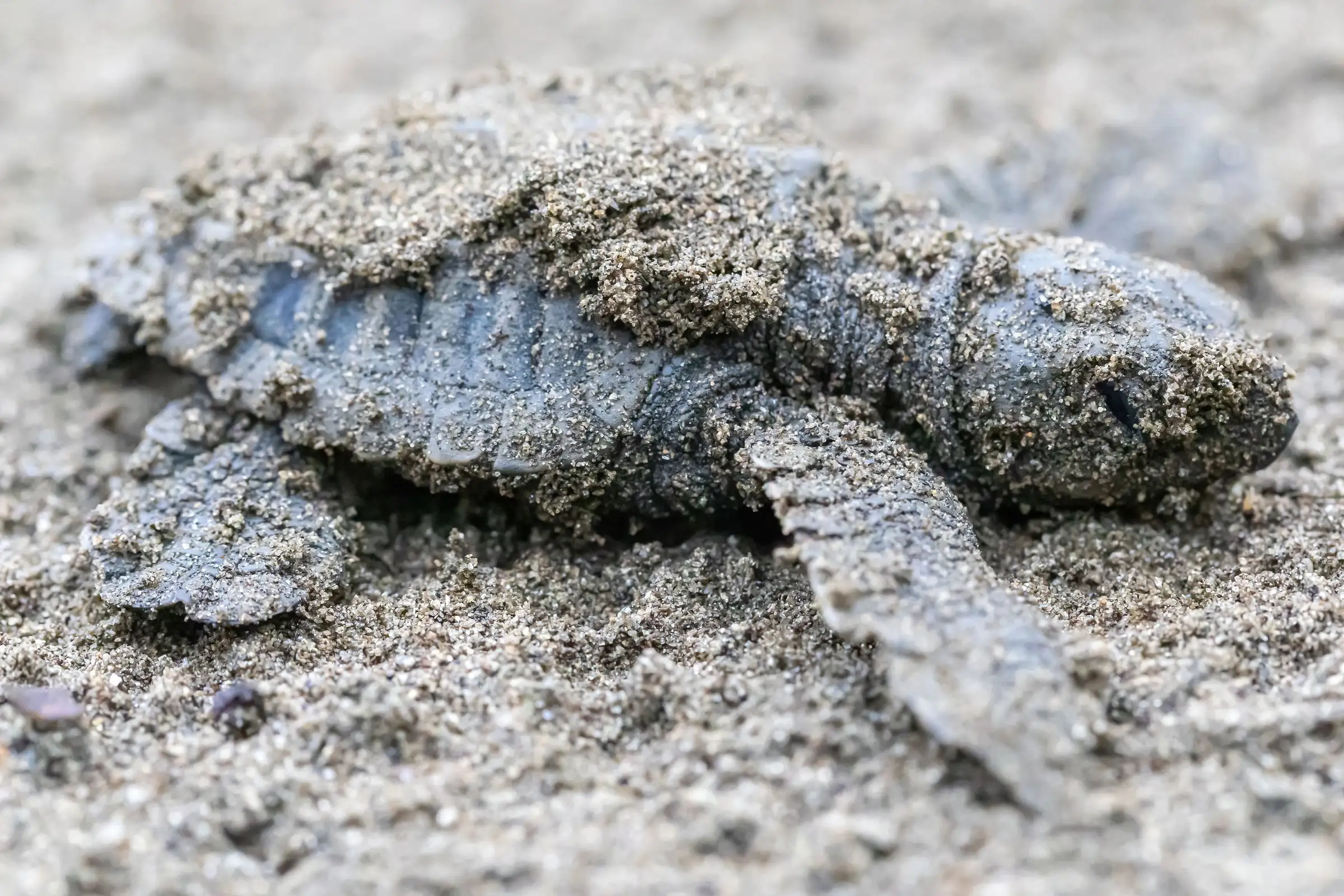
Bahía Solano and El Valle
Bahía Solano and El Valle, Chocó: sea turtle releases, humpback whales and a jungle hike to Utría park. Flights from Medellín, entry tax, lodging, prices.