City · Caribbean coast
Mompox
Mompox, the UNESCO-listed filigree town on the Magdalena River: how to get there from Cartagena, things to do, Holy Week 2027 and where to stay.
In this guide
Mompox, officially Santa Cruz de Mompox (also spelled Mompós), is a colonial town in Bolívar department, built on the banks of the Magdalena River in the middle of the flood plains of the Depresión Momposina. Founded in 1537, it was one of the richest river ports in the Spanish empire; when the river shifted course it was left stranded, and its old town survived almost untouched. It has been a UNESCO World Heritage Site since 1995, and it’s where Francesco Rosi shot the 1987 film of García Márquez’s Chronicle of a Death Foretold. My view: it’s well worth the trip if you like slow towns, churches and crafts, but give it at least 2 nights. It’s about 6 hours by road from Cartagena, so it doesn’t work as a day trip. Below: how to get there, things to do, Holy Week 2027, where to stay and the safety picture.
Is Mompox safe? Travel advisories
Mompox itself is a quiet town full of Colombian visitors, but it sits in a region where armed groups are active, so it helps to know where the no-go areas start.
- FCDO (UK, updated 30 October 2026) advises against all but essential travel to “the southern part of Bolívar Department”, without drawing an exact line. Mompox isn’t named.
- US State Department: Colombia is at Level 3, Reconsider Travel (since 31 March 2026). Bolívar is not among the Level 4 areas, which are Arauca, Cauca (except Popayán), Valle del Cauca (except Cali), Norte de Santander and the Venezuela border.
- In Bolívar’s official subregions, Mompox belongs to the Depresión Momposina (with Cicuco, Talaigua Nuevo, Margarita and San Fernando), while “southern Bolívar” is made up of the Magdalena Medio and Loba subregions; sources only disagree on a few border municipalities such as Hatillo de Loba. So Mompox is outside the areas advised against, but they’re only a few dozen miles away.
What’s happening locally: in October 2026 Colombia’s ombudsman, the Defensoría del Pueblo, issued an early warning (Alerta Temprana 024 of 2026) for Magangué, the river city the road to Mompox passes through, where the Clan del Golfo controls neighbourhoods and rural areas. The same document says the group has a cell in the Mompox area, living off extortion. Further south, around San Martín de Loba, Barranco de Loba and the mining towns, the Clan del Golfo and the ELN are fighting. The direct risk to visitors is low: the police have a tourism unit in Mompox and send hundreds of officers for Holy Week and the jazz festival. In practice:
- travel in daylight, by scheduled bus or a known transfer, and don’t drive local roads at night;
- in Magangué, stop only as long as your connection takes;
- don’t head to the towns south of the river (Loba, Magdalena Medio) without asking your hotel or the police first.
The bigger picture is in our guide to safety in Colombia.
How to get to Mompox
Mompox really is out of the way: from any city on the coast it’s 6 hours or more. Since 2020 the road has crossed the Magdalena on the Yatí-Bodega bridges (including the 2.3 km Roncador bridge), which replaced the old car ferry, so from Cartagena and Magangué you now arrive without changing vehicles.
| From | How | Time |
|---|---|---|
| Cartagena | Unitransco bus or private transfer | about 6 hours (5.5-8) |
| Barranquilla | bus or transfer, or via Cartagena | 6-7 hours |
| Santa Marta | bus to El Banco, then car or colectivo | 9-11 hours in total |
| Medellín | overnight bus or Satena flight | 13 hours by bus |
How to get to Mompox from Cartagena
- Bus: the operator is Unitransco (part of the Expreso Brasilia group), from Cartagena’s Terminal de Transportes. The ride takes about 6 hours; ticket sites list departures from early morning to evening and fares of around 90,000 pesos, but check times at the ticket office. Take a morning bus so you arrive in daylight.
- Private or shared transfer: several agencies and many Mompox hotels arrange door-to-door cars and minivans. Private transfers on international booking sites are sold in US dollars; for a seat in a shared minivan, ask the hotel you’re staying at, which often knows a driver.
- Flying: Satena used to fly Cartagena-Mompox, but in January 2026 the airline said it had suspended the route. Check its website to see if it’s back.
From Barranquilla and Santa Marta
- From Barranquilla, ticket sites list direct buses, but with few departures: confirm at the ticket office. Otherwise go to Cartagena and take the Unitransco bus, or book a private transfer. To fit Mompox into a coast trip, see also our guide to Barranquilla.
- From Santa Marta there’s no easy connection: take a bus to El Banco (Magdalena), then a car or colectivo to Mompox, about an hour and a half. With waiting times it adds up to 9-11 hours; I’d route via Cartagena instead.
From Medellín and Bogotá
- Flying: Satena flies from Medellín to Mompox’s San Bernardo airport, a few minutes from town; in January 2026 the route had four flights a week, with extra flights at Holy Week. It’s the fastest way in from the interior. There are no direct flights from Bogotá: connect in Medellín or fly to Cartagena.
- Bus: there’s at least one overnight bus from Medellín (Expreso Brasilia, Rápido Ochoa or Unitransco, depending on the ticket site), about 13 hours.
River boats
Chalupas, fast motor launches, still link towns along the Magdalena, but you no longer need them to reach Mompox. There are also Magdalena river cruises that stop in Mompox, sold as packages. Other travel times around the coast are in our guide to getting around Colombia.
Getting around Mompox
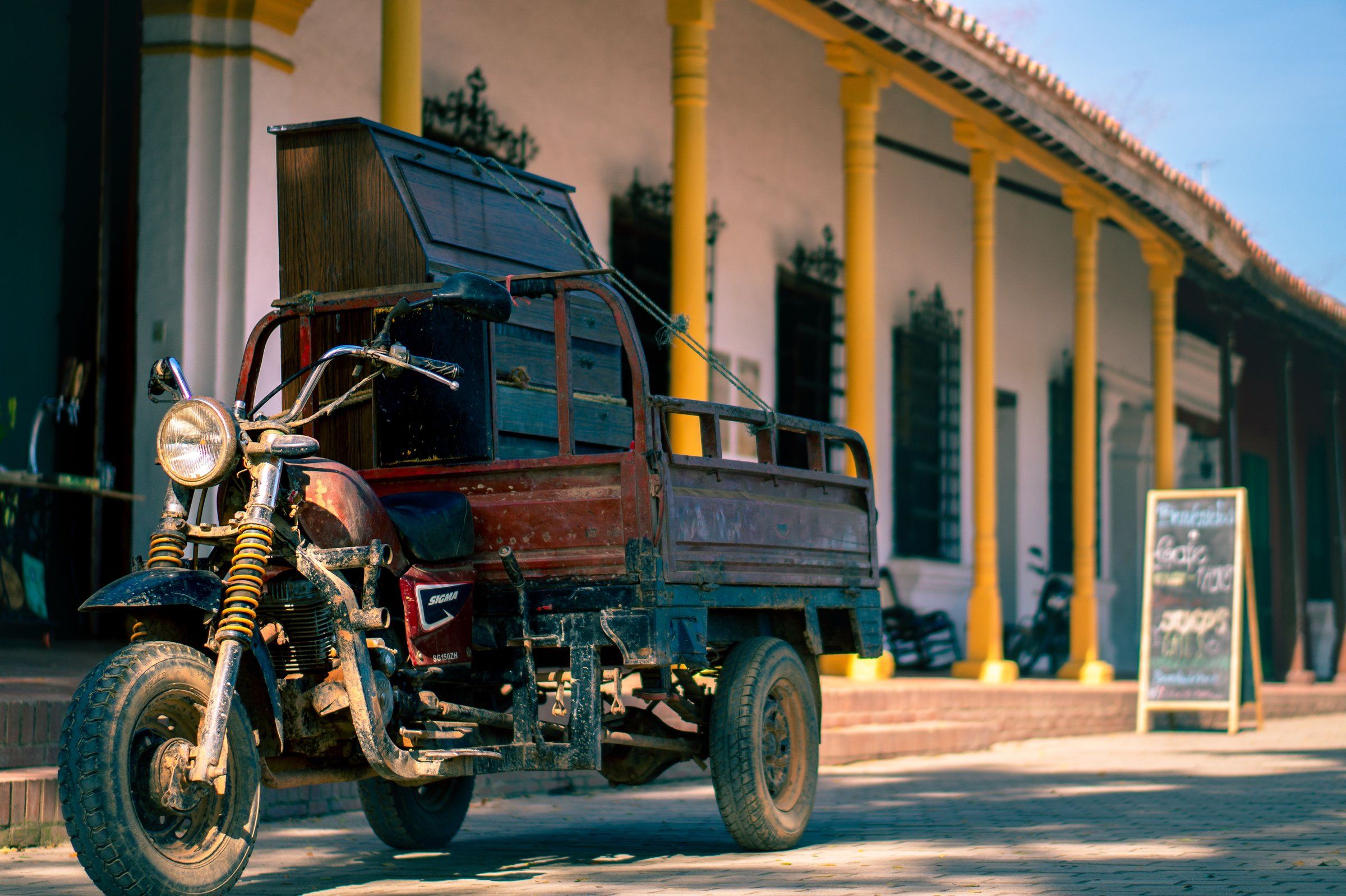
The old town is easy on foot: it’s long and narrow, strung along three streets parallel to the river (the Albarrada, Calle Real del Medio and Calle de Atrás). For the cemetery and outlying areas there are mototaxis and motorbike carts; many hotels rent bicycles, the best way to get around early in the morning.
Things to do in Mompox
| What | Time | Approx. price |
|---|---|---|
| Albarrada riverfront | 1-2 hours, at sunset | free |
| Churches in the old town | half a day | free, donation |
| Cemetery | 30-45 minutes | free |
| Filigree workshops | 1 hour | free to watch |
| Ciénaga de Pijiño boat trip | 2-3 hours | 50,000-95,000 pesos, depending on the source |
| Religious art museum | 1 hour | check it’s open |
The Albarrada and the old town
The Albarrada is the old flood wall along the Mompox branch of the Magdalena, now a promenade with benches, shade trees and colonial facades across the street. It’s where everyone goes at sunset, when the heat eases, and where the boats for river trips tie up. Along the same street you’ll find the Plaza de la Concepción, the old riverside market and arcaded houses like the one in the cover photo. The rest of the old town is streets of low houses with huge wooden doors, barred windows and inner courtyards: take your time, because this is why Mompox is on the UNESCO list. Simón Bolívar passed through several times; in 1812 he recruited many of his men here and famously said: “If to Caracas I owe my life, to Mompox I owe my glory.”
The churches: Santa Bárbara, San Agustín, Santo Domingo and La Inmaculada
Mompox has six churches and two chapels within a few minutes of each other. Entry is free, but they’re usually open only early in the morning and late in the afternoon, around mass times.
- Santa Bárbara: the most photographed, painted yellow, with an ornate octagonal bell tower topped by a balcony. It stands on the Albarrada, on its own square.
- San Agustín: home to the gilded Holy Sepulchre and many of the statues carried in the Holy Week processions.
- Santo Domingo: on the other side of town, with a leafy square.
- La Inmaculada Concepción: by the river on the Plaza de la Concepción, close to the old market.
If you want to get inside all of them, Civitatis sells a walking tour of the churches; otherwise, a stroll between 4:30 and 6 pm does the job.
The cemetery
The municipal cemetery is one of the loveliest spots in town: white tombs, marble angels and dozens of cats that live there and are looked after by locals. It takes half an hour and is free. On the Wednesday of Holy Week, at 6 pm, townspeople come in their best clothes to light candles on their family graves while the band plays: if you’re here then, it’s the most moving moment of the week.
Mompox filigree
Mompox is famous across Colombia for filigree, the goldsmithing technique of twisting ultra-fine threads of silver (or gold) into earrings, pendants and rings. The old town is dotted with family workshops, often in the front room facing the street, where you can watch the jewellers at work and buy direct. There’s also a filigree workshop at the Casa de la Cultura, where some walking tours end.
Prices depend on the metal and the weight: a small pair of silver earrings costs far less than a gold or gold-plated piece, and I couldn’t find reliable price lists to quote. Before you buy, always ask what metal it is and how much it weighs, and compare two or three workshops.
Museums
The Museo Cultural de Arte Religioso, in the house where Bolívar stayed, holds a collection of religious silverwork and art. According to El Universal (August 2025), though, it hasn’t reopened since the pandemic for lack of funds: ask your hotel whether it’s open before you go. Beyond that, Mompox’s real museums are its churches, houses and workshops.
Boat trip on the Ciénaga de Pijiño
The best outing beyond the old town is a boat trip along the Mompox branch of the river to the Ciénaga de Pijiño, a lagoon of channels winding through mangroves and flooded pasture. Boats leave from the Albarrada in the afternoon and come back after sunset: expect herons, kingfishers, birds of prey, iguanas and sometimes howler monkeys, with the sun going down over the river at the end.
Prices vary a lot by source and type of boat: one blog put it at 50,000 pesos per person in 2023, more recent guides give 75,000-95,000 pesos. Private trips and those sold on tour websites are priced in dollars. Bring insect repellent: mosquitoes are out in force at dusk. In dry spells the Mompox branch can run very low and the route changes, so ask your boatman how far you’ll get.
What to eat and buy
- Queso de capa: Mompox’s own cheese, made in thin rolled layers, eaten plain or filled with bocadillo (guava paste). You’ll find it from street sellers and shops in the old town.
- Dulce de limón: the town’s classic sweet, made from candied lime peel; the same shops sell coconut and other fruit sweets.
- Vino de corozo: a sweet, low-alcohol, dark red wine made from the fruit of a local palm. There are tamarind and other fruit versions too.
- River fish, fried bocachico with coconut rice and patacones, in the restaurants on the Albarrada.
- Momposino rocking chairs: the wood-and-wicker mecedoras you see outside every house are still handmade in a few workshops. They’re beautiful but bulky: if you want one, ask whether the workshop can ship it.
Holy Week in Mompox
Holy Week (Semana Santa) is the biggest event of the year: for a week the town fills up and every evening the processions come out, with the pasos (statues on wooden platforms) carried on the shoulders of nazarenos in blue or red robes, who move with a distinctive side-to-side sway to the band’s rhythm. Processions are held after dark, because of the heat and for the candlelight.
| Day | What happens |
|---|---|
| Thursday 18 March 2027 (Jueves de Dolores) | the first procession, opening the week |
| Sunday 21 March (Palm Sunday) | blessing of the palms and procession |
| Monday-Tuesday 22-23 March | evening processions from the different churches |
| Wednesday 24 March | cemetery visit at 6 pm, with candles and a serenade for the dead |
| Thursday 25 March | the procession of the 14 pasos, the most lavish |
| Friday 26 March | Stations of the Cross, Sermon of the Seven Words and the Santo Entierro procession |
| Saturday 27 March | serenade to the Holy Sepulchre and vigil |
Dates follow the 2027 calendar (Easter Sunday is 28 March) and the pattern of previous years; the official schedule for each evening usually comes out a few weeks ahead. In 2026 the town reported record crowds with hotels nearly full, though the figures vary widely by source (from about 17,500 tourists to over 50,000 visitors). If you want to go, book accommodation months ahead and plan on 3-4 nights.
The Jazz Festival and other events
The Mompox Jazz Festival (Festijazz) takes place every September, with free open-air evening concerts: in 2025 it ran from 17 to 20 September, in 2026 from 3 to 5 September. The 2027 dates haven’t been announced yet. Rooms fill up just as they do at Holy Week. I couldn’t find a separate filigree festival: filigree features in the craft fairs held during the Festijazz and other events.
Where to stay in Mompox
| Area | Best for | Good to know |
|---|---|---|
| The Albarrada | river views and sunsets | restored colonial houses, boutique hotels, the highest prices |
| Central, near Calle Real del Medio | walking everywhere, a little quiet | courtyard houses with pools, more mid-range choice |
| Around Santo Domingo and Calle de Atrás | tighter budgets | hostels and guesthouses, 5-10 minutes’ walk from the river |
Almost every place to stay is a colonial house turned hotel, often with a courtyard and a small pool: in this heat I think the pool and air conditioning are worth paying extra for. On booking sites prices are mostly shown in US dollars, from hostels to boutique houses, and they jump at Holy Week and during the Festijazz. Before booking a tour or transfer with a local agency, ask for its Registro Nacional de Turismo (RNT) number, which every Colombian tourism business must have.
How many days do you need?
Give it 2 nights to see Mompox without rushing, 3 if you want to slow down or add a bike ride, 3-4 for Holy Week. With just one night you’ll spend most of your time on the road.
2-day itinerary
- Day 1: leave Cartagena in the morning, arrive early afternoon. Rest through the heat, then walk the old town, see Santa Bárbara and watch the sunset on the Albarrada; river fish for dinner.
- Day 2: early start by bike or on foot for the churches, the cemetery and the Plaza de la Concepción; mid-morning, a filigree workshop and some queso de capa. Break for the hottest hours, then a boat trip to the Ciénaga de Pijiño until sunset.
- Day 3: leave early in the morning so you arrive in daylight.
Fitting it into your trip: the simplest plan is a round trip from Cartagena, before or after your days in the city (3 days in Cartagena, 2 nights in Mompox). San Basilio de Palenque, the town founded by escaped slaves, is about an hour from Cartagena and best done as a day trip from there. If you’re heading to Santa Marta afterwards, consider going back via Cartagena or Barranquilla rather than via El Banco. Other stops are on our Caribbean coast page.
Best time to visit Mompox
Mompox is hot all year: average highs range from about 32 °C (90 °F) in November to 36-38 °C (97-100 °F) in February, with high humidity and little wind.
- December-March: the dry season and the best time for weather, with Holy Week in March or April. February and March are the hottest months.
- April-May: the first rainy season, with afternoon storms; May is one of the wettest months.
- June-August: patchier rain, humid heat.
- September-November: the wettest stretch, peaking in October; in 2010 Magdalena floods swamped much of the area. September is also Festijazz month.
River levels swing a lot: in dry seasons and El Niño years the silted-up Mompox branch can run very low, while heavy rain makes it rise fast. For how the regions compare, see our guide on when to visit Colombia.
Practical tips
- Money: Mompox has a few ATMs, but don’t rely on them alone. Many small businesses (boats, workshops, street food) take cash only: withdraw in Cartagena before you set off.
- Health: in 2026 Bolívar is among the Colombian departments with the most dengue cases, so use repellent, especially at dawn and dusk. For yellow fever, the Health Ministry table updated to 31 March 2026 rates Mompós as low risk: the vaccine isn’t required, though some municipalities further south in Bolívar are high risk.
- Heat: drink plenty, wear a hat and sunscreen and keep outdoor sightseeing for early morning and after 4 pm.
- Clothing: light clothes; cover your shoulders and skip very short shorts to go into churches.
How much does Mompox cost?
| Item | Approx. price |
|---|---|
| Cartagena-Mompox bus | about 90,000 pesos on ticket sites |
| Private transfer from Cartagena | sold in US dollars |
| Ciénaga de Pijiño boat trip | 50,000-95,000 pesos per person, depending on the source |
| Churches, Albarrada and cemetery | free |
| Filigree jewellery | depends on metal and weight |
| Accommodation | mostly priced in US dollars |
Mistakes to avoid
- Trying to do Mompox as a day trip from Cartagena: that’s about 12 hours on the road there and back.
- Travelling or driving at night on the roads of the Depresión Momposina.
- Walking around at midday: by 1 pm the town has shut and the heat is brutal.
- Turning up at Holy Week without a room.
- Buying filigree without asking about metal and weight: prices vary hugely between silver, gold and plated pieces.
- Forgetting repellent for the sunset boat trip.
- Relying on ATMs to pay for boats and workshops.
FAQ
Is Mompox worth visiting?
Yes, if you have at least two nights and you’re into colonial towns, churches and crafts: it’s one of the most intact historic centres in Colombia, without Cartagena’s crowds. If you’re short on time or after beaches, stay on the coast.
How far is Mompox from Cartagena?
About 270 km (170 miles), or around 6 hours by Unitransco bus or private transfer. In January 2026 Satena suspended its Cartagena-Mompox flight; the Medellín flight still runs.
Is Mompox safe for tourists?
The town is calm, has tourist police and isn’t in the areas the FCDO advises against. But the region borders southern Bolívar, where armed groups operate, and Colombia’s ombudsman reports Clan del Golfo control in Magangué: travel by day and check before heading further south.
When is Holy Week in Mompox in 2027?
From 21 March (Palm Sunday) to 28 March 2027 (Easter Sunday), with the first procession on Thursday 18 March. The candlelit cemetery visit is on Wednesday 24 and the procession of the 14 pasos on Thursday 25.
How many days do you need in Mompox?
Two nights cover the old town, the cemetery, filigree and the Ciénaga de Pijiño boat trip; allow three or four for Holy Week.
Some links are affiliate links: if you buy through them I earn a small commission, at no extra cost to you. How it works
Nearby and worth combining
Caribbean coast
Barranquilla
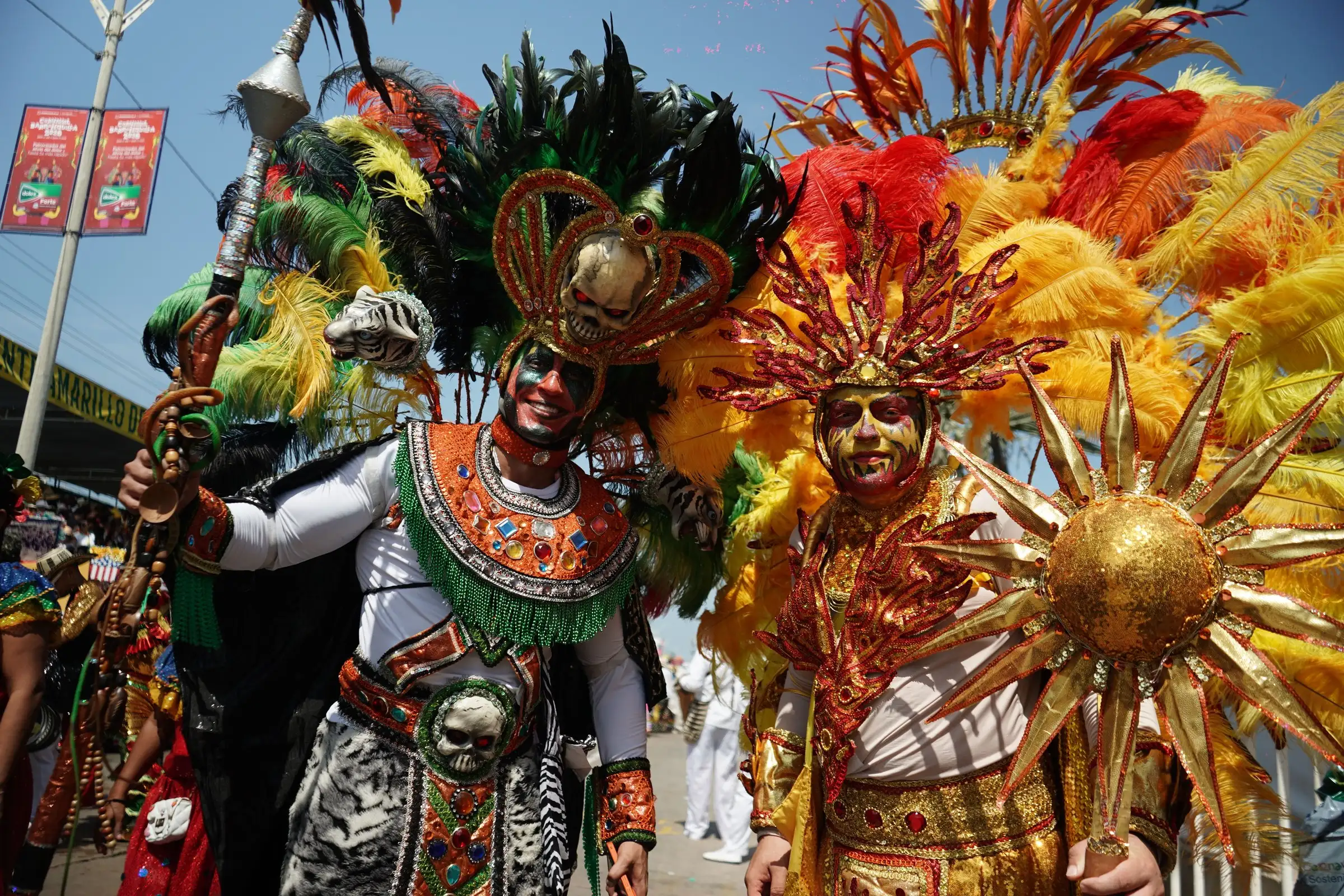
Barranquilla, home of Colombia's biggest carnival: 2027 dates and grandstand tips, the Gran Malecón, museums, where to stay, safety and easy day trips.
Caribbean coast
Cartagena de Indias
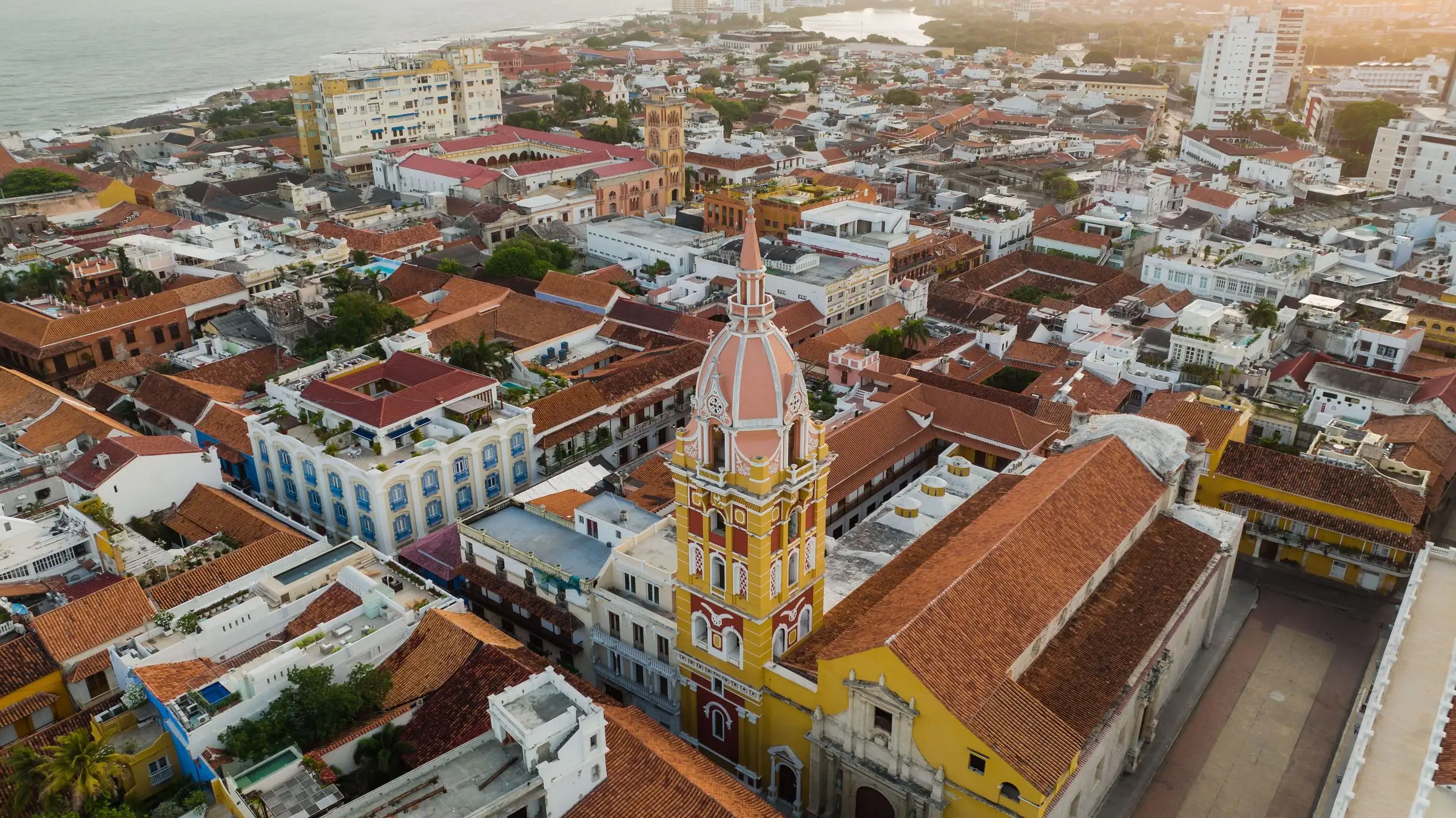
Cartagena, Colombia travel guide: the country's most beautiful colonial city, how many days you need, the best area to stay, airport transfers and costs.