Food & drink
Colombian food: typical dishes, what to eat and what it costs
Colombian food explained for travellers: typical dishes region by region, arepas, breakfast, street food, tropical fruit, what to drink and what meals cost.
In this guide
- What Colombian food is like
- Typical Colombian dishes to try
- Colombian food region by region
- Arepas: which ones to try
- Colombian breakfast
- Colombian street food
- Tropical fruit: which ones to taste
- Typical Colombian desserts
- What to drink in Colombia
- Lunch in Colombia: how the menú del día works
- How much food costs in Colombia
- Tips for eating well in Colombia
- Frequently asked questions
Colombian food is home-style, generous and very different from one region to the next: hearty soups, corn, rice, beans, plantain, cassava and meat in the Andes; fish, coconut and coconut rice on the coast. It isn’t spicy: the chilli comes on the side, in the ají sauce you’ll find on every table. The most important meal is lunch, and the cheapest way to eat well is the menú del día. Here you’ll find the typical dishes to try region by region, arepas, breakfast, street food, fruit, what to drink and what eating out costs.
What Colombian food is like
It’s a cuisine of simple ingredients, born from the meeting of Indigenous traditions (corn, potatoes, cassava), Spanish ones (pork, rice, frying) and African ones (plantain, coconut and the coastal seafood). The result is filling food, designed for people working the land, served in generous portions.
The basics you’ll find almost everywhere:
- Corn: in arepas, empanadas, tamales and soups.
- Rice and beans: rice comes with almost every dish, even soups; beans (frijoles) are at the heart of Antioquia’s cooking.
- Plantain: green, smashed and fried as patacones; ripe and sweet as tajadas.
- Roots and tubers: dozens of potato varieties in the Andes, and yuca (cassava) all over the country.
- Soups: a sopa starts almost every lunch, even where it’s hot.
Flavours change with altitude and climate: in the Andes people eat soups and meat, on the Caribbean coast fried fish, coconut and seafood, in the Llanos grilled meat. That’s why it pays to try each dish where it comes from.
Typical Colombian dishes to try
These are the most representative dishes, with the area where they’re at their best:
| Dish | What it is | Where to try it |
|---|---|---|
| Ajiaco santafereño | chicken soup with three kinds of potato, corn on the cob and a herb called guascas, served with cream, capers and avocado | Bogotá |
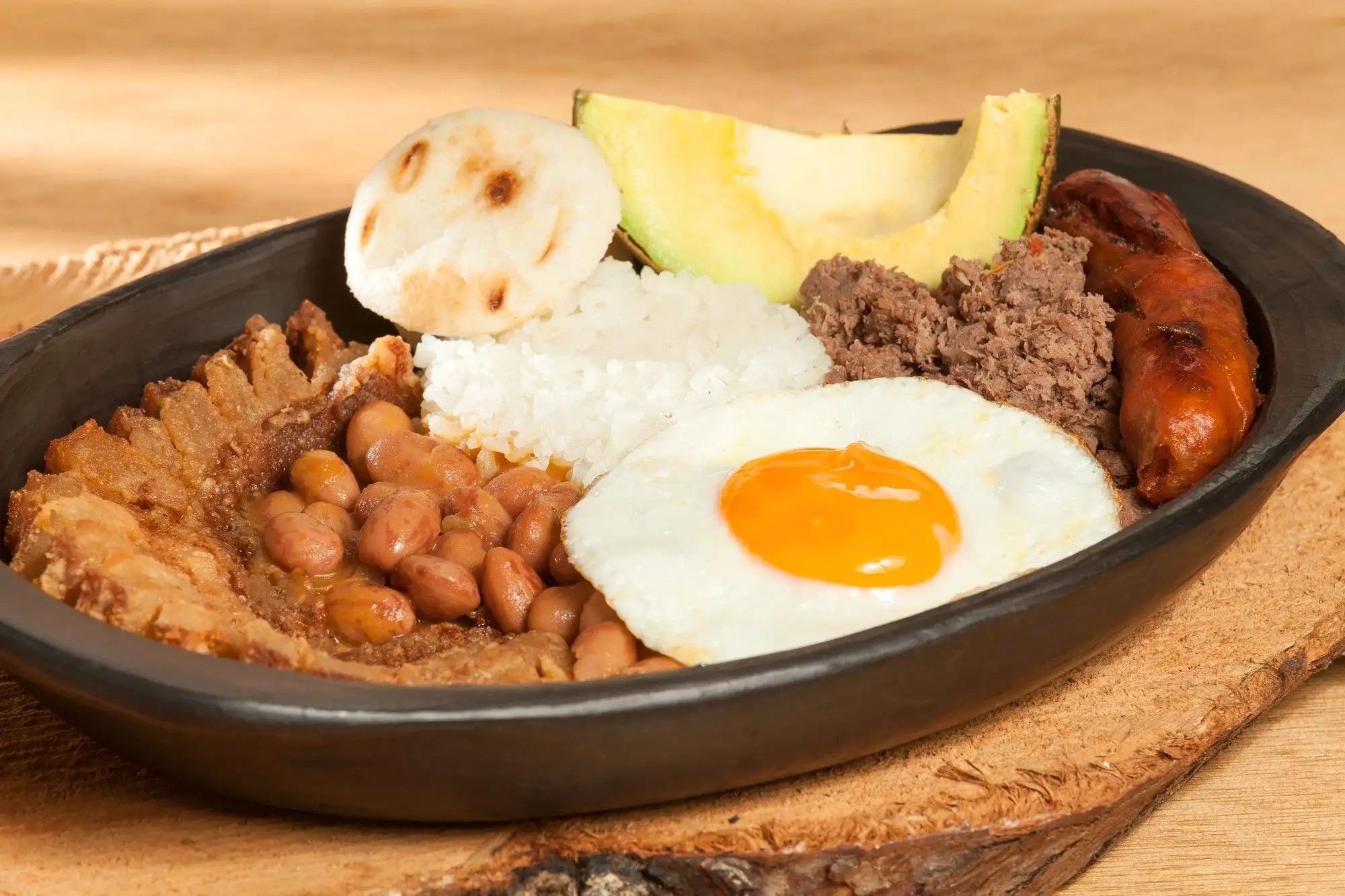
| Bandeja paisa | a platter of beans, rice, minced beef, chicharrón, chorizo, egg, plantain, arepa and avocado | Medellín and Antioquia |
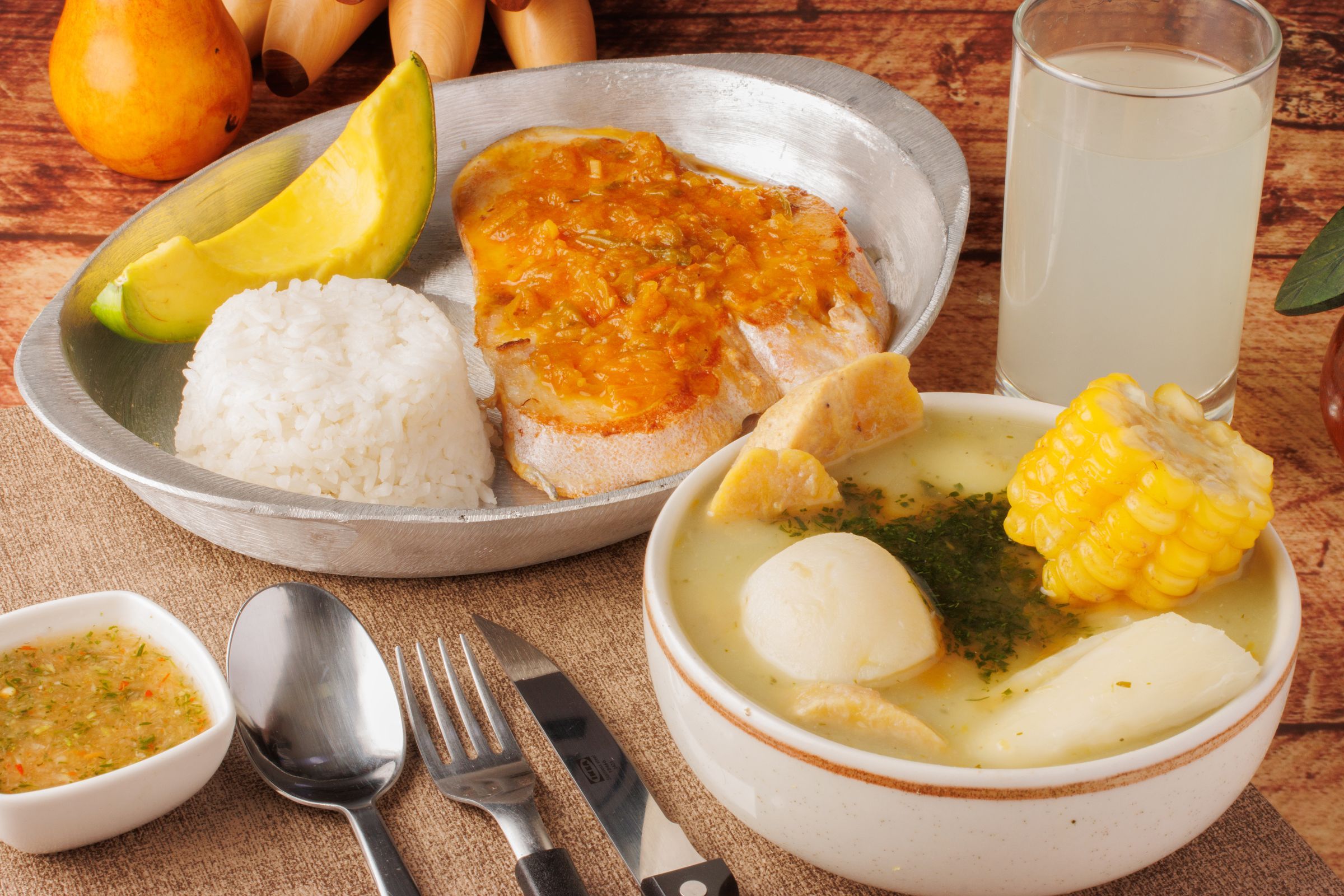
| Sancocho | soup with cassava, plantain, potatoes and corn, with hen, beef or fish | the whole country; de gallina in Cali, de pescado on the coast |
| Pescado frito | whole fried fish (often mojarra) with coconut rice, patacones and salad | Caribbean coast |
| Cazuela de mariscos | thick seafood stew with coconut milk | Cartagena and the Caribbean coast |
| Posta negra cartagenera | beef slow-cooked in a dark, sweet panela-based sauce | Cartagena |
| Mote de queso | yam (ñame) soup with salty coastal cheese | Caribbean coast, Córdoba and Sucre |
| Lechona | whole pig stuffed with its own meat and yellow peas, roasted for hours in a wood oven | Tolima, Bogotá and central Colombia |
| Tamal | corn dough with pork, chicken and vegetables, steamed in banana leaves | Tolima and Bogotá, for breakfast |
| Trucha | farmed trout, grilled or with garlic, with patacón | Salento and the Coffee Region |
| Mamona (ternera a la llanera) | veal roasted on stakes around a wood fire | Llanos (Meta and Casanare) |
| Cuy | roast guinea pig | Nariño, around Pasto |
If you’re short on time, my three priorities are ajiaco in Bogotá, bandeja paisa in Medellín and fried fish with coconut rice on the Caribbean coast. You’ll come across sancocho and arepas everywhere anyway.
Colombian food region by region
Bogotá and the central Andes
In Bogotá and on the high plateau it’s cool all year round, and the food is all about hot soups. The signature dish is ajiaco; for breakfast people eat tamal and changua, a milk and egg soup with spring onion and coriander. Also try chocolate santafereño, hot chocolate served with a piece of fresh cheese that you drop in to melt. In Boyacá you’ll find the arepa boyacense, sweet and filled with cheese, and cocido boyacense, a stew of meats, tubers and corn.
Antioquia and the Coffee Region
This is the land of bandeja paisa, frijoles and the arepa paisa, white, thin and unsalted, which comes with every meal. For breakfast there’s calentado, the previous day’s rice and beans fried up with egg and arepa. In the Coffee Region, around Salento, the local dish is trout, and the coffee comes straight from the farms.
Caribbean coast
In Cartagena, Santa Marta and Barranquilla the food changes completely: fried fish, coconut rice, patacones, seafood and street-side fritters. The icon of street food is the arepa de huevo, a fried corn arepa with an egg inside. Also try the carimañola, a cassava fritter filled with meat or cheese, limonada de coco and the coconut sweets (cocadas) sold by Cartagena’s street vendors.
Valle del Cauca and Cali
In and around Cali people eat sancocho de gallina, aborrajados (fried ripe plantain stuffed with cheese) and pandebono, a cheese bread made with cassava starch. To drink there’s lulada, with crushed lulo, ice and lime, and champús, made with corn, lulo and pineapple. The most famous street dessert is cholado: shaved ice with fruit, condensed milk and syrup. A little further south, Popayán was the first city in the world named a UNESCO Creative City of Gastronomy (2005): try the empanadas de pipián, filled with potato and peanuts.
Santander
Santander has the most unusual food in the country: cabrito (roast kid goat), pepitoria (rice with the goat’s offal) and hormigas culonas, large toasted and salted ants harvested during the spring rainy season. This is also where bocadillo veleño comes from, the guava paste from Vélez wrapped in bijao leaves.
Pacific coast and the Amazon
On the Pacific coast, Afro-Colombian cooking uses fish, seafood and coconut milk: the typical dish is encocado. Here you’ll find borojó, a dense fruit used in smoothies, and viche, an artisanal sugarcane spirit. In the Amazon, around Leticia, people eat river fish such as pirarucú and fruits you won’t find elsewhere, like copoazú and camu camu.
Arepas: which ones to try
An arepa is a corn cake cooked on a griddle, grilled or fried, and it’s eaten all over the country at any time of day. Every region has its own version:
| Arepa | What it’s like | Where |
|---|---|---|
| Arepa paisa | white, thin, unsalted; eaten with butter, cheese or as a side | Antioquia and the Coffee Region |
| Arepa de choclo | made with sweet corn, thick, served with fresh cheese (quesito) | the whole country, especially the Andes |
| Arepa boyacense | sweet, yellow, filled with cheese | Boyacá and Bogotá |
| Arepa de huevo | fried, with a whole egg and often minced meat inside | Caribbean coast |
| Arepa santandereana | with bits of chicharrón in the dough | Santander |
| Arepa rellena | split open and filled with meat, chicken, cheese or eggs | city street food |
Colombian arepas are usually thinner and plainer than Venezuelan ones: they often play the role of bread rather than a dish. If you want a filled arepa, look for arepas rellenas at street stalls.
Colombian breakfast
Colombian breakfast is savoury and filling. A typical desayuno is huevos pericos (scrambled eggs with tomato and spring onion), an arepa with cheese, a juice or hot chocolate and a tinto, filtered black coffee. In cafés and bakeries you’ll also find:
- Calentado: rice and beans fried up with egg and arepa, typical of Antioquia.
- Tamal con chocolate: the Sunday breakfast in Bogotá and Tolima.
- Changua: a soup of milk, water and egg with stale bread, typical of Bogotá and Boyacá.
- Caldo de costilla: beef rib broth with potatoes, Colombia’s cure for a long night out.
- Pandebono, almojábana and pan de yuca: cheese breads, best eaten hot from the oven.
- Buñuelos: fried balls of cheese and cornflour.
Colombian street food
Street food is the cheapest way to taste Colombian cooking, and it’s everywhere, from carts in the squares to stalls outside schools:
- Empanadas: corn dough, fried, filled with potato and meat. Eat them with ají and a squeeze of lime.
- Arepa de huevo and carimañolas: the fritters of the Caribbean coast.
- Mazorca asada: grilled corn on the cob with butter and salt.
- Salchipapa and perro caliente: fries with frankfurters, and hot dogs loaded with sauces, cheese, crushed crisps and sometimes pineapple.
- Mango biche: sliced green mango with salt and lime, sold in plastic cups.
- Obleas: two thin wafers with arequipe (dulce de leche), blackberry jam and cheese.
- Salpicón: diced fruit salad in juice.
In tourist areas the same snacks can cost two or three times as much: in Cartagena an arepa de huevo in the walled city costs far more than in Getsemaní or a residential neighbourhood.
Tropical fruit: which ones to taste
Colombia has one of the greatest varieties of fruit in the world, and many are hard to find in Europe or North America. They’re eaten fresh, but above all as juice (jugo), made to order en agua (with water) or en leche (with milk).
| Fruit | What it’s like | How to try it |
|---|---|---|
| Lulo | orange outside, green inside, very tart | as juice or lulada |
| Maracuyá | passion fruit, tart and fragrant | as juice |
| Guanábana | soursop: white, creamy flesh, sweet and tangy | as juice with milk or in a smoothie |
| Granadilla | sweet relative of passion fruit, with jelly-like seeds | fresh: crack it open and eat it with a spoon |
| Uchuva | goldenberry (cape gooseberry), small, sweet and tangy | fresh or in fruit salad |
| Pitahaya amarilla | yellow dragon fruit, white and very sweet flesh | fresh, in moderation: it has a laxative effect |
| Tomate de árbol | tamarillo, red-orange and tangy | as juice |
| Mora | Andean blackberry, bigger and more tart than the usual kind | as juice |
| Feijoa and curuba | fragrant fruits grown in the Andes | as juice or in desserts |
| Mamoncillo | Spanish lime: small green fruit with jelly-like flesh around the stone | fresh, on the Caribbean coast |
The best place to taste them is an indoor market (plaza de mercado), such as Paloquemao in Bogotá or the Plaza Minorista in Medellín, where vendors let you try the fruit before you buy.
Typical Colombian desserts
Colombian sweets are very sugary and almost always based on milk, panela, coconut or fruit:
- Arequipe: a caramelised milk spread similar to dulce de leche, found in dozens of desserts.
- Bocadillo con queso: guava paste with a slice of fresh cheese, the classic snack.
- Obleas and brevas con arequipe: wafers and candied figs filled with arequipe.
- Cocadas: coconut sweets from the Caribbean coast.
- Postre de natas: a dessert of cooked milk skin, typical of Bogotá and Boyacá.
- Natilla and buñuelos: the Christmas treats you’ll find in every bakery in December.
What to drink in Colombia
- Fresh juices (jugos): available everywhere, from restaurants to street stalls, and served with almost every lunch.
- Tinto: light, filtered black coffee. For quality coffee, farm tours and specialty cafés, read the guide to Colombian coffee.
- Aguapanela: water and panela (unrefined cane sugar), hot, or cold with lime.
- Chocolate: the breakfast hot chocolate, often with cheese.
- Limonada de coco: lemonade blended with coconut milk, typical of the Caribbean coast.
- Beer: the most common brands are Águila, Club Colombia and Poker. Refajo is beer mixed with a sweet soda (Colombiana), drunk mostly on holidays.
- Aguardiente: the national spirit, made from sugarcane and flavoured with aniseed. Each region has its own, such as Antioqueño and Néctar; it’s drunk neat, in shots.
- Rum: Ron Viejo de Caldas and Ron Medellín are the best known.
- Chicha: a fermented corn drink of Indigenous origin. In Bogotá you’ll find it mainly in La Candelaria, around the Chorro de Quevedo, and in the La Perseverancia neighbourhood.
Lunch in Colombia: how the menú del día works
The menú del día, also called corrientazo, almuerzo corriente or almuerzo ejecutivo, is the fixed-price set lunch served in neighbourhood eateries. It usually includes:
- A soup (sopa), often vegetable, legume or chicken.
- The main plate (seco): rice, a choice of protein (beef, chicken, pork or fish), the principio (beans, lentils or pasta), a small salad and fried plantain or chips.
- A fresh juice of the day.
- Sometimes a small dessert.
It’s served between noon and 2pm, after which many eateries close the kitchen. In neighbourhood places it usually costs between 15,000 and 25,000 pesos: according to La República, the national average in January 2026 was about 17,500 pesos. In business and tourist areas, such as El Poblado in Medellín, an almuerzo ejecutivo goes up to 25,000-30,000 pesos.
How much food costs in Colombia
Indicative prices in the big cities. In tourist areas, such as Cartagena’s walled city, you’ll pay more:
| Item | Indicative price |
|---|---|
| Tinto at a café or from a street vendor | 1,500-4,000 pesos |
| Empanada | 2,000-5,000 pesos |
| Arepa de huevo | 3,000-6,000 pesos at stalls, 8,000-15,000 in tourist areas |
| Fresh juice | 5,000-12,000 pesos |
| Menú del día (set lunch) | 15,000-25,000 pesos, up to 30,000 in tourist areas |
| Ajiaco at a traditional restaurant in Bogotá | 25,000-45,000 pesos |
| Bandeja paisa in Medellín | about 40,000 pesos |
| Dinner at a mid-range restaurant | 50,000-100,000 pesos per person |
Restaurant bills often include a 10% propina voluntaria: it’s an optional tip and you can ask for it to be removed. The details are in the guide to money in Colombia.
Tips for eating well in Colombia
- Order politely: the most common way to ask for something is “¿Me regala un jugo de lulo, por favor?” (“could I have a lulo juice, please?”).
- Ask for less sugar in your juice: juices are usually very sweet. Say “con poquita azúcar” or “sin azúcar”.
- Go for traditional dishes at lunchtime: many eateries only cook soups and traditional dishes at midday; in the evening it’s mostly fast food, pizza and international restaurants.
- If you’re vegetarian, say “no como carne, ni pollo, ni pescado”: to many Colombians “no meat” just means no beef. Also ask whether the beans and soups are cooked with pork. The big cities have plenty of vegetarian restaurants; in small towns, order the menú del día without the protein.
- Taste fruit at the markets, not just in juices: it’s cheap and vendors are happy to explain how to eat each one.
- Eat dishes where they come from: ajiaco outside Bogotá or fried fish far from the sea are often lesser versions.
Frequently asked questions
What is the national dish of Colombia?
There isn’t just one: every region has its own. The best known are bandeja paisa from Antioquia, ajiaco from Bogotá and sancocho, which is made all over the country. Arepas are eaten everywhere, at every meal.
Is Colombian food spicy?
No, Colombian dishes aren’t spicy. The chilli comes on the side, in the ají sauce on the table, which you can add to taste.
How much does food cost in Colombia?
A menú del día at lunchtime usually costs 15,000-25,000 pesos for a full meal. A street snack costs a few thousand pesos and dinner at a mid-range restaurant 50,000-100,000 pesos per person.
What do Colombians eat for breakfast?
Scrambled eggs with tomato and spring onion (huevos pericos), an arepa with cheese, juice, hot chocolate or coffee. In Bogotá people also eat tamal and changua, in Antioquia calentado.
What fruit is there in Colombia?
Lulo, passion fruit, soursop, granadilla, goldenberries, yellow dragon fruit, tamarillo and Andean blackberries, as well as mango, pineapple and papaya. They’re mostly drunk as juice, with water or milk.
More Colombian flavours
Coffee Region
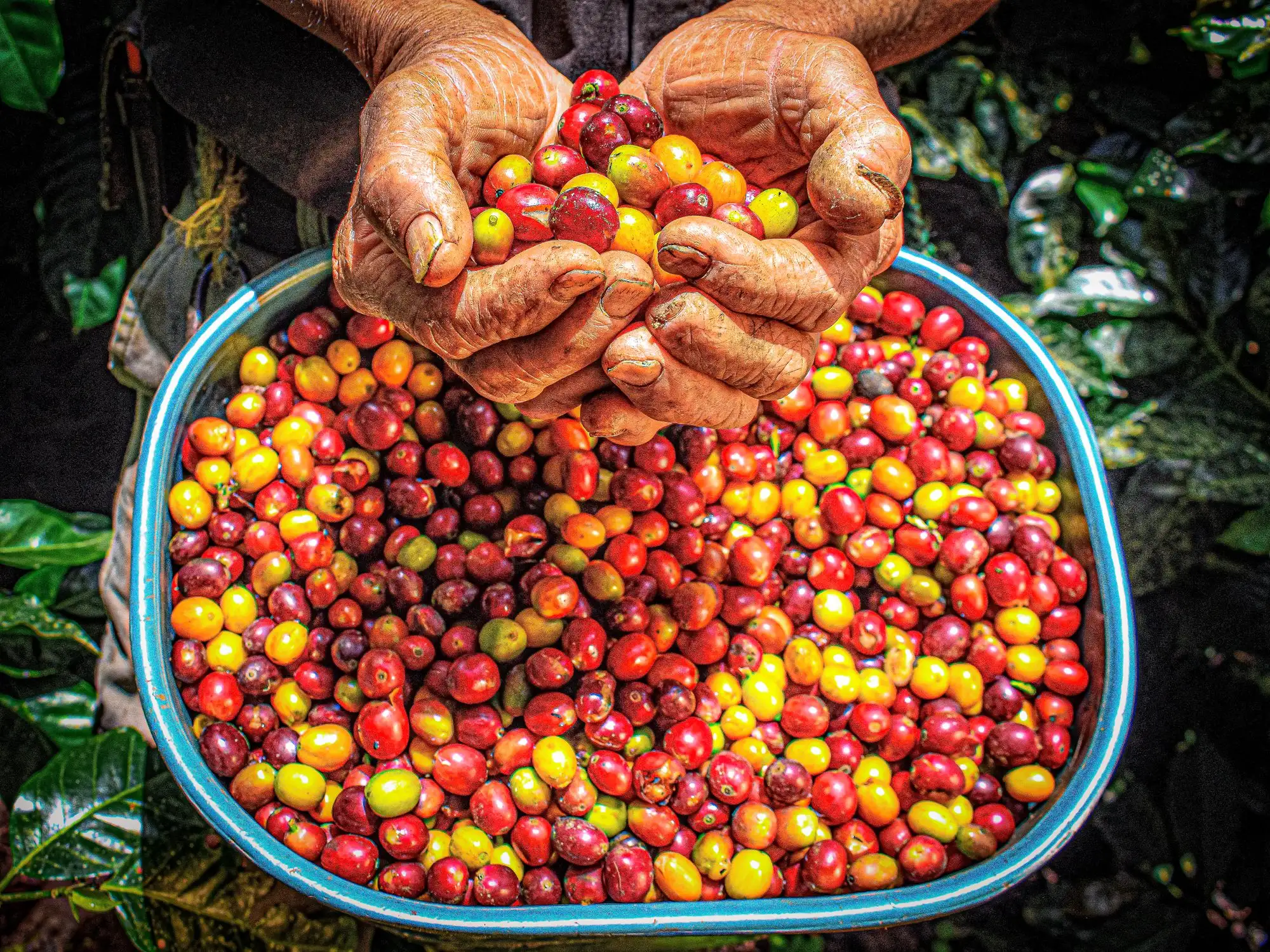
Colombian coffee: tinto, Juan Valdez, coffee farms and what to buy
Colombian coffee for travellers: how to order it (tinto, perico, aromática), who Juan Valdez is, how to visit a coffee farm and which coffee to take home.
Antioquia
Bandeja paisa
What bandeja paisa is, Medellín's signature dish: every ingredient explained, how much it costs, where to eat it and how to order it without overdoing it.