Place · Pacific coast
Bahía Solano and El Valle
Bahía Solano and El Valle, Chocó: sea turtle releases, humpback whales and a jungle hike to Utría park. Flights from Medellín, entry tax, lodging, prices.
In this guide
- Bahía Solano or El Valle? How the area fits together
- Is Bahía Solano safe in 2026?
- How to get to Bahía Solano
- Things to do in Bahía Solano and El Valle
- Communities and community tourism
- Where to stay in Bahía Solano and El Valle
- How many days in Bahía Solano: sample itinerary
- Best time to visit Bahía Solano: month by month
- Practical tips: money, power, internet and health
- How much does Bahía Solano cost?
- Mistakes to avoid
- FAQ
Bahía Solano and El Valle are the northern side of Colombia’s Chocó coast: a fishing town with its own airport and, half an hour down the road, a village on a long beach where sea turtles nest and from where you can walk to Utría National Park. Compared with Nuquí, further south, there are fewer lodges and more simple guesthouses, it’s easy to put a trip together without a package, and it costs less. I’d give it 4-5 days, ideally between July and October, when the humpback whales are here too. Below: how to get there, the entry tax, things to do with times and prices, where to stay and what you need to know about safety.
Bahía Solano or El Valle? How the area fits together
Bahía Solano is the name of the municipality and the bay; the main town is officially Ciudad Mutis, but everyone calls it “Bahía”. This is where you’ll find the airport, the pier, the port authority, the shops and the only ATM. The beach in front of town, inside the bay, isn’t as good as El Valle’s and the water goes a long way out at low tide: it’s not where you stay for the beach.
- North of Ciudad Mutis, by boat: Playa Huina, with a few hotels and the wreck dive, and Playa Mecana, home to the Jardín Botánico del Pacífico. Further up are Cupica and then Juradó, near the Panama border; neither is a tourist destination.
- Southwest, 18 km (11 miles) by road: the village of El Valle, on the open ocean, with Playa Almejal beach, the mouth of the Tundó river, the turtle nesting beach (Playa Cuevita) and the trail to Utría, the sheltered inlet between El Valle and Nuquí.
In practice they are two different places: Ciudad Mutis is the service hub, El Valle is where you go for nature. The rest of the coast is covered on the Pacific coast page.
Is Bahía Solano safe in 2026?
Bahía Solano is one of the few places in Chocó that the UK doesn’t advise against, but the department is still a conflict zone and you need to be careful. The advisories are the same as for Nuquí and are covered in full in the Nuquí guide. In short:
- UK (FCDO), updated 30 October 2026: advises against all but essential travel to Chocó except Quibdó, Nuquí, Bahía Solano and Capurganá.
- US State Department: Colombia is at Level 3, Reconsider Travel (since 31 March 2026). Chocó isn’t on the Level 4 “Do Not Travel” list, but the Level 3 warnings about armed groups and kidnapping apply.
- Colombia’s Ombudsman (Defensoría del Pueblo) has had an early warning in place since 2024 (Alerta Temprana 009 of 2024) for northern Pacific Chocó, covering Juradó, Bahía Solano and Nuquí.
What’s different here compared with Nuquí:
- Juradó, to the north: in September and October 2026 local media reported families confined to their homes by fighting between the ELN guerrilla and the Clan del Golfo, and the Ombudsman warned that the violence also affects Bahía Solano and Nuquí. I found no reports of tourists involved or of recent incidents in El Valle or the town.
- Migrants in transit: since 2025 Bahía Solano’s pier has been a stopover for migrants heading south from Panama, moved by smuggling networks on informal boats. According to The New Humanitarian (April 2026) and the Ombudsman, many are dropped off in Juradó and Bahía Solano. For you this means one thing: only use boats run by registered operators, never rides offered at the pier.
- The ocean: on 29 September 2025 three tourists drowned at Playa Almejal in El Valle after being swept away by a wave; the maritime authority (Dimar) had already installed a warning system on that beach. The most real risk for visitors here is the sea, not crime.
In practice: book transfers and trips through your guesthouse or an operator listed on the National Tourism Register (RNT), stay within Ciudad Mutis, El Valle, Huina, Mecana and Utría, and don’t head towards Cupica and Juradó. The wider picture is in the guide to safety in Colombia.
How to get to Bahía Solano
You reach Bahía Solano by air, at José Celestino Mutis airport (BSC), about 10 minutes from Ciudad Mutis. No road connects it to the rest of Colombia.
- From Medellín: flights leave from Olaya Herrera, the city airport, not from Rionegro where international flights land. Satena, Clic and Moon Flights fly the route in about 1 hour; one route tracker counted around 10 flights a week in May 2026. Satena’s reference fares for April-May 2026 started at about 177,400 pesos one way; according to Kayak, the average return fare in 2025 was around 559,000 pesos. Prices go up from July to October.
- From Cali: Satena flies direct on Tuesdays and Saturdays, according to the latest announcement from Cali’s city government (October 2025). Check on the airline’s website that it’s still running.
- From Quibdó: short Satena flights, useful if you’re already in Chocó’s capital.
- From Bogotá: you usually connect in Medellín.
The airport: a new passenger terminal opened on 25 September 2026, costing about 31,195 million pesos, but the runway, control tower and safety systems are still to be rebuilt. Heavy rain can delay flights, so don’t book an international flight on the same day you fly back. Baggage limits are tight (5 kg/11 lb carry-on with Satena): details are in the Nuquí guide.
From the airport to Ciudad Mutis and El Valle
Outside the terminal you’ll find motorbike taxis, tuk-tuks and a few jeeps. Ciudad Mutis is about 10 minutes away; El Valle about 45 minutes, on an 18 km road that’s partly unpaved and that the government has been promising to pave for over 15 years (in August 2026 the mayor was still complaining about delays). In the rain it turns muddy and slow.
I couldn’t find official fares: one traveller mentions about 15,000 pesos per person in a shared jeep to El Valle, but it’s not a recent figure. Agree the price before you get in, or ask your guesthouse to send someone to pick you up: many will.
To and from Nuquí: boat or plane
There’s no road between Bahía Solano and Nuquí. You have two options:
- Boat: according to travel guides, scheduled boats run a couple of times a week (often Mondays and Fridays) and take about 2 hours in calm seas; I couldn’t find timetables or prices updated for 2026. Otherwise you charter a private boat, which costs much more. The open ocean can be very rough: keep your bag in a dry bag.
- Satena flight: there’s an air link between the two airstrips, with 2026 reference fares of about 312,000 to 370,000 pesos one way.
Cargo ships with passenger berths also sail from Buenaventura, but the trip takes over a day and Buenaventura is an area travel advisories warn against: I don’t recommend it.
Tourist tax and entry requirements
- Tourist tax (Proturismo): paid in cash on arrival at the airport, and almost never included in packages. Two operators’ 2026 price lists give 55,000 pesos for foreigners and 40,000-41,000 for Colombians, with a reduced rate of 18,000 pesos for ages 11-18 and under-10s free. An older news report quoting Satena mentioned 35,000 pesos. I couldn’t find the municipality’s official resolution, so have 55,000 pesos per person ready.
- Yellow fever: Colombia’s Ministry of Health classifies Bahía Solano as high risk, and Colombian rules call for vaccination before visiting. There are no reports of systematic certificate checks, but get vaccinated at least 10 days before you go. Details are in the guide to Colombia entry requirements.
Things to do in Bahía Solano and El Valle
| What | From where, how long | Approximate price |
|---|---|---|
| Turtle hatchling release | El Valle, at sunset | donation to the association |
| Whale watching (July-October) | Ciudad Mutis or El Valle; half a day | sold in euros on tour sites; often in packages |
| Utría National Park | from El Valle on foot (2-3 hours) or by boat | 80,000 pesos for foreigners, plus guide |
| Canoe on the Tundó river | El Valle; about 4 hours | agree with your guide |
| Cascada del Tigre | from El Valle by boat or on foot | agree with your guide |
| Jardín Botánico and Playa Mecana | from Ciudad Mutis on foot at low tide or by boat | boat about 60,000 pesos per one guidebook |
| Wreck dive | Huina, 35 minutes by boat | through dive centres |
El Valle’s sea turtles
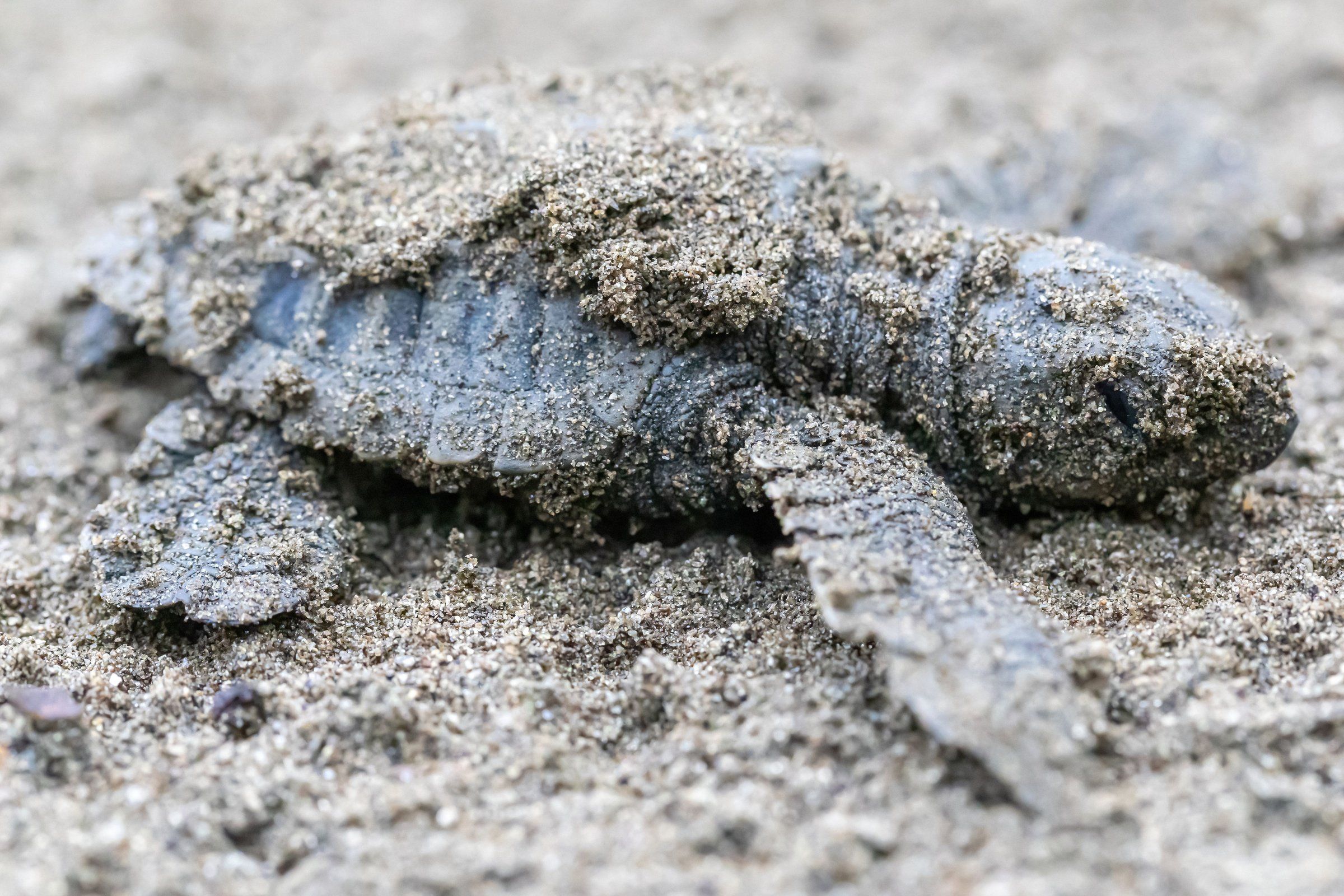
El Valle is the best-known place on Colombia’s Pacific coast to see olive ridley turtles. At night the females come up onto Playa Cuevita, south of the village, to lay their eggs; three local groups (Tortugas del Pacífico, Asociación Caguama and Asociación de guías y conservación del Valle) protect the nests, often moving them into a fenced hatchery (tortugario), and release the hatchlings into the sea when they are 3-5 days old. Local press reports at least one turtle coming ashore every night in the second half of the year, and in 2026 three turtles of another species, not seen here for almost fifty years, were recorded on Cuevita.
- When: sources don’t fully agree. Nesting starts around July and releases run roughly from September to January; in my view October-December gives you the best odds. One report mentioned visitors joining releases until 15 January. Check with your guesthouse before you go.
- How to join: releases usually happen at sunset, led by the associations’ volunteers, who ask for a donation for their work. I couldn’t find a fixed price, so ask beforehand.
- Rules: don’t touch the hatchlings unless the volunteers tell you to, no flash or white torches on the beach at night (guides use red light), and keep away from nests and nesting females.
Whale watching from Bahía Solano and El Valle
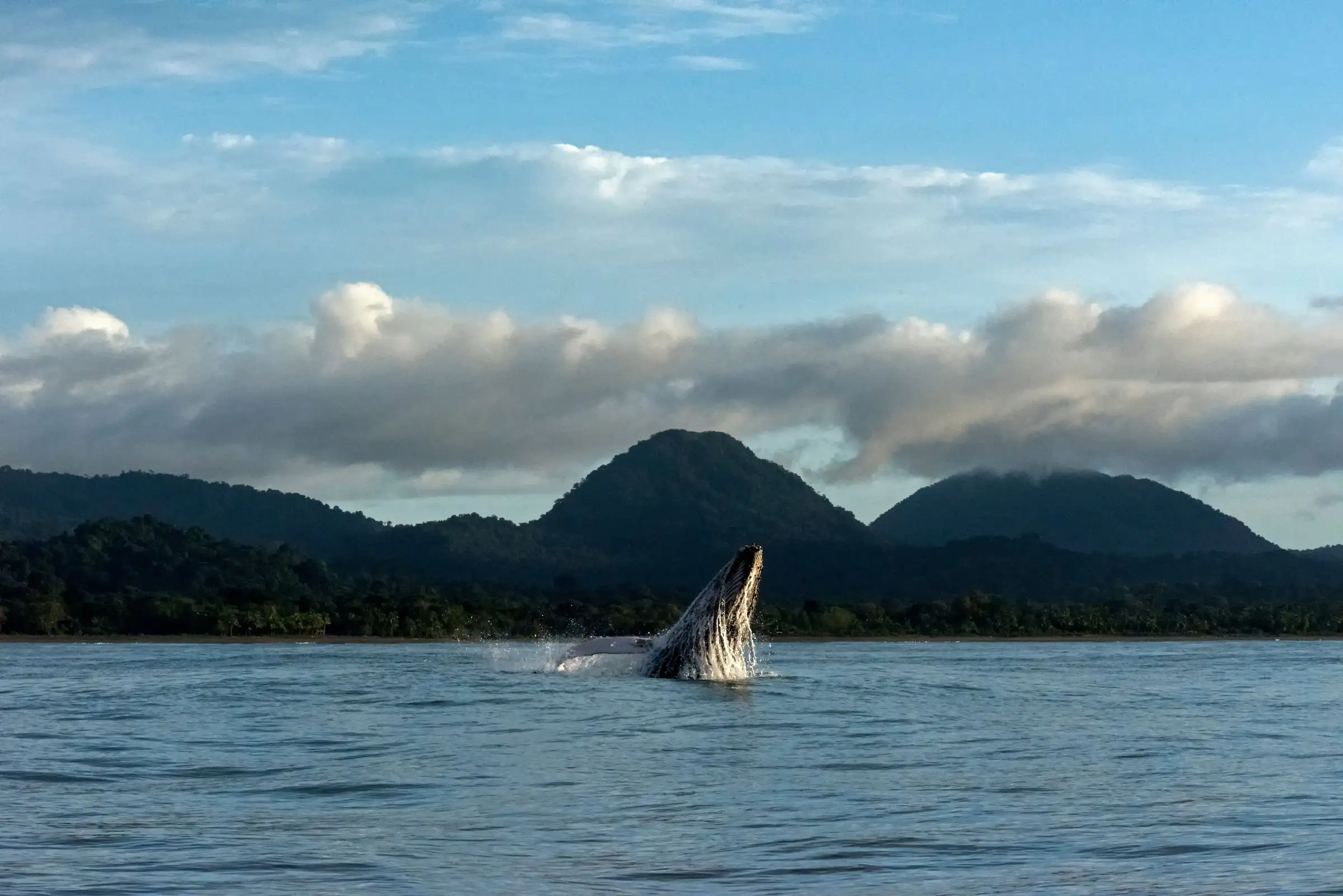
Humpback whales pass Bahía Solano and El Valle from July to October, peaking in August and September, as everywhere in Chocó. The difference from Nuquí is that here you can book trips on their own, without a package: operators in Ciudad Mutis work inside the bay and along the coast towards Huina, while from El Valle you head out onto the open sea towards Utría, where whales often come in close to shore.
At the start of the season the Dimar inspects boats in Bahía Solano, and the rules are the same as in the Nuquí guide (at least 200 metres/650 feet from the whales, low speed, never chasing them). Trips sold on tour sites are priced in euros; one local operator’s 2026 package with transfers, hikes and two whale-watching trips cost 1,190,000 pesos per person. Rough seas mean postponed trips, so keep at least two mornings free.
Hiking to Utría National Park from El Valle
El Valle is the nearest gateway to Utría National Park (Parque Nacional Natural Utría) and the point on the coast from which you can get there on foot. The El Valle-Utría trail is about 9-10 km (6 miles) long through forest, rivers and hills: sources say 2-3 hours’ walking, often on muddy ground. A guide is compulsory: book one through your guesthouse or El Valle’s guide associations. Alternatively, take a boat (about an hour) and walk one way.
The park rules are covered in the Nuquí guide: the entrance fee is 80,000 pesos for non-resident foreigners, it’s day visits only, and there’s no lodging or restaurant in the park. In April 2023 the national parks service closed Utría to visitors after a group of El Valle residents occupied the park headquarters to demand a flood wall on the Valle river; the occupation ended on 8 April 2023 with an agreement with the government, and the park receives visitors again (the parks service restated its visiting rules in August 2026). A 2024 parks document showed the Valle-Utría and Cocalito guided routes ready, but trail maintenance funds still pending: ask your guide about trail conditions before setting off.
Playa Almejal and surfing
Playa Almejal is the long dark-sand beach north of El Valle, backed by forest, with cabins and eco-lodges facing the sea. It’s the place for surfing, with beach breaks suited to surfers with some experience: ask your guesthouse where to rent a board.
The currents are strong, though: after three people drowned in September 2025 the municipality asked visitors to swim only in designated areas. Only go in where locals swim, never alone, and never in big seas or in the evening.
Playa Mecana and the Jardín Botánico del Pacífico
Mecana is a beach north of Ciudad Mutis at the mouth of the Mecana river, where the Jardín Botánico del Pacífico foundation protects about 170 hectares (420 acres) of riverside forest, with trails and an eco-hotel. You can walk along the beach in about an hour, leaving at low tide, or take a 15-minute boat ride; one guidebook quotes about 60,000 pesos for the boat, though the figure isn’t recent. Ask the eco-hotel in advance about guided visit times and fees.
Waterfalls: El Tigre and the airport falls
The waterfalls are the reason to stay a few days even outside whale season.
- Cascada del Tigre: north of Playa Almejal, with pools for swimming. The easiest way is by boat from El Valle; there’s a demanding coastal trail on foot, and sources give very different times (from half an hour after a boat drop-off to about 4 hours from El Valle). Go with a guide.
- Airport waterfall and El Chocolatal: a guided hike of about 6 hours takes you to these two falls, pool by pool through the forest. Tour sites sell it too, starting from Ciudad Mutis.
Canoeing the Tundó river
From El Valle you paddle up the Tundó river in a traditional canoe, without a motor, through mangroves and forest, then walk about an hour to a small waterfall; on some tours you float back down on an inner tube. The trip takes about 4 hours and is ideal on rough-sea days; the meeting point is usually the San Rafael church in El Valle.
Diving the Sebastián de Belalcázar wreck
Off Huina, about 35 minutes by boat from the pier, lies the wreck of the Sebastián de Belalcázar, a Colombian Navy ship about 63 metres (207 feet) long, deliberately sunk on 2 September 2004 as an artificial reef. It sits at around 30 metres (100 feet) on a silty bottom and you can penetrate the hull: you need at least Advanced Open Water certification. Only a few dive centres operate in Bahía Solano, so book ahead and check whether the day’s conditions allow the dive.
Sport fishing: what has changed
For years Bahía Solano was one of Colombia’s best-known sport fishing destinations (marlin, sailfish, dorado/mahi-mahi, tuna, wahoo). But in ruling C-148 of 2022 the Constitutional Court held that sport fishing is not an exception to the animal cruelty law, with effect one year later: since then it has no longer been allowed in Colombia, not even catch-and-release. In June 2026 the mayor asked the Court to reconsider, as many families made a living from it.
If someone offers you a sport fishing trip, be aware it currently has no legal basis. To see local fishing, go to the pier when the small-scale fishermen come in; they work in a zone reserved for them.
Birdwatching and food
The forest between El Valle and Utría is part of the Chocó biogeographic region, one of the places with the most endemic species on earth: with a guide at dawn, on the Utría trail or along the Tundó, you’ll see toucans, hummingbirds and, on the coast, boobies and frigatebirds. Food here is mostly fresh fish, from pargo (snapper) to tuna, often with coconut rice and patacones (fried green plantain): Bahía Solano is one of the ports that supplies fish to the rest of Colombia for Holy Week.
Communities and community tourism
Much of the land around Bahía Solano and El Valle belongs to Afro-Colombian consejos comunitarios (community councils): the Consejo Comunitario General Los Delfines, with the local councils of El Cedro and Río Valle, signs agreements with the national parks service to manage the area around Utría. Inland live Emberá indigenous communities, in their resguardos (reserves). Guide associations, boatmen and most of El Valle’s guesthouses are run by local families.
- Choose local guides from El Valle’s associations: they’re compulsory in Utría anyway, and they know the tides and trails.
- Pay community fees for trails and turtle releases without haggling.
- Emberá communities are visited only on trips organised and accepted by the community; always ask before taking photos.
Where to stay in Bahía Solano and El Valle
| Area | Best for | Good to know |
|---|---|---|
| El Valle (village) | budget travellers who want turtles and the Tundó on foot | simple guesthouses and hostels, the cheapest on the coast |
| Playa Almejal | sea views and surfing | cabins and eco-lodges, priced in dollars on booking sites |
| Ciudad Mutis | late arrivals, early flights, divers | handy for airport and pier, poor beach |
| Huina | diving and whales in the bay | a few beachfront hotels, reached by boat |
| Mecana | seclusion in the forest | eco-hotel inside the botanical garden |
On booking sites, almost all prices for Bahía Solano and El Valle are shown in dollars: hostel beds in El Valle are among the cheapest on Colombia’s Pacific coast, while beachfront cabins at Almejal cost several times as much. Many El Valle guesthouses take bookings only by phone or WhatsApp: ask whether the price includes breakfast, the airport transfer and how many hours a day there’s electricity.
Packages: they’re not as essential here as in Nuquí, but they’re handy in whale season. One local operator’s 2026 package with transfers, hikes and two whale-watching trips cost 1,190,000 pesos per person; always ask whether it includes flights, the tourist tax and the Utría fee. Agencies and accommodation must have a National Tourism Register (RNT) number: ask for it and check it on the official portal.
How many days in Bahía Solano: sample itinerary
Allow 4-5 days for Bahía Solano and El Valle, plus a night in Medellín before and after for the flights. With 3 days you’ll fit in Utría and whales, but risk missing them if the sea is rough; with 6-7 days you can add Nuquí.
- Day 1: morning flight from Medellín Olaya Herrera, tax on arrival, jeep or motorbike taxi to El Valle. Afternoon on Playa Almejal and, in season, a turtle release at sunset.
- Day 2: whale watching in the morning (July-October) or Cascada del Tigre; free afternoon on the beach.
- Day 3: Utría National Park with a guide, hiking in and returning by boat.
- Day 4: canoe on the Tundó in the morning; in the afternoon, transfer to Ciudad Mutis or Huina.
- Day 5: walk to Mecana at low tide or a wreck dive, then an afternoon flight to Medellín if the schedule allows.
Combining it with Nuquí: fly into one airport and out of the other, for example Medellín-Bahía Solano, 3-4 nights in El Valle, boat or flight to Nuquí, 3 nights in a lodge, Nuquí-Medellín. Utría lies in between: visit it from El Valle and spend your Nuquí days on hot springs and waterfalls. Before and after, stay in Medellín, near Olaya Herrera airport.
Best time to visit Bahía Solano: month by month
Bahía Solano is hot and humid all year, averaging around 25-26 °C (77-79 °F), and very wet: about 5,000 mm (200 inches) of rain a year according to Dimar, slightly less than Nuquí. It rains every month, often at night or in short heavy bursts, with sunny spells in between.
| Months | What’s happening | Rain |
|---|---|---|
| January-March | last turtle releases in January, calmer seas, empty beaches | the least rainy period |
| April-June | forest, waterfalls and surf; Holy Week brings Colombian visitors | increasing |
| July-October | whales, first turtle nesting; flights and guesthouses fill up | the wettest, peaking in August |
| November-December | turtle releases, Colombian holidays from mid-December | still heavy |
Tides matter here: during each month’s highest tides (Dimar flagged, for example, those between 6 and 15 November 2026) the sea covers the beaches and the walk to Mecana is only possible at certain times.
Practical tips: money, power, internet and health
- Cash: Ciudad Mutis has a single ATM and it’s often out of order; El Valle has none. Bring pesos from Medellín for the tax, transport, guides, the Utría fee and donations. More on cards and fees in the guide to money in Colombia.
- Electricity: the municipality had long outages in 2026. In March, after a power-plant failure, there were about eight days of rationing with 3-hour cuts at peak times (over 30 hours in some neighbourhoods, according to the municipal ombudsman), and in May the village of Cupica went two weeks without power. The Ministry of Energy has announced a 4-megawatt solar park. Bring a power bank and a headlamp.
- Internet: mobile signal and wifi are slow and patchy, especially outside the villages.
- Health: according to the Pan American Health Organization, Bahía Solano only has primary-level health services. For anything serious you fly to Medellín or Quibdó, so travel insurance with medical evacuation is essential. Chocó has malaria and dengue: ask your doctor about antimalarials, use a strong insect repellent and sleep under a net.
- Water: drink bottled or filtered water.
- What to pack: rain jacket, quick-dry synthetic clothes, closed sandals or water shoes for boat landings and rivers, light hiking shoes for Utría’s mud, and dry bags.
How much does Bahía Solano cost?
| Item | Approximate price |
|---|---|
| Medellín-Bahía Solano flight | from about 177,400 pesos one way (Satena), more in season |
| Tourist tax | 55,000 pesos for foreigners, 40,000-41,000 for Colombians |
| Airport-El Valle shared jeep | about 15,000 pesos per one traveller (to be checked) |
| Nuquí-Bahía Solano flight | about 312,000-370,000 pesos one way |
| Utría National Park entrance fee | 80,000 pesos for foreigners, 28,000 for Colombians |
| Boat to Mecana | about 60,000 pesos per one guidebook |
| Package with 2 whale-watching trips | about 1,190,000 pesos per person (2026) |
Mistakes to avoid
- Staying in Ciudad Mutis expecting a beach holiday: the town beach is the weakest and the best trips start from El Valle.
- Arriving without cash: one ATM for the whole municipality, often broken.
- Swimming at Playa Almejal in big seas or away from where locals swim.
- Taking informal boats at the pier or towards Juradó: only use registered operators.
- Going to Utría without a guide or without checking the state of the trail.
- Booking a sport fishing trip: it hasn’t been allowed in Colombia since 2023.
- Booking an international flight on the same day you leave Bahía Solano.
- Setting off for Mecana at high tide: the beach closes and you get stuck.
FAQ
How do you get to Bahía Solano?
By plane: Satena, Clic and Moon Flights fly from Medellín’s Olaya Herrera airport in about an hour, and Satena also flies from Quibdó and, twice a week, from Cali. From the airport, El Valle is about 45 minutes away by jeep or motorbike taxi.
How much is the Bahía Solano tourist tax?
Operators’ 2026 price lists give 55,000 pesos for foreigners and 40,000-41,000 for Colombians, paid in cash on arrival; children under 10 are exempt. The official resolution is hard to find, so have the cash ready.
When can you see sea turtles in El Valle?
Olive ridley turtles nest on Playa Cuevita from July, and hatchling releases run roughly from September to January. You join the local associations at sunset and leave a donation.
Can you hike from El Valle to Utría National Park?
Yes: the trail is about 9-10 km (6 miles) and takes 2-3 hours through the forest, always with a guide, which is compulsory. Many people hike in and return by boat; the entrance fee is 80,000 pesos for foreigners.
Bahía Solano or Nuquí?
Bahía Solano and El Valle suit travellers who want to organise things themselves, spend less, and see turtles and hike to Utría; Nuquí is better for a secluded full-board lodge with hot springs and waterfalls nearby. Both are great for whale watching.
Some links are affiliate links: if you buy through them I earn a small commission, at no extra cost to you. How it works
Nearby and worth combining
Pacific coast
Nuquí and Utría National Park
Nuquí, Colombia: humpback whales breaching near shore and jungle meeting the Pacific. Flights from Medellín, boat-access lodges, Utría park and prices.