When to go
When to visit Colombia
The best time to visit Colombia, region by region: weather month by month, rainy seasons, peak season, Tayrona closures, whale season and festivals.
In this guide
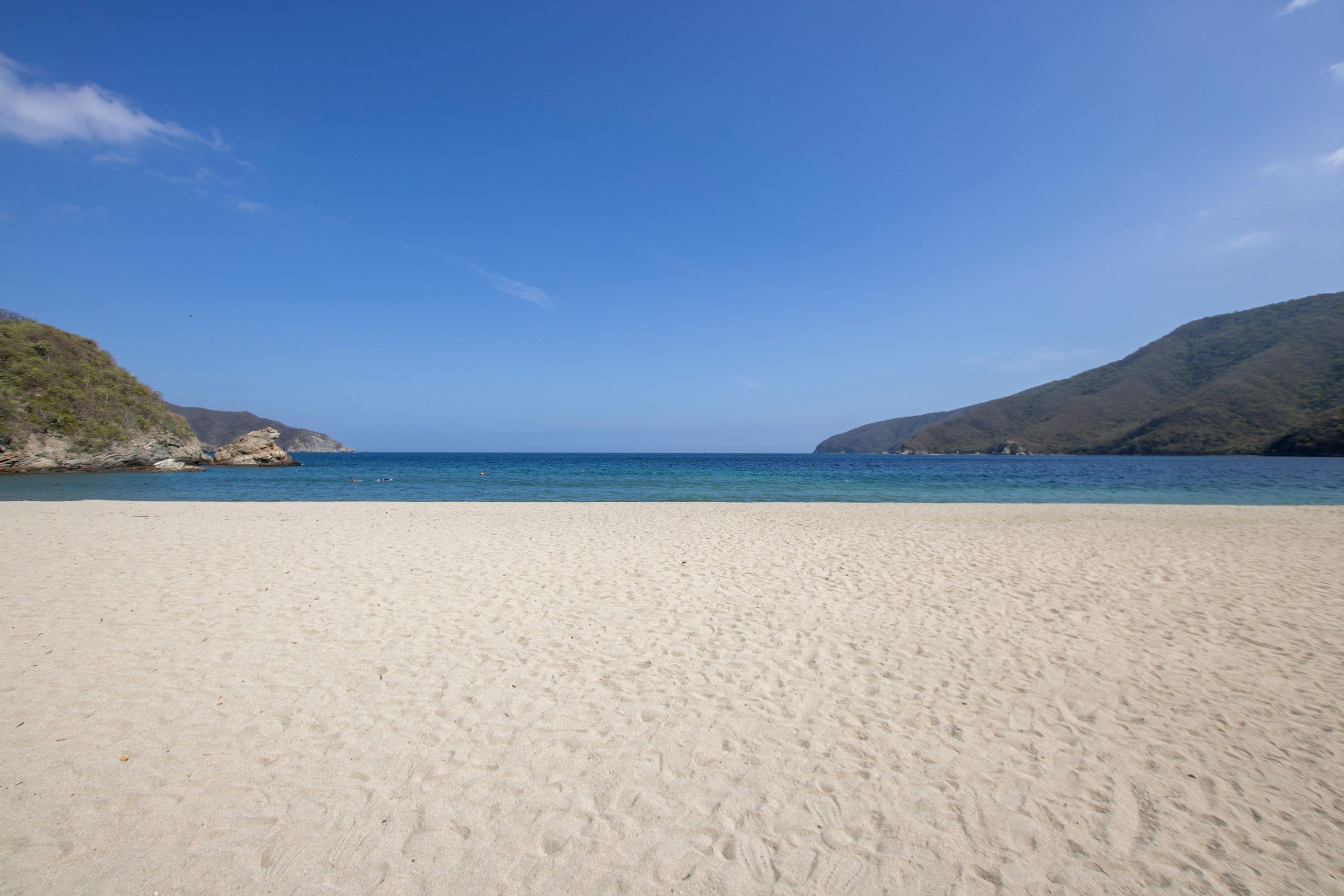
The best time to visit Colombia is December to March: it’s the driest season in both the Andes and on the Caribbean coast, so you can combine Bogotá, Medellín, the Coffee Region and the beach with little rain. The second good window is July-August, great for the Andes and for seeing whales on the Pacific. That said, Colombia works all year round: there’s no summer or winter here, temperature changes with altitude, and rain usually comes as an afternoon downpour. Here’s how to pick the right month for where you want to go.
Colombia’s climate depends on altitude
In Colombia the temperature barely changes through the year: what matters is how high up you are. Colombians split the country into “thermal floors”, and on a single trip you can go from swimwear to a down jacket.
| Zone | Altitude | Where | Typical temperatures |
|---|---|---|---|
| Tierra caliente | up to 1,000 m | Caribbean coast, Pacific, Amazon | 24-33 °C (75-91 °F) |
| Tierra templada | 1,000-2,000 m | Medellín, Coffee Region, Cali | 17-28 °C (63-82 °F) |
| Tierra fría | 2,000-3,000 m | Bogotá, Villa de Leyva, Boyacá | 7-20 °C (45-68 °F) |
| Páramo | above 3,000 m | Los Nevados, high mountains | below 10 °C (50 °F), freezing nights |
These are the average temperatures in the most visited places, and they hold more or less all year:
| City | Altitude | Highs | Lows |
|---|---|---|---|
| Cartagena | sea level | 31-32 °C (88-90 °F) | 24-25 °C (75-77 °F) |
| Santa Marta | sea level | 31-33 °C (88-91 °F) | 23-25 °C (73-77 °F) |
| Medellín | 1,495 m | 27-28 °C (81-82 °F) | 16-18 °C (61-64 °F) |
| Salento | about 1,900 m | 22-24 °C (72-75 °F) | 13-15 °C (55-59 °F) |
| Bogotá | about 2,600 m | 19-20 °C (66-68 °F) | 7-9 °C (45-48 °F) |
| Leticia (Amazon) | about 100 m | 31-32 °C (88-90 °F) | 22-23 °C (72-73 °F) |
Dry season and rainy season
Colombia doesn’t have four seasons but alternates between dry spells (verano) and rainy spells (invierno), and they differ from region to region.
- Andes (Bogotá, Medellín, Coffee Region): two dry seasons, December to March and July to August, and two rainy ones, April-May and October-November. Even in the rainy months it rarely rains all day: mornings are usually clear and the downpour comes in the afternoon.
- Caribbean coast (Cartagena, Santa Marta, Tayrona): dry and breezy from December to April; June-July brings a drier break (the veranillo), then rain builds to a peak in October. It’s hot all year.
- Pacific coast (Nuquí, Bahía Solano): one of the wettest places on earth, with rain every month. You go for the whales and the wildlife, not the sunshine.
- Amazon (Leticia): it rains all year, but what really matters is the river level, which changes the excursions (more on that below).
In recent years El Niño and La Niña have made the seasons less predictable: a “dry” month can be wetter than usual, and vice versa. Check the forecast in the days before you leave and keep a spare day for outdoor trips.
Colombia weather month by month
| Month | Andes | Caribbean coast | What’s on |
|---|---|---|---|
| January | dry | dry and breezy | peak season until mid-month; Carnaval de Negros y Blancos in Pasto |
| February | dry | dry and breezy | Tayrona closed in the first half of the month; often Barranquilla Carnival |
| March | dry, rain late in the month | dry | Holy Week in March or April |
| April | rainy | dry and very hot | Holy Week; Vallenato Festival late in the month |
| May | rainy | rain increasing | low season, lower prices |
| June | rain easing | drier break | Tayrona closed in the first half of the month; school holidays from mid-month |
| July | dry | hot, fairly dry | school holidays; whale season begins |
| August | dry | hot and humid, more rain | Medellín Flower Festival; peak whale season |
| September | rain increasing | rainy | whales on the Pacific; low season |
| October | rainy | wettest month | Tayrona closed from late October to early November |
| November | rainy | rainy, improving late in the month | Cartagena independence celebrations (11 November) |
| December | dry from mid-month | dry and breezy | peak season from mid-month; Christmas lights in Medellín; Feria de Cali |
The best time to visit, region by region
| Area | Best time | Good to know |
|---|---|---|
| Caribbean coast | December-April | Tayrona National Park closes three times a year |
| Bogotá and Boyacá | December-February, July-August | cool all year, you’ll want a jacket in the evening |
| Medellín and the Coffee Region | December-March, July-August | short downpours possible in any month |
| Pacific coast | July-October | humpback whale season |
| Amazon | all year | high or low water changes the excursions |
| Lost City (Ciudad Perdida) trek | December-March | the trail gets very muddy in the rainy months |
Tayrona National Park closures
Tayrona National Park closes three times a year to give the ecosystem and the Sierra Nevada’s Indigenous communities a rest. In 2026 the closures were 1-15 February, 1-15 June and 19 October to 2 November; the dates have been almost identical in recent years, but Parques Nacionales confirms them every year. If Tayrona is a must on your trip, check the official calendar before booking flights.
When to see whales on the Pacific coast
Humpback whales come to Colombia’s Pacific coast to breed between July and October, peaking in August and September. The easiest places to reach are Nuquí and Bahía Solano in Chocó, with Utría National Park in between: you get there by plane, usually from Medellín. Other whale-watching spots, such as Gorgona Island and Bahía Málaga, mean travelling through areas covered by government travel warnings (see our guide to safety in Colombia). The first whales sometimes show up in late June, but if you want to play it safe, go in August.
Amazon: high water or low water
It rains all year in the Amazon; what changes is the level of the river, which can rise and fall by several metres. Sources don’t agree on the exact dates, but roughly:
- High water, roughly December to May: the forest floods, you get around more by boat and canoe and pink river dolphins are easier to spot.
- Low water, roughly August to October: beaches and trails appear, you walk more, it rains less but the sun is fierce.
Neither is the “wrong” time: choose based on what you’d rather do and ask the operator running your trip.
Peak season and prices in Colombia
The busiest and most expensive weeks are Colombian holiday periods:
- mid-December to mid-January, the priciest time of all, especially on the coast;
- Holy Week (March or April);
- mid-June to late July, during the school holidays;
- one week in October, when schools take a break.
In these periods domestic flights and accommodation cost more and beaches are packed: book a few months ahead. To plan your journeys around them, read our guide to getting around Colombia.
Watch out for puentes festivos too: by law many public holidays move to the Monday, which gives around fifteen long weekends a year. On those weekends places near the big cities (Guatapé, Villa de Leyva, Salento) fill up and buses leave full. Check the festivos calendar before you fix your weekend stops.
The cheapest months, if you don’t mind some rain, are May and September to November (long weekends aside).
Festivals and events in Colombia
- Carnaval de Negros y Blancos in Pasto (2-7 January): UNESCO-listed, with one day when everyone paints their face black and another of white talc.
- Barranquilla Carnival (February or early March, the four days before Ash Wednesday): the biggest in the country and UNESCO-listed. Book accommodation months ahead.
- Holy Week in Popayán (March or April): night-time processions held for centuries, also on the UNESCO list.
- Festival de la Leyenda Vallenata in Valledupar (late April or early May): the celebration of vallenato music.
- Feria de las Flores in Medellín (early August, about ten days): the highlight is the parade of silleteros, who carry huge flower arrangements on their backs.
- Festival Petronio Álvarez in Cali (August): the festival of Afro-Colombian music from the Pacific.
- Alumbrados in Medellín (December to early January): Christmas lights along the river and across the neighbourhoods.
- Feria de Cali (25-30 December): salsa, concerts and parades.
Exact dates change every year: check them on the cities’ official websites before planning your trip around an event.
What to pack
On a single trip you go from 32 °C (90 °F) on the coast to 7 °C (45 °F) on a Bogotá night, so the rule is layers:
- light, breathable clothes for the coast and the Amazon;
- a fleece or jumper and a light jacket for Bogotá, Salento and mountain evenings;
- a rain jacket or poncho, useful in every season;
- closed shoes for the trails (Cocora and Tayrona get muddy), high-factor sunscreen and mosquito repellent.
Frequently asked questions
What is the best month to visit Colombia?
For most of the country the best time is December to March, with late January to March combining dry weather and fewer crowds. July and August are a great alternative for the Andes and the Pacific coast.
When is the rainy season in Colombia?
In the Andes it rains mostly in April-May and October-November, usually as afternoon downpours. On the Caribbean coast the wettest period runs from September to November, peaking in October; on the Pacific coast it rains all year.
Is August a good time to visit Colombia?
Yes, especially if you’re visiting the Andes and the Pacific: August is dry season in Bogotá, Medellín and the Coffee Region, it’s Flower Festival time and the best month for whales. On the Caribbean coast it’s very hot and the odd storm is possible.
When can you see whales in Colombia?
On the Pacific coast from July to October, peaking in August and September. The easiest places to get to are Nuquí, Bahía Solano and Utría National Park in Chocó, with flights mostly from Medellín.
Is Colombia cold?
Only in the mountains: in Bogotá, at about 2,600 metres, highs are 19-20 °C (66-68 °F) and at night it drops below 10 °C (50 °F). The Caribbean coast is hot all year, with highs of 31-32 °C (88-90 °F).
Some links are affiliate links: if you buy through them I earn a small commission, at no extra cost to you. How it works
More practical guides
Practical info
Colombia time zone: what time it is and the difference with the UK and US
Colombia's time zone explained: UTC-5 all year with no daylight saving, the difference with London and US cities, sunrise and sunset times and beating jet lag.
Flights
Flights to Colombia: nonstops, connections, airports and prices
Flights to Colombia from the UK and the US: nonstop routes, the easiest connections, which airport to fly into, when to book and what you need at check-in.
Getting around
Getting around Colombia
How to get around Colombia: domestic flights, buses, shuttles, taxis, apps and city transport, with travel times between cities, rough prices and tips.