City · Southwest
Popayán
Popayán, Colombia travel guide: things to do in the White City, Holy Week, flights and Puracé volcano ash, where to stay, prices and Cauca safety advice.
In this guide
- Is Popayán safe?
- How to get to Popayán
- Puracé volcano and the earthquake: the situation in 2026
- Things to do in Popayán
- Holy Week in Popayán
- What to eat in Popayán
- How many days: a 2-day itinerary
- Day trips from Popayán: what you can do now
- Where to stay in Popayán
- How much does Popayán cost?
- Best time to visit Popayán
- Mistakes to avoid
- Frequently asked questions
Popayán is Colombia’s White City: a colonial centre where every façade is whitewashed, a dozen churches, museums in the former homes of presidents and poets and, in March or April, the UNESCO-listed Holy Week processions. In 2005 it also became the world’s first UNESCO City of Gastronomy. I’d allow 1-2 days, more only for Holy Week. Below you’ll find things to do, how to get there (in 2026 the Puracé volcano disrupted flights), where to stay, what it costs and what travel advice says about Cauca.
Is Popayán safe?
You can visit Popayán with the usual precautions for a Colombian city, and it’s the only part of Cauca that travel advice doesn’t warn against. Here’s what governments say:
- US State Department (advisory of 31 March 2026): Level 4, “Do not travel”, for all of Cauca except Popayán. US government employees may only travel to Popayán with permission.
- UK Foreign Office (FCDO): advises against all but essential travel to all of Cauca except the departmental capital, Popayán.
The advice excludes the city, not the roads leading to it. The Pan-American Highway from Cali and the road to San Agustín cross rural areas where armed groups operate: between 24 and 27 April 2026 a wave of bomb attacks hit Cauca and Valle del Cauca, including one device that exploded on the Pan-American Highway. Popayán is also a frequent focus of protests and road blockades (paros) that can shut the highway for days. That’s why I recommend flying in and out and skipping day trips outside the city.
In town the usual rules apply: don’t walk around with your phone in your hand, use taxis booked through an app or your hotel at night, and don’t climb Morro de Tulcán or Belén hill alone, especially after sunset. The historic centre is calm by day but empties early in the evening. All the rules are in our guide to safety in Colombia.
How to get to Popayán
Guillermo León Valencia Airport (PPN) is on the north side of the city, about 2 km from the historic centre: 5-10 minutes by taxi.
- By air from Bogotá: the only direct link with a major city, with Avianca and Clic, about an hour’s flight. From Medellín, Cartagena or abroad you connect in Bogotá.
- By bus from Cali: 3-4 hours on the Pan-American Highway, with frequent departures from Cali’s Terminal de Transportes. It’s the route Colombians use, but it crosses northern Cauca, which the FCDO and the State Department advise against, and it’s the stretch most affected by attacks and blockades. I wouldn’t take it.
- From the south (Pasto, Ecuador): the highway to Pasto crosses southern Cauca, also advised against, and is prone to landslides. Fly via Bogotá.
You won’t need transport in town: from Parque Caldas, the Puente del Humilladero, Morro de Tulcán and the main churches are 15 minutes’ walk at most. Use taxis for the airport, the bus terminal and evenings; you can also book them through apps, including Uber. To compare flights and buses across the country, read how to get around Colombia.
Puracé volcano and the earthquake: the situation in 2026
Puracé, less than 30 km from the city as the crow flies, is one of Colombia’s most active volcanoes. On 1 August 2026 the Colombian Geological Survey (SGC) raised the alert from yellow to orange, with ash emissions that repeatedly shut the airport; on 29 September it lowered it back to yellow. Yellow means the volcano is still active, not that it has calmed down.
What it means for visitors today:
- life in the city is normal; the practical risk is flight cancellations when the wind blows ash towards the airport;
- Puracé National Park reopened the San Nicolás, San Juan, San Rafael, Pilimbalá and Paletará sectors under Resolution 458 of 2 October 2026, but the trails to the Puracé crater and the Coconucos volcanic chain remain closed;
- before you travel, check the SGC bulletins and, on the day you fly, your airline’s notices.
The 10 August 2026 earthquake, centred in Chocó, did far less damage in Popayán than in Cali: the press reported damage to the roof of Santo Domingo church, a few damaged houses and power cuts, and the city had buildings in the historic centre inspected. There have been no reports of the main monuments closing, but no official assessment of the centre has been published: if one church matters to you, ask at your hotel whether it’s open.
Things to do in Popayán
| Sight | Entrance fee | Time |
|---|---|---|
| Parque Caldas, Torre del Reloj and cathedral | free | 1 hour |
| Churches of San Francisco, Santo Domingo and La Ermita | free | 1-2 hours |
| Puente del Humilladero | free | 30 minutes |
| Morro de Tulcán | free | 1 hour |
| Capilla de Belén | free | 1 hour |
| Casa Museo Mosquera | about 2,200 pesos (older figure) | 1 hour |
| Museo Arquidiocesano de Arte Religioso | about 5,000 pesos (older figure) | 1 hour |
| Casa Museo Guillermo Valencia | free in 2024 | 45 minutes |
| Museo de Historia Natural | check locally | 1 hour |
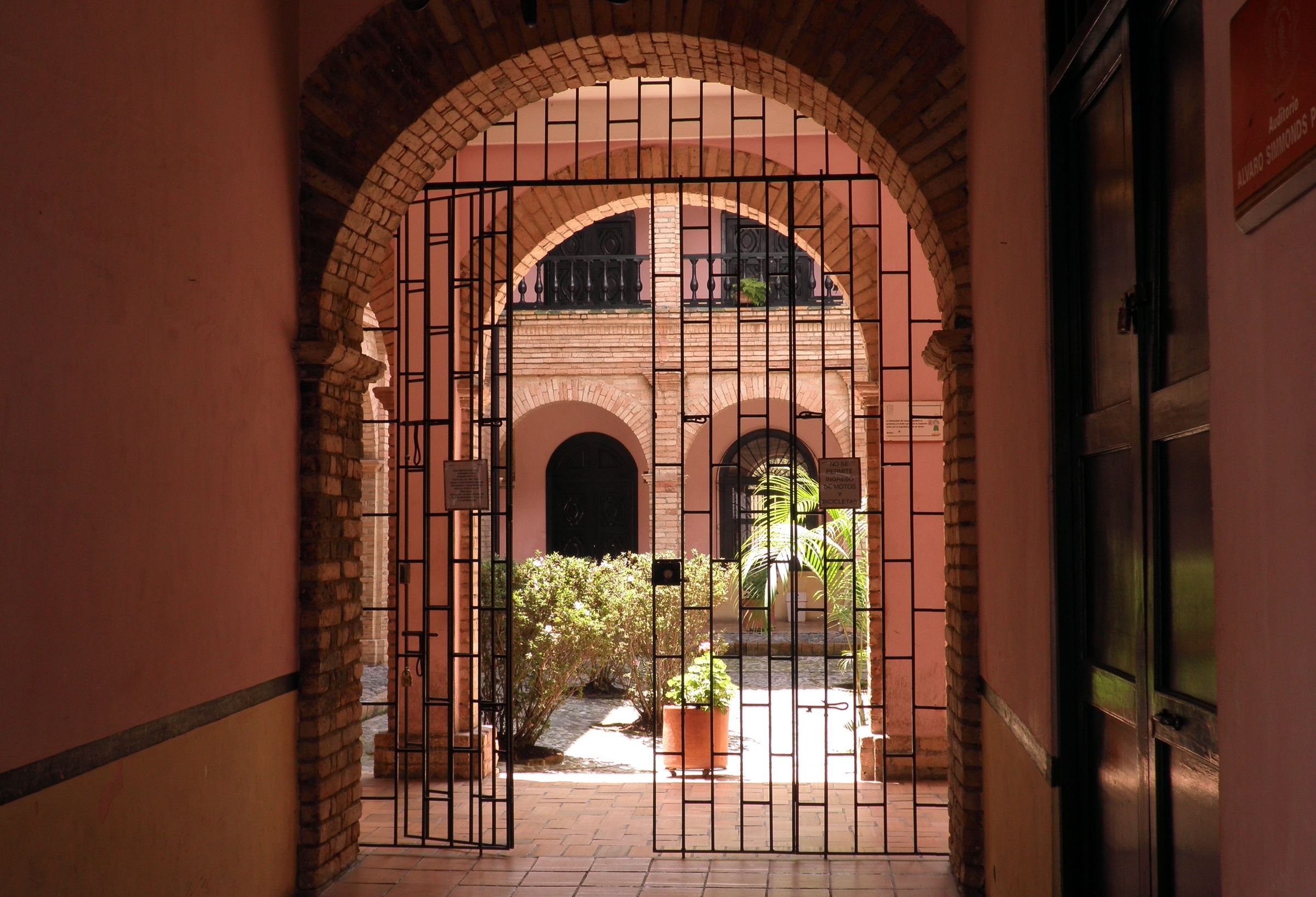
- Parque Caldas is the main square. Next to it stands the Torre del Reloj, the 17th-century brick clock tower locals call “the nose of Popayán”, with a one-handed English clock. The neoclassical cathedral was rebuilt after the 1983 earthquake, which destroyed much of the centre.
- The churches: San Francisco is the city’s largest colonial church, Santo Domingo has a baroque stone doorway and adjoins the University of Cauca, and La Ermita is the oldest. Many open only for Mass, early in the morning and late in the afternoon: if you find one closed, come back then and enter quietly.
- Puente del Humilladero is the long brick bridge from 1873 that once led into the city from the north; next to it is the small 18th-century Puente de la Custodia.
- Morro de Tulcán is a pyramid-shaped hill built in pre-Columbian times, about 15 minutes’ walk from the centre, with the best view over the white façades and rooftops. Go by day and with company.
- Capilla de Belén is the chapel on the hill east of the centre, reached by a stairway lined with the Stations of the Cross. The light is lovely in the afternoon, but come down before dark.
- The museums: Casa Museo Mosquera was the home of General Tomás Cipriano de Mosquera, four times president; Museo Arquidiocesano holds colonial silverwork, paintings and statues; Casa Museo Guillermo Valencia was the poet’s home (his son became president); the University of Cauca’s Museo de Historia Natural has one of the country’s most important bird collections. Opening hours and fees change often and the available figures aren’t recent, so treat them as a guide.
If you want the history and architecture explained in a few hours, a guided walking tour is the easiest option.
Holy Week in Popayán
The Holy Week processions are the reason many Colombians come to Popayán, and they have been on UNESCO’s Intangible Cultural Heritage list since 2009. They go out at night from Holy Tuesday to Holy Saturday: the cargueros carry the pasos, platforms bearing colonial statues decorated with flowers and candles, on their shoulders along a fixed route through the historic centre. There’s also a daytime procession on Palm Sunday.
In 2027 Easter Sunday falls on 28 March, so the night processions run from 23 to 27 March. The same week the Religious Music Festival holds concerts in the churches.
- Book your room 3-6 months ahead: hotels in the centre fill up and prices rise sharply.
- Get to the route at least an hour early, dress modestly and bring a jacket: nights are cool.
- It’s a religious ceremony, not a show: keep quiet as the pasos go by.
- The official programme is published by the Junta Permanente Pro Semana Santa a few months beforehand.
What to eat in Popayán
The signature dish is empanadas de pipián: small fried pastries filled with potato and peanuts, dipped in ají de maní, a spicy peanut sauce. Also try tamales de pipián, carantanta (crunchy corn crisps) and aplanchados, glazed puff-pastry biscuits. Every year, usually in September, the Congreso Gastronómico de Popayán brings chefs and cuisines from around the world to the city. The other dishes of the southwest are in our guide to Colombian food.
How many days: a 2-day itinerary
- Day 1 – Historic centre. In the morning Parque Caldas, the Torre del Reloj and the cathedral, then San Francisco, Santo Domingo and La Ermita. Lunch on empanadas de pipián; in the afternoon the Puente del Humilladero and Morro de Tulcán, coming down before sunset.
- Day 2 – Museums and Belén. Casa Museo Mosquera and the Museo Arquidiocesano in the morning, the Museo de Historia Natural or Casa Museo Guillermo Valencia after lunch, and the climb to Capilla de Belén in the afternoon.
With just one day, do the centre and the churches in the morning, one museum and Morro de Tulcán in the afternoon. For Holy Week, allow 3-4 nights.
Day trips from Popayán: what you can do now
The classic day trips from Popayán are all in rural Cauca, the areas the State Department and the FCDO advise against. Before deciding, read your government’s advice and check your travel insurance: many policies don’t cover advised-against areas.
- Silvia (about an hour and a half north-east) is famous for its Tuesday market, when the Misak people come into town in their blue clothes. In May 2026 clashes between Misak and Nasa communities led the army to deploy in the town: for now I’d skip it.
- Coconuco (about an hour south-east) has the Agua Hirviendo and Aguas Tibias hot springs. It sits at the foot of Puracé: during the orange alert, temporary shelters were set up in Coconuco and Paletará. At the end of October 2026 there was no up-to-date news on whether the springs were open: ask at your hotel before going.
- Puracé National Park reopened some sectors on 2 October 2026, but not the trails to the crater. The 2026 fees published in the press start at 16,500 pesos, but it isn’t clear what non-resident foreigners pay: check with Parques Nacionales and only go with an authorised guide.
- The road to San Agustín runs via Coconuco, Paletará and Isnos, through Puracé National Park: about 136 km, with a stretch that is still unpaved. It’s the most direct route, but it crosses advised-against areas close to the volcano. The alternative is to fly back to Bogotá, then on to Neiva, and take a 4-5 hour bus, as explained on our page about southwest Colombia.
Where to stay in Popayán
| Area | Pros | Cons |
|---|---|---|
| Historic centre | hotels in colonial houses, everything on foot, floodlit façades at night | streets empty after dinner, high prices in Holy Week |
| North (towards the airport and bus terminal) | modern and chain hotels, shopping malls, handy for flights | little atmosphere, you need a taxi to the centre |
Typical prices per night: 40,000-70,000 pesos for a dorm bed, 120,000-300,000 for a double room in a hotel, more in boutique hotels in colonial houses. Prices rise sharply in Holy Week.
I’d stay in the historic centre: Popayán is a city for walking, and it’s at its best in the evening, when the white façades are lit up. Avoid fincas and rural lodgings outside the city, which are in areas covered by the travel warnings.
How much does Popayán cost?
| Item | Typical price |
|---|---|
| Churches, Morro de Tulcán, Puente del Humilladero | free |
| Casa Museo Mosquera | about 2,200 pesos (older figure) |
| Museo Arquidiocesano de Arte Religioso | about 5,000 pesos (older figure) |
| Casa Museo Guillermo Valencia | free in 2024 |
| Puracé National Park | from 16,500 pesos |
| Dorm bed | 40,000-70,000 pesos |
| Double room in a hotel | 120,000-300,000 pesos |
Best time to visit Popayán
Popayán sits at about 1,760 metres, so it’s mild all year round, with highs around 23-24 °C (73-75 °F) and cool nights of about 13 °C (55 °F). The driest months are December to February and June to August; March-May and October-November are the wettest. The most special time is Holy Week (21-28 March in 2027), which is also the most expensive; the Congreso Gastronómico is usually in September. The seasons in the rest of the country are in when to visit Colombia.
Mistakes to avoid
- Arriving by bus from Cali or heading to San Agustín on the Paletará road without checking first: fly.
- Booking a flight with no slack: in 2026 Puracé ash caused closures and cancellations.
- Climbing Morro de Tulcán or Belén hill alone or after dark.
- Turning up in Holy Week without a booking: hotels in the centre are full months ahead.
- Expecting churches to be open all day: many open only for Mass.
- Forgetting a jacket and umbrella: it’s cool in the evening and when it rains.
- Planning to climb Puracé: the trails to the crater are closed.
Frequently asked questions
Is Popayán safe to visit?
Yes, with normal precautions: US and UK travel advice excludes the city from the advised-against areas of Cauca. Both warn against the rest of the department, including the roads from Cali and towards San Agustín, so it’s best to fly in and out.
How do you get to Popayán?
By air from Bogotá with Avianca or Clic, in about an hour. In 2026 ash from the Puracé volcano caused airport closures and cancellations, so book a flexible fare and leave a spare day.
How many days do you need in Popayán?
One or two days are enough for the historic centre, the churches, a couple of museums and the viewpoints. For Holy Week, allow 3-4 nights.
When is Holy Week in Popayán in 2027?
Easter Sunday 2027 falls on 28 March: the night processions run from Tuesday 23 to Saturday 27 March, with a daytime procession on Palm Sunday, 21 March. The official programme is published by the Junta Permanente Pro Semana Santa.
Can you visit Puracé volcano?
Not up to the crater: since 2 October 2026 the park has reopened some sectors, but the trails to the volcano and the Coconucos chain remain closed. The park is also in rural Cauca, which travel advice warns against.
Some links are affiliate links: if you buy through them I earn a small commission, at no extra cost to you. How it works
Nearby and worth combining
Southwest
Cali
Cali, Colombia travel guide: things to do, where to learn salsa, best areas to stay, airport transfers, prices, safety and the city after the 2026 earthquake.