Getting around
Getting around Colombia
How to get around Colombia: domestic flights, buses, shuttles, taxis, apps and city transport, with travel times between cities, rough prices and tips.
In this guide
The best way to get around Colombia is almost always domestic flights for long distances and buses or shuttles for short hops. The country is bigger than Texas and nearly five times the size of the UK, and three mountain ranges run through it: cities look close on a map, but road journeys take a long time, and a one-hour flight can replace a twelve-hour bus ride. Here you’ll find travel times between the main cities, how flights, buses, taxis and city transport work, and the mistakes to avoid. To get to Colombia in the first place, see the guide to flights to Colombia.
Travel times between the main cities
| Route | By bus | By plane | My advice |
|---|---|---|---|
| Bogotá – Medellín | 9-10 hours | about 1 hour | fly |
| Medellín – Cartagena | 13-14 hours | about 1 hour 15 | fly |
| Bogotá – Cartagena | 18-20 hours | about 1 hour 30 | fly |
| Bogotá – Santa Marta | 16-18 hours | about 1 hour 30 | fly |
| Cartagena – Santa Marta | 4-5 hours | — | shuttle or bus |
| Santa Marta – Tayrona National Park | about 1 hour | — | local bus |
| Medellín – Guatapé | about 2 hours | — | bus |
| Medellín – Salento | 6-8 hours | fly to Pereira or Armenia | bus, or fly + 1 hour by bus |
| Bogotá – Salento | 8-9 hours | fly to Armenia | fly + 1 hour by bus |
Landslides and roadworks can add a couple of hours to mountain bus journeys: don’t schedule an international flight on the same day as a long road trip.
Domestic flights in Colombia
Domestic flights are the fastest and often the cheapest way to cover long distances. Most routes go through Bogotá or Medellín, but there are also direct flights between the coast and the Coffee Region.
| Airline | Type | Good to know |
|---|---|---|
| Avianca | full-service | the biggest network; checked bags aren’t always included in basic fares |
| LATAM | full-service | good network between the main cities |
| JetSMART | low-cost | low fares, pay extra for bags and seats |
| Wingo | low-cost | domestic flights plus Panama and the Caribbean |
| Satena | regional | small airports: Pacific coast, Amazon, Llanos |
| Clic | regional | regional routes, many from Medellín’s Olaya Herrera airport |
On low-cost sale fares a domestic flight starts at around 60,000-70,000 pesos one way without luggage; add a checked bag or travel in holiday periods and the price climbs fast. A few practical tips:
- Compare the final price: on basic fares with JetSMART, Wingo and often Avianca too, you pay extra for checked bags and sometimes for a large cabin bag.
- Check in online: some low-cost airlines charge for checking in at the airport.
- Arrive 1.5-2 hours early for domestic flights: security queues can be long in Bogotá and Cartagena.
- Check which airport: Medellín has two. Most domestic flights use José María Córdova (MDE), 45-60 minutes from the city; regional flights use Olaya Herrera (EOH), in town.
Long-distance buses
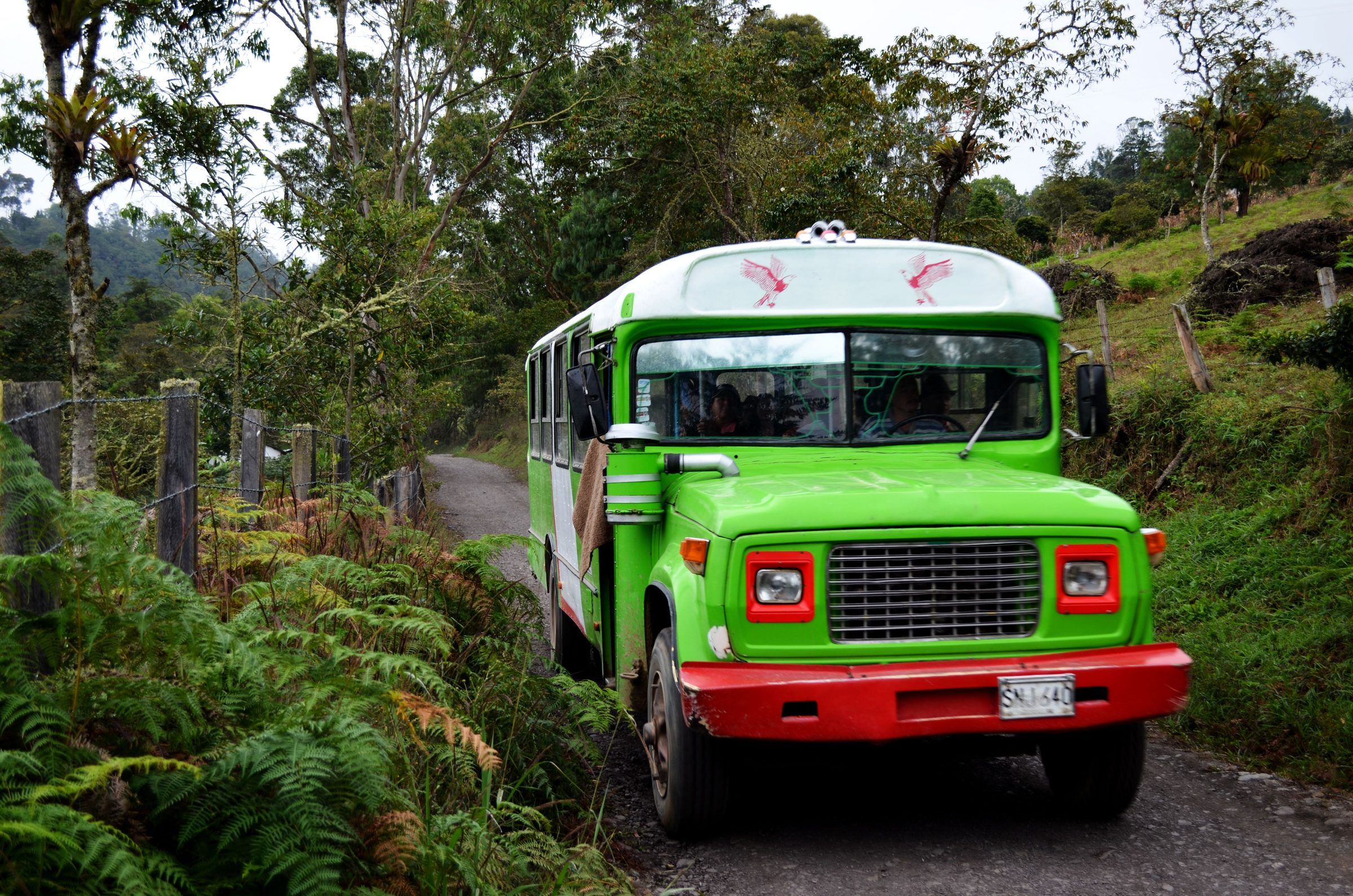
Buses link every city and leave from terminales de transporte (bus stations): Bogotá’s main one is Terminal Salitre, while Medellín has the Terminal del Norte (for the coast, Guatapé and the north) and the Terminal del Sur (for the Coffee Region and the south). The big companies run modern coaches with reclining seats, a toilet and air conditioning, often freezing: keep a hoodie and a light blanket handy.
- Tickets: buy them at the ticket windows in the bus station, where companies compete (compare times and prices at a few counters), or online on the companies’ websites and platforms such as Pinbus and Redbus.
- Rough prices: Bogotá-Medellín costs about 70,000-100,000 pesos, Cartagena-Santa Marta by shuttle about 50,000-85,000 pesos depending on the company, and short hops such as Medellín-Guatapé 25,000-30,000 pesos. Sources don’t always agree, and fares rise in holiday periods.
- Luggage: your suitcase goes in the hold with a tag; keep the bag with your documents, money and phone with you, on your lap.
- Checkpoints: there are police checkpoints on the main roads, and officers sometimes check passengers’ documents. Keep your passport handy.
For 2-5 hour journeys there are also minivans and busetas, faster but with less room. On the coast some companies offer puerta a puerta (door-to-door) shuttles, picking you up at your accommodation and dropping you at the next one: it costs a bit more but saves you the bus station. Mountain roads are full of bends, so bring something if you get travel sick. And whenever you can, travel by day.
Taxis and ride-hailing apps
- Bogotá and Medellín: yellow taxis have meters; make sure it’s switched on when you set off.
- Cartagena and Santa Marta: no meters, fares follow set zones. Ask the price before you get in and pay with small notes.
- Apps: Uber, DiDi, Cabify and inDrive all work in the big cities. Private-car services sit in a legal grey area in Colombia but are used every day; the upside is a clear price upfront and a tracked ride. Some apps let you book official taxis too.
- Airports: head for the official taxi rank. App drivers can sometimes only pick you up at meeting points outside the terminal.
- At night, don’t hail taxis in the street: book through an app or your hotel. Our guide to safety in Colombia explains why.
City transport: metro, TransMilenio and buses
| City | System | Fare per ride | Card |
|---|---|---|---|
| Medellín | metro, Metrocable (cable cars), tram and buses, all integrated | about 4,400 pesos | Cívica card |
| Bogotá | TransMilenio (bus rapid transit on dedicated lanes) and SITP buses | 3,550 pesos | TuLlave card |
| Cartagena | Transcaribe (bus rapid transit) | about 3,900 pesos | Transcaribe card |
Medellín’s metro is clean, fast and the best way to get around the city: the Metrocable cable cars are part of the same network and give you sweeping views over the valley. In Bogotá TransMilenio is quick but packed at rush hour (roughly 6-9am and 5-8pm), and pickpocketing is common: wear your backpack on your front. Bogotá’s first metro line is still under construction.
You buy and top up the cards at the stations, usually in cash: keep some small notes on you.
Renting a car in Colombia
You can drive in Colombia on your UK or US licence during a tourist stay; bring an International Driving Permit too, as police may ask for it at checkpoints. Driving takes patience, though: narrow, winding mountain roads, slow lorries, motorbikes overtaking on every side and roadworks.
- In the big cities pico y placa restricts driving on certain days and hours based on the last digit of the number plate: ask the rental company how it applies to your car.
- Tolls (peajes) are frequent on the main roads: keep cash handy.
- Don’t drive at night: animals, potholes and poor visibility.
In my view a car makes most sense in the Coffee Region and Boyacá, for exploring the small towns at your own pace; for the cities and long distances, flights and buses are simpler.
Boats and launches
In some areas the boat is the only option: to the Rosario Islands and Playa Blanca from Cartagena, to Tayrona from Santa Marta or Taganga, on the Pacific coast and on the Amazon at Leticia. The sea can be very rough, especially from December to March when the trade winds blow: keep your phone and documents in a waterproof bag, choose licensed operators and check there are life jackets for everyone on board.
Mistakes to avoid
- Underestimating distances: on the map Medellín-Cartagena looks short, but by bus it takes over 13 hours.
- Booking only the basic fare: with bags and a seat, a low-cost flight can cost more than Avianca or LATAM.
- Going to the wrong airport in Medellín: check whether your flight leaves from MDE or EOH.
- Travelling on long weekends without a ticket: buses and flights fill up on puentes festivos, so book ahead.
- Hailing a taxi in the street at night: use an app or have one called for you.
Frequently asked questions
What is the best way to get around Colombia?
Domestic flights for long distances (Bogotá to Cartagena in about an hour and a half instead of almost 20 hours by bus) and buses or shuttles for journeys under 5-6 hours, such as Cartagena-Santa Marta or Medellín-Guatapé.
Does Uber work in Colombia?
Yes: Uber, DiDi, Cabify and inDrive are widely used in the big cities, even though private-car services aren’t clearly regulated under Colombian law. For many travellers they’re the easiest and safest way to get around at night.
How much does a domestic flight in Colombia cost?
On low-cost sale fares a one-way flight starts at around 60,000-70,000 pesos without luggage. With a checked bag and in holiday periods prices rise sharply: book a few weeks ahead and compare the final price.
Are buses in Colombia safe?
On the main routes and with the well-known companies, yes, especially by day. Keep your documents and money in a bag on your lap, not in the overhead rack.
Can I rent a car in Colombia with a foreign licence?
Yes, during a tourist stay; it’s wise to bring an International Driving Permit as well. Drive carefully: mountain roads are slow, there are lots of motorbikes, frequent tolls and pico y placa restrictions in the cities.
Some links are affiliate links: if you buy through them I earn a small commission, at no extra cost to you. How it works
More practical guides

Practical info
Colombia time zone: what time it is and the difference with the UK and US
Colombia's time zone explained: UTC-5 all year with no daylight saving, the difference with London and US cities, sunrise and sunset times and beating jet lag.
Flights
Flights to Colombia: nonstops, connections, airports and prices
Flights to Colombia from the UK and the US: nonstop routes, the easiest connections, which airport to fly into, when to book and what you need at check-in.
Safety
Is Colombia safe? Safety tips for travellers
Is Colombia safe to visit? Areas to avoid, neighbourhoods to watch, common scams, taxis and apps, scopolamine and what to do if you're robbed.