City · Southwest
Cali
Cali, Colombia travel guide: things to do, where to learn salsa, best areas to stay, airport transfers, prices, safety and the city after the 2026 earthquake.
In this guide
- Is Cali safe?
- Cali after the 10 August 2026 earthquake
- How to get to Cali
- Getting around Cali
- Things to do in Cali
- Salsa in Cali: classes, salsotecas and shows
- What to eat in Cali
- 3-day Cali itinerary
- Day trips from Cali
- Where to stay in Cali
- How much does Cali cost?
- Best time to visit Cali
- Mistakes to avoid
- FAQ
Cali is Colombia’s third city and the world capital of salsa: people dance in schools, in classic salsotecas and in the street, with a lightning-fast footwork you won’t see anywhere else. It isn’t as pretty as Cartagena or as easy as Medellín, but it has an energy of its own, Pacific-influenced food and hot weather all year round. I’d allow 2-3 days. Below you’ll find things to do, where to learn to dance, where to stay, what it costs, and what you need to know about safety and the damage from the 2026 earthquake.
Is Cali safe?
You can visit Cali with the usual big-city precautions, but it’s the destination on this site with the strictest travel advice, and the governments don’t agree:
- US State Department (advisory of 31 March 2026): Level 4, “Do not travel”, for the whole of Valle del Cauca except Cali. US government employees may only travel to Cali with permission.
- FCDO (UK): advises against all but essential travel only to the western part of Valle del Cauca, including Buenaventura, and to the municipality of Jamundí, just south of Cali. The rest of the department isn’t on the list.
- Italy’s foreign ministry (Viaggiare Sicuri) advises against Cauca and Valle del Cauca, especially outside the main urban centres.
In practice: fly in and fly out, stay in the city and check carefully before any day trip by road. In April 2026 a wave of bomb attacks hit Cauca and Valle del Cauca, mostly targeting military bases and police stations away from tourist areas.
In the city the main risk is petty crime: Cali has a higher murder rate than Bogotá and Medellín, although the violence is concentrated in neighbourhoods far from the tourist areas, such as those in the east. Don’t walk around with your phone in your hand, don’t walk alone in the centre after dark, and at night use only taxis booked through an app or by your hotel. All the rules are in our guide to safety in Colombia.
Cali after the 10 August 2026 earthquake
On 10 August 2026 a magnitude 7.4 earthquake, with its epicentre near San José del Palmar in Chocó, hit Cali hard: according to the city’s figures from early September there were more than 150 deaths in Cali, over 12,000 buildings damaged and about 760 declared unsafe to live in.
What it means for visitors today:
- the airport was back to normal operations the next day;
- most hotels, restaurants and bars are open, according to Cotelco, the hotel association; estimates of how many properties were damaged vary widely between sources;
- La Merced church and San Pedro cathedral are badly damaged and closed: repairs to the cathedral could take up to three years. The Teatro Municipal is also closed;
- La Ermita church suffered only minor damage and is open;
- the Feria de Cali in December is going ahead. The Petronio Álvarez Festival, planned for 12-17 August, was postponed: at the end of September no new date had been announced.
Before booking, read the hotel’s most recent reviews and, if you have doubts about the building, ask the property directly.
How to get to Cali
Alfonso Bonilla Aragón airport (CLO) is in Palmira, about 20 km (12 miles) from the centre: the drive takes 30-45 minutes, longer at rush hour.
- By air: direct flights from Bogotá (about 1 hour), Medellín and Cartagena, plus Miami, Fort Lauderdale and, in some seasons, Madrid. It’s the safest way to arrive.
- Taxi from the airport: about 70,000-90,000 pesos to the centre or the north, depending on the area and the source. Take one from the official rank: the Cali meter applies up to the bridge over the Cauca river, then the fare set by Palmira applies.
- Bus from the airport: the Rápido Aeropuerto runs to Cali’s Terminal de Transportes for 13,000 pesos according to the company’s website (ticket sites list up to 17,000), roughly from 3:30am to 8:30pm. From the terminal, take a taxi or the MIO.
- By bus from the north: from Armenia and the Coffee Region it’s 3-4 hours by bus along the Pan-American Highway, through the Cauca river valley. It’s the route you’d take from Salento: the FCDO doesn’t advise against this area, the State Department does, because it’s outside Cali. Travel by day.
Don’t take the bus to Popayán: the Pan-American Highway heading south crosses Cauca, which every government advises against, and a car bomb hit it in April 2026. For Popayán, San Agustín and Tatacoa, fly via Bogotá: how to plan the route is explained in our guide to southwest Colombia. To compare flights and buses, read getting around Colombia.
Getting around Cali
- MIO: the city’s public bus system costs 3,500 pesos a ride. You pay with a rechargeable MIO card, sold at station ticket booths: drivers don’t take cash. Handy by day along the main routes.
- Taxis: the minimum fare is about 7,100 pesos. By day you can hail them in the street; at night book through an app or ask your hotel.
- Apps: Uber, DiDi, Cabify and inDrive all work and show the fare before you set off.
- On foot: San Antonio, the historic centre and the riverside are easy to walk by day.
Things to do in Cali
| Sight | Price | Time |
|---|---|---|
| San Antonio neighbourhood | free | 2 hours |
| Historic centre (Plaza de Caicedo, La Ermita, Bulevar del Río) | free | 2 hours |
| Cristo Rey | free | half a day with transfers |
| Gato del Río and riverside | free | 1 hour |
| Museo del Oro Calima | free according to Banco de la República | 1 hour |
| Museo La Tertulia (modern art) | about 20,000 pesos (older figure) | 1.5 hours |
| Cali Zoo | about 55,000 pesos for foreigners | 3 hours |
| Cerro de las Tres Cruces | free | 2-3 hours |
- San Antonio is the oldest neighbourhood, on a hill above the centre: low colonial houses, the little San Antonio chapel from 1747, cafés, hostels and a park at the top where locals gather at sunset. It’s the most pleasant area to explore on foot.
- The historic centre has Plaza de Caicedo, the neo-Gothic La Ermita church by the river and the Bulevar del Río, a pedestrian promenade along the Cali river. Go by day: the centre empties out in the evening.
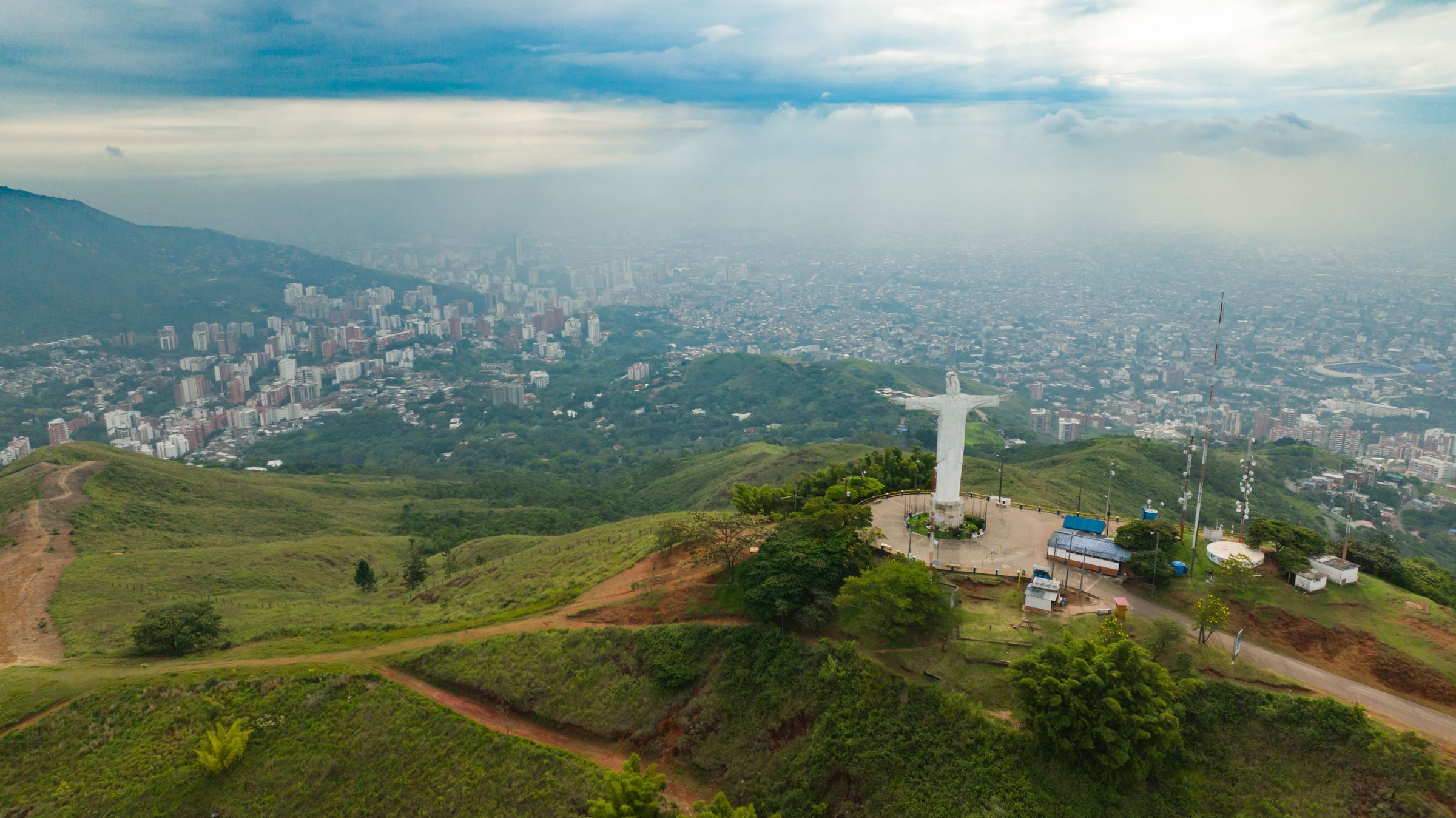
- Cristo Rey is the statue, about 26 metres (85 ft) tall, on the hill west of the city, with the best view over the valley. The Ecoparque is open Tuesday to Sunday from 6am to 6pm (closed on Mondays, and on Tuesday when Monday is a public holiday); in July 2026 entry was free with no booking needed. You get there by taxi or on a tour, then walk the last stretch.
- El Gato del Río is artist Hernando Tejada’s huge cat sculpture, by the Cali river between El Peñón and Normandía, surrounded by the “cat girlfriends” painted by other artists.
- Museo del Oro Calima displays pre-Columbian goldwork and pottery from the Calima culture. According to Banco de la República it’s open Tuesday to Saturday with free entry: check the opening hours before you go.
- Cerro de las Tres Cruces is a steep 1.3-1.8 km climb (0.8-1.1 miles), depending on the trail, popular with locals for exercise. Go early in the morning at the weekend, when lots of people are walking, and not alone.
Salsa in Cali: classes, salsotecas and shows
Cali-style salsa is all about super-fast footwork and acrobatic moves: even if you’ve never danced, one class will help you understand the city.
- Classes: there are dozens of schools, from San Antonio to the south of the city. A one-hour private class costs about 40,000-100,000 pesos, depending on the school; group classes are cheaper and some schools offer a free trial. Two or three hours are enough to survive on the dance floor.
- Salsotecas: the names travellers mention most are La Topa Tolondra (near San Antonio, very popular with foreigners), Zaperoco (around Granada, classic salsa) and Tin Tin Deo. Opening hours change often: check their social media before you go. Juanchito, across the Cauca river, is the historic district of big salsa clubs, but it’s in the municipality of Candelaria, outside Cali: if you go, use an app taxi both ways.
- Delirio: the city’s most famous show, with salsa dancers, circus acts and a live orchestra, usually once a month (typically the last Friday) and every night during the Feria. An events site lists prices of 190,000-340,000 pesos: check the official website and book ahead.
What to eat in Cali
Local favourites are sancocho de gallina (hen soup), aborrajados (fried ripe plantain stuffed with cheese), pandebono cheese bread and, to drink, lulada, made with crushed lulo fruit. For something sweet there’s cholado, shaved ice with fruit, condensed milk and syrup, sold at street stands. The Galería Alameda market has tropical fruit and Pacific fish. More dishes from the region are in our guide to Colombian food.
3-day Cali itinerary
- Day 1 – San Antonio and the centre. San Antonio in the morning, then walk down to La Ermita, the Bulevar del Río and the Gato del Río. A salsa class in the afternoon, sunset at San Antonio park in the evening.
- Day 2 – Cristo Rey and museums. Cristo Rey early in the morning, when it’s cooler and clearer; the Museo del Oro Calima or La Tertulia in the afternoon; dinner in Granada and your first salsoteca.
- Day 3 – Your choice. The zoo, Cerro de las Tres Cruces in the morning or a second dance class. If it’s the last Friday of the month, there’s Delirio in the evening.
With just one day, do San Antonio, the centre and a salsa class, then a salsoteca at night.
Day trips from Cali
The classic day trips are Hacienda El Paraíso (the house from the novel María, about 45 minutes north-east), Lake Calima and the river at Pance, south of the city. Before you go, bear in mind that the State Department says do not travel to all of Valle del Cauca outside Cali, while the FCDO only advises against the west and Jamundí: decide based on your own government’s advice and your insurance.
- Pance is in the municipality of Cali but borders Jamundí. Farallones de Cali National Park has only a few trails open to visitors and the rules change often: check with Parques Nacionales and go only with an authorised guide.
- Buenaventura, San Cipriano and the Pacific coast by road are on the FCDO’s advise-against list: skip them.
Where to stay in Cali
| Area | Pros | Cons |
|---|---|---|
| San Antonio | colonial, hostels and small hotels, walkable to the centre and salsa schools | the streets down to the centre empty out at night |
| Granada, El Peñón and Centenario | restaurants, mid-range and upscale hotels, close to the river | pricier, little historic atmosphere |
| South (Ciudad Jardín, towards Pance) | quiet, green, modern hotels | far from the centre and the nightlife |
Indicative prices per night: in San Antonio 50,000-90,000 pesos for a dorm bed and 150,000-300,000 for a double; in Granada, El Peñón and the south 200,000-450,000 pesos for a hotel double.
I’d pick San Antonio if you’re backpacking or coming for salsa, and Granada-El Peñón if you want a comfortable hotel with restaurants nearby. During the Feria (25-30 December) prices go up and it’s worth booking months ahead.
How much does Cali cost?
| Item | Indicative price |
|---|---|
| Taxi airport-city | 70,000-90,000 pesos |
| Rápido Aeropuerto bus | 13,000 pesos |
| MIO ride | 3,500 pesos |
| Minimum taxi fare | about 7,100 pesos |
| Cristo Rey | free |
| Cali Zoo (foreigners) | about 55,000 pesos |
| Private salsa class (1 hour) | 40,000-100,000 pesos |
| Delirio show | 190,000-340,000 pesos |
Best time to visit Cali
Cali is hot all year round: highs are around 30 °C (86 °F) and evenings are T-shirt weather. The driest months are December to February and June to August; April-May and October-November are the wettest. The Feria de Cali, from 25 to 30 December, opens with the Salsódromo, a parade of dancers on 25 December: it’s the liveliest and most expensive week. The Petronio Álvarez Festival of Pacific music is usually held in August. Seasons for the rest of the country are in when to go to Colombia.
Mistakes to avoid
- Arriving or leaving by bus heading south: for Popayán and the rest of the southwest, fly.
- Hailing a taxi in the street at night: book through an app or ask the bar to call one.
- Going to a salsoteca without a class: even one hour makes the night much more fun.
- Climbing Cerro de las Tres Cruces alone or in the afternoon: go early, at the weekend, with other people around.
- Counting on La Merced and the cathedral: they’ve been closed since the earthquake.
- Booking late for the Feria: the good hotels fill up in late December.
FAQ
Is Cali safe to visit?
Yes, with normal precautions: no government advises against the city itself. However, the US State Department says do not travel to the rest of Valle del Cauca and the FCDO advises against the west and Jamundí, so it’s best to fly in and check before any road trip.
How many days do you need in Cali?
Two or three days: one for San Antonio and the centre, one for Cristo Rey and the museums, plus evenings for salsa.
How do I get from Cali airport to the city?
By taxi, for about 70,000-90,000 pesos and a 30-45 minute drive, or on the Rápido Aeropuerto bus to the Terminal de Transportes (13,000 pesos) and then a taxi.
Can you visit Cali after the earthquake?
Yes. The 10 August 2026 earthquake caused a lot of damage, but the airport, hotels and restaurants are working and the December Feria is going ahead. La Merced church, the cathedral and the Teatro Municipal are closed.
Where can I learn salsa in Cali?
At one of the city’s many dance schools, many of them in San Antonio and the south: a private class costs about 40,000-100,000 pesos an hour. Then put it into practice at a salsoteca such as La Topa Tolondra or Zaperoco.
Some links are affiliate links: if you buy through them I earn a small commission, at no extra cost to you. How it works
Nearby and worth combining
Antioquia and the Coffee Region
Salento and the Cocora Valley
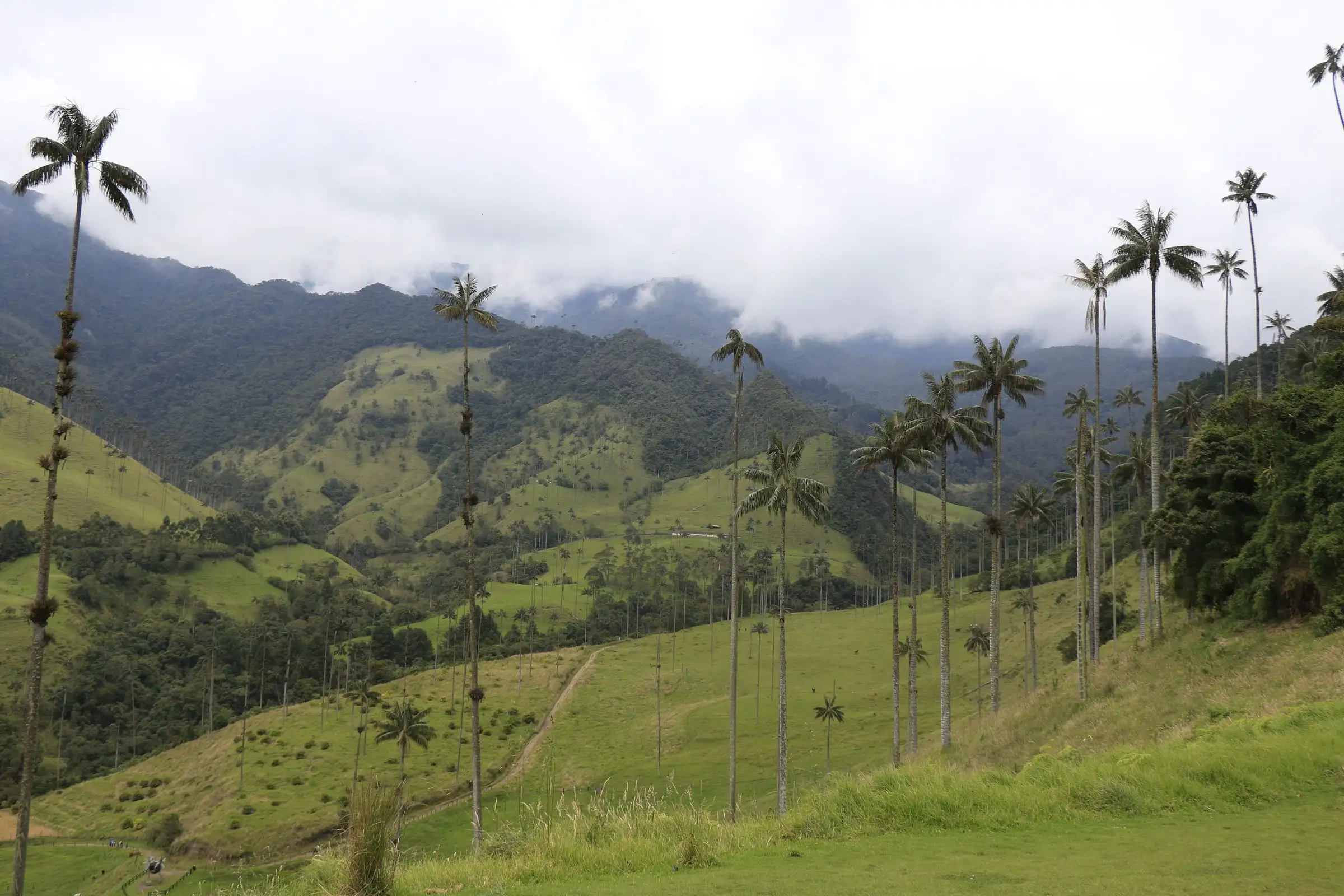
The Cocora Valley hike and Salento: Willys jeeps and times, the loop trail with timings and fees, coffee farm tours, where to stay and when to go.