Drinks · Coffee Region
Colombian coffee: tinto, Juan Valdez, coffee farms and what to buy
Colombian coffee for travellers: how to order it (tinto, perico, aromática), who Juan Valdez is, how to visit a coffee farm and which coffee to take home.
In this guide
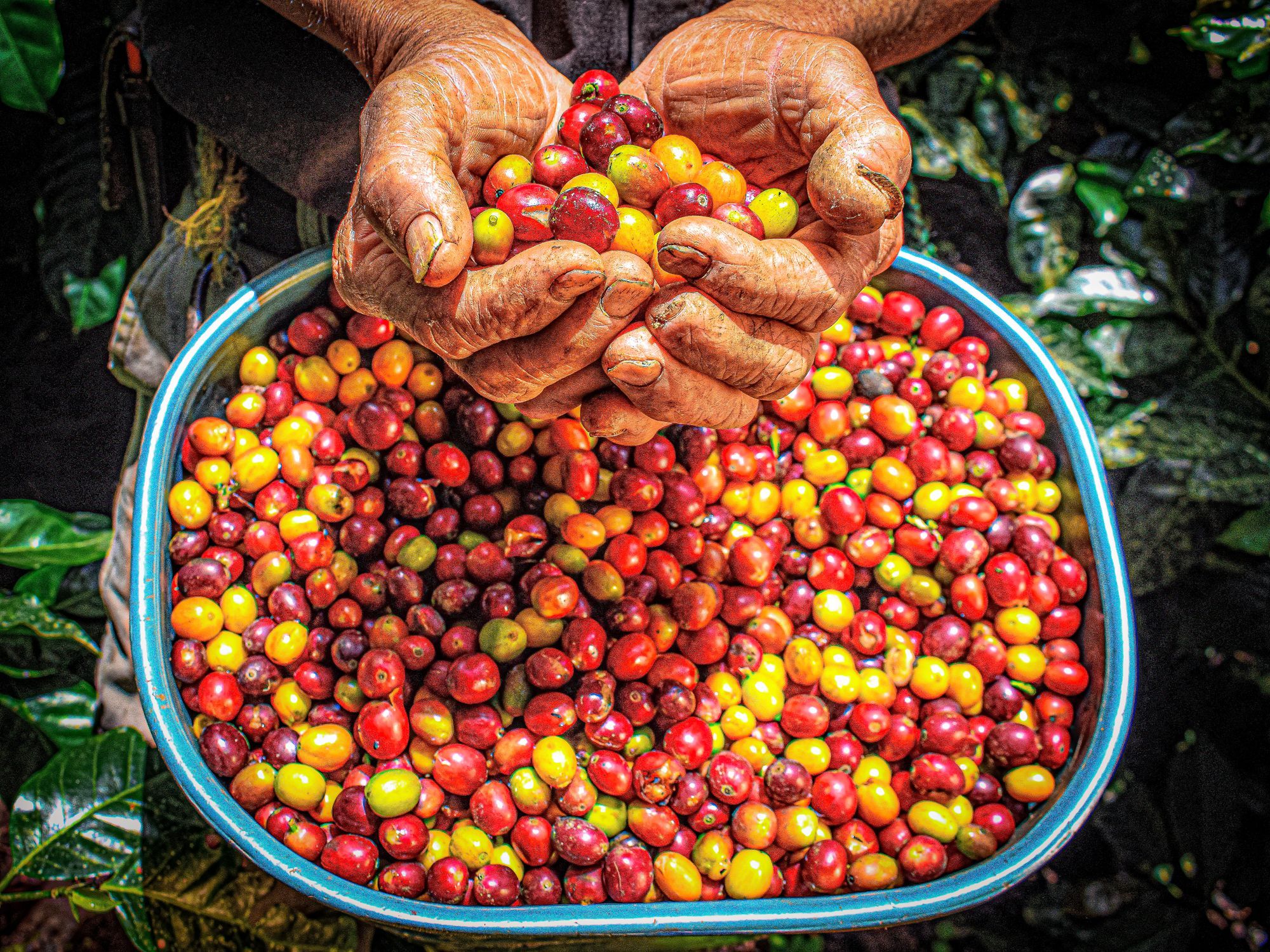
Colombian coffee is one of the reasons many people choose this country: Colombia is one of the world’s biggest producers, grows almost exclusively Arabica and has a whole region, the Eje Cafetero, listed by UNESCO for its landscape of plantations. You’ll find it everywhere on your trip, from street sellers’ tinto to the specialty coffee shops of Bogotá and Medellín and the fincas (farms) where you can see the plant, the harvest and the roasting. Here’s how to order it, who Juan Valdez is, where to do a coffee tour and what to take home.
What Colombian coffee is like
Colombian coffee is almost all Arabica, grown on Andean slopes at roughly 1,200 to 2,000 metres (4,000-6,500 ft) and washed: the fruit pulp is removed before drying, producing a clean, sweet cup with bright acidity. Since 2007 Café de Colombia has also been a protected geographical indication in the European Union, the first non-European product to get one.
Most coffee is grown by smallholders, represented by the Federación Nacional de Cafeteros (FNC), founded in 1927. According to the federation, the 2024-2025 coffee year reached a record 14.87 million 60-kg bags, the highest in over thirty years, while in 2025-2026 the harvest fell to 12.65 million because of the weather.
How to order coffee in Colombia
Everyday coffee in Colombia is filter coffee, light and served in small cups or plastic shot glasses. Here’s the vocabulary you need:
| What you ask for | What you get |
|---|---|
| Tinto | light black filter coffee, often pre-sweetened on the street. Note: it isn’t red wine |
| Perico or pintado | tinto with a dash of milk |
| Café con leche | a large milky coffee, for breakfast |
| Tinto campesino | coffee brewed with panela, unrefined cane sugar, typical of the countryside |
| Espresso, capuchino, americano | as at home, in cafés and chains |
| Aromática | not coffee: a hot herbal or fruit infusion, often offered after lunch |
Street sellers’ tinto, poured from a thermos into tiny cups, costs a few thousand pesos and is a small daily ritual in Colombia. For decades the best beans were exported and Colombians drank lower grades at home, which is why street tinto is often light and very sweet.
Juan Valdez: the character and the coffee shops
Juan Valdez, the coffee grower with the hat, poncho and his mule Conchita, was created by the Federación Nacional de Cafeteros in the late 1950s to promote Colombian coffee around the world. He isn’t a real person but a symbol, played over the years by several actors, and his logo guarantees the coffee is 100% Colombian.
Since 2002, when the first shop opened at Bogotá’s El Dorado airport, Juan Valdez has also been a coffee shop chain, with hundreds of branches in Colombia and abroad. It’s convenient and reliable, but pricier than neighbourhood cafés and less interesting than specialty coffee shops.
Where to drink good coffee in Colombia
In recent years the big cities have filled with specialty coffee shops, buying directly from farms and serving single-origin coffee. You’ll find them mainly in Chapinero and Usaquén in Bogotá and El Poblado and Laureles in Medellín; among the best known are Amor Perfecto in Bogotá and Pergamino in Medellín.
In the towns of the Coffee Region, such as Salento, Jardín and Jericó, many cafés serve coffee from nearby farms: the best place to taste beans from different growers a few kilometres from the plant.
Visiting a coffee farm
The Coffee Cultural Landscape (Paisaje Cultural Cafetero), spanning Caldas, Quindío, Risaralda and northern Valle del Cauca, has been a UNESCO World Heritage Site since 2011. A farm tour is one of the highlights of a trip to Colombia, even if you don’t drink coffee:
- Salento: the easiest option. Many farms, such as Finca El Ocaso or Don Elías, are reachable on foot or by jeep from town; tours take 2-3 hours, from plant to cup, with a tasting at the end. Prices range from about 40,000 pesos for a basic tour to over 100,000 pesos for premium ones, according to sources that aren’t all recent: ask in town or at your hotel.
- Jardín and Jericó: smaller, less touristy, often family-run farms in Antioquia.
- From Medellín: if you don’t have time for the Coffee Region, there are day tours to farms around the city.
The most interesting time is the harvest, when you can see the pickers at work: in the Coffee Region the main harvest usually runs from September-October to December and the smaller mitaca from April to June, though dates vary with area and altitude.
What to buy and how to take it home
- Whole beans from a farm: the best souvenir. Buy them in a sealed bag with the roast date and grind them at home.
- Specialty coffee: roasters in Bogotá and Medellín sell 250-500 g bags with origin, variety and tasting notes.
- Juan Valdez: handy for gifts, sold in the chain’s shops and at Bogotá, Medellín and Cartagena airports.
- Supermarket coffee: Colombians’ everyday brands are cheap, but they’re made for tinto and often lower quality.
Roasted coffee in a sealed pack is fine in both checked and hand luggage in personal quantities; if you’re flying home to the US, declare food items on your customs form.
FAQ
What is a tinto in Colombia?
It’s everyday black coffee: filtered, light and served in small cups. On the street it costs a few thousand pesos and is often pre-sweetened. Don’t confuse it with red wine, which in Colombia is vino tinto.
Is Juan Valdez a real person?
No, he’s a character created by the Federación Nacional de Cafeteros in the late 1950s to promote Colombian coffee, played over the years by several actors. Since 2002 Juan Valdez has also been a coffee shop chain.
Where can you visit a coffee farm in Colombia?
In the Coffee Region, especially around Salento, Filandia and Manizales, and in Antioquia, in Jardín and Jericó. There are also day tours to farms around Medellín.
Which Colombian coffee should I take home?
Whole beans from a farm or a specialty roaster, in a sealed bag with the roast date. Juan Valdez is convenient for gifts and is sold at the airport.
More Colombian flavours
Antioquia
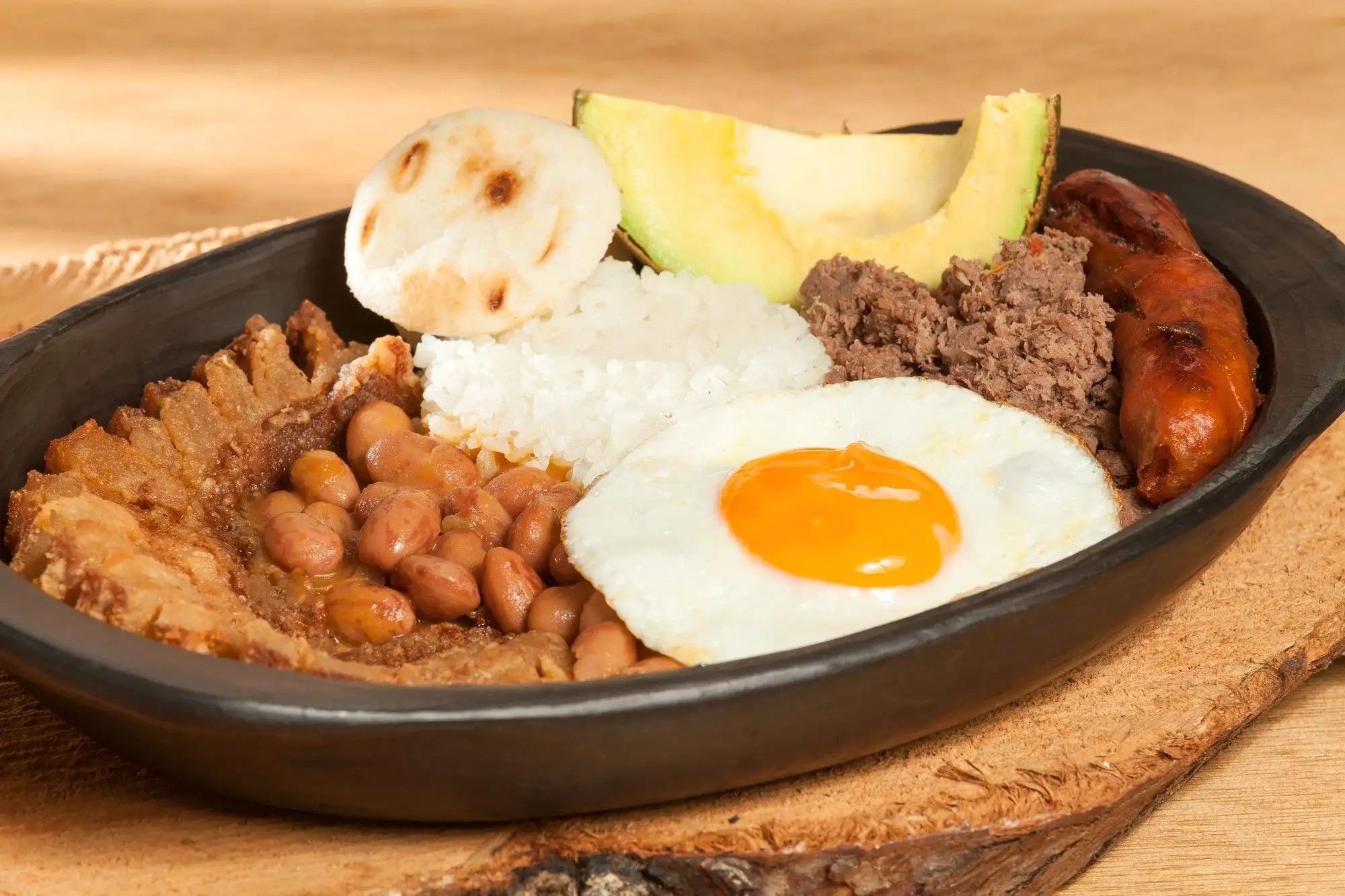
Bandeja paisa
What bandeja paisa is, Medellín's signature dish: every ingredient explained, how much it costs, where to eat it and how to order it without overdoing it.