Discover Colombia
The flag of Colombia: colours, meaning and history
The flag of Colombia: why yellow fills half the flag, what the colours mean, where the tricolour comes from and when you'll see it flying everywhere.
In this guide
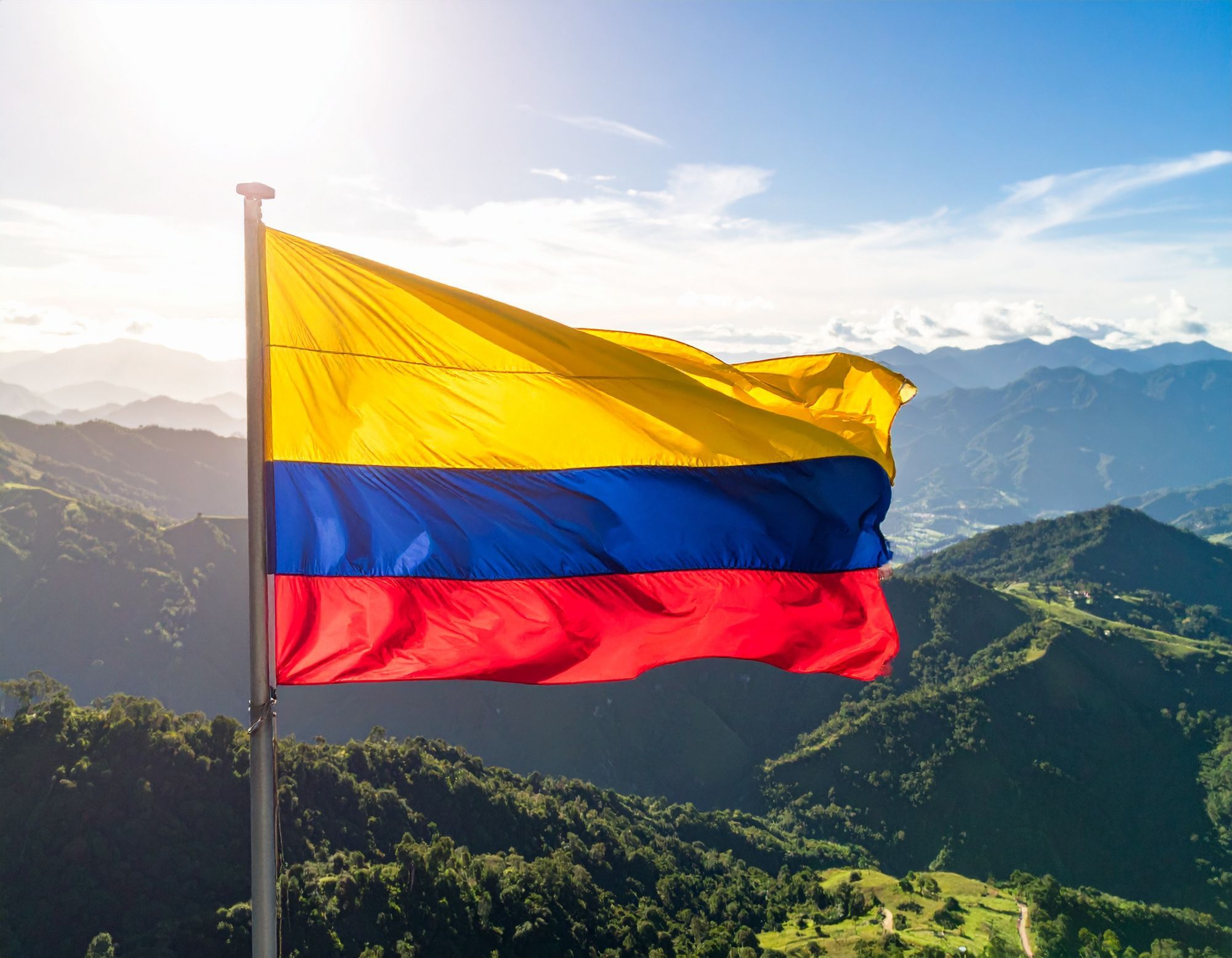
The flag of Colombia is a horizontal tricolour in yellow, blue and red, with one feature that makes it easy to recognise: the yellow isn’t the same size as the other colours, but fills the whole top half on its own, while blue and red share the bottom half. You’ll see it everywhere, from government buildings to the Selección’s shirts, and knowing its story helps you understand a piece of the country’s identity. Here’s what it looks like, what the colours mean, where it comes from and on which days you’ll see it flying the most.
What the Colombian flag looks like
The national flag has three horizontal stripes of different heights:
| Colour | Position | Share of the flag |
|---|---|---|
| Yellow | top | half the height |
| Blue | middle | a quarter |
| Red | bottom | a quarter |
The proportions are set by Law 12 of 1984 on national symbols: yellow at the top with a height equal to half the flag, blue and red in equal stripes of a quarter each, with blue in the middle. The usual height-to-length ratio is 2:3.
The flag you’ll see on homes and in squares is the plain one, without a coat of arms. There are also versions with the national coat of arms in the centre, used by some institutions and the armed forces, but for ordinary citizens the flag is the three-stripe one.
What the colours of the flag mean
Colombian law describes the colours but doesn’t give them an official meaning. Over time a few readings have become widespread, and you’ll find them in school books and national holiday speeches:
- Yellow: the wealth of the land, gold and natural resources, but also sovereignty and justice.
- Blue: the two oceans that wash Colombia’s shores, the Pacific and the Caribbean, as well as its rivers and sky.
- Red: the blood shed by those who fought for independence from Spain.
An older reading, from the independence era, sees yellow as America, blue as the ocean separating it from Spain and red as Spain itself. These are interpretations, not rules: if a Colombian tells you a different one, they’re not wrong.
The history of the flag of Colombia
Francisco de Miranda and the first tricolour (1806)
Yellow, blue and red go back to Francisco de Miranda, the Venezuelan patriot known across Latin America as el Precursor (the Forerunner) because he paved the way for independence. In 1806 Miranda first raised the tricolour on the ship Leander during his expedition to the coast of Venezuela. There are several theories about where the colours came from, and none is backed by firm documents.
Gran Colombia and the three sister flags
After independence, Miranda’s colours became those of Gran Colombia, the state that until 1830-1831 united today’s Colombia, Venezuela, Ecuador and Panama. When the federation broke up, Colombia, Venezuela and Ecuador kept the yellow, blue and red, which is why the three flags look so alike today.
From 1861 to today
During the 19th century the arrangement of the colours changed several times, including versions with vertical stripes. The current design, with horizontal stripes and a double-height yellow, was set by the decree of 26 November 1861 issued by General Tomás Cipriano de Mosquera, then provisional president of the United States of Colombia. The design hasn’t changed since and has been confirmed by later laws, up to Law 12 of 1984.
How to tell Colombia’s flag from Ecuador’s and Venezuela’s
The three flags born from Gran Colombia use the same colours, but you can tell them apart at a glance:
| Country | Stripes | Distinguishing feature |
|---|---|---|
| Colombia | double yellow, blue and red | no coat of arms on the civil flag |
| Ecuador | double yellow, blue and red | coat of arms with a condor in the centre |
| Venezuela | three equal stripes | arc of eight white stars on the blue (and the coat of arms on the official version) |
The trick: if the stripes are equal, it’s Venezuela; if there’s a coat of arms with a condor, it’s Ecuador; if it’s plain with a big yellow stripe, it’s Colombia.
When you’ll see the flag flying
Decree 1967 of 1991 requires the national flag to be flown on public buildings, homes and businesses on certain national holidays, including 20 July, the anniversary of the 1810 cry of independence, and 7 August, the anniversary of the 1819 Battle of Boyacá, fought between Tunja and Villa de Leyva. On those days whole neighbourhoods turn yellow, blue and red, there are parades, and in Bogotá the Plaza de Bolívar and the National Capitol are at the heart of the celebrations.
The other time the flag is everywhere is when the national team plays: the Selección is also called La Tricolor after the flag’s colours, and on match days flags appear on balconies, cars and windows. Everything about the fans and how to see a game is in the guide to football in Colombia.
Buying a Colombian flag as a souvenir
A flag is one of the easiest souvenirs to find: street vendors sell them on holidays and before matches, along with hats, scarves and yellow shirts, and you’ll also find them in souvenir shops in the historic centres. Small desk flags and sew-on patches for your backpack are the easiest to take home.
FAQ
Why is the yellow stripe bigger on Colombia’s flag?
Because the law states that yellow fills half the flag and blue and red a quarter each. The layout dates from the decree of 26 November 1861 and has no official meaning: the most common reading is that yellow, the country’s wealth, is worth as much as the other two colours together.
What do the colours of the Colombian flag mean?
There’s no official meaning. The most widespread interpretation is yellow for the country’s wealth and resources, blue for its two oceans, the Pacific and the Caribbean, and red for the blood shed in the wars of independence.
Who created the flag of Colombia?
The colours go back to Francisco de Miranda, who first raised the yellow, blue and red tricolour in 1806. The current design, with yellow in the top half, was set by Tomás Cipriano de Mosquera’s decree of 26 November 1861.
What’s the difference between the flags of Colombia and Ecuador?
They share the same colours and proportions, but Ecuador’s flag has the national coat of arms with a condor in the centre, while the Colombian flag used by citizens is plain, without a coat of arms.
More about Colombia

Discover Colombia
Map of Colombia: regions, departments, cities and distances
The map of Colombia explained for travellers: the six natural regions, the 32 departments and their capitals, the Andes and distances between the main cities.
Discover Colombia
Football in Colombia: league, clubs, stadiums and the national team
Football in Colombia: how the Liga BetPlay works, the big clubs and clásicos, how to buy match tickets and the story of the Colombian national team.