Place · Southwest
San Agustín
San Agustín, Colombia's land of pre-Columbian stone statues: 2026 archaeological park entrance fee, getting there via Neiva or Pitalito, jeep tours and safety.
In this guide
- Is San Agustín safe?
- How to get to San Agustín
- Puracé volcano, the earthquake and yellow fever: what to know in 2026
- San Agustín Archaeological Park: opening hours, entrance fee and what to see
- Alto de los Ídolos, Alto de las Piedras and day trips from San Agustín
- Where to stay in San Agustín
- How many days: a 3-day itinerary
- Coffee and Huila food
- How much does San Agustín cost?
- Best time to visit San Agustín
- Mistakes to avoid
- FAQ
San Agustín is a mountain town in southern Huila, at around 1,700 metres (5,600 ft), known for its pre-Columbian stone statues: hundreds of gods, warriors and animals carved between the 1st and 8th centuries AD to guard the tombs of a people who left no written records. The archaeological park and the sites around it have been a UNESCO World Heritage site since 1995. I’d allow 2-3 days: one for the main park, one for the jeep tour to Alto de los Ídolos and the waterfalls, and an optional third on horseback. Below you’ll find 2026 prices and opening hours, how to get there while avoiding the risky roads, where to stay and what UK and US travel advice says.
Is San Agustín safe?
San Agustín can be visited with normal precautions: neither UK nor US travel advice lists Huila among the areas to avoid. Here’s what they say:
- UK Foreign Office (FCDO): no part of Huila is on its list of advised-against areas. It does advise against all but essential travel to all of Cauca except Popayán, which includes the road from Popayán.
- US State Department (advisory of 31 March 2026): Huila falls under the Level 3 “Reconsider travel” that applies to most of Colombia. Level 4, “Do not travel”, covers Cauca (except Popayán), Valle del Cauca (except Cali), Arauca and Norte de Santander.
That doesn’t mean Huila is calm everywhere. FARC dissident groups struck the department several times in 2026: in April they set fire to a truck on Route 45 between Hobo and Gigante, the Neiva-Pitalito road; in October Colombia’s Ombudsman’s Office (Defensoría del Pueblo) warned of drone attacks in central and northern Huila; and on 31 October an explosives-laden motorbike killed a police officer in Algeciras, east of Neiva. The attacks targeted security forces and hauliers, not tourists, and none of them happened in San Agustín. Still, travel by day only, ask your hotel about the road before setting off and check national road conditions with INVÍAS (the national roads agency) or on #767, as ICANH, the institute that runs the parks, recommended in an August 2026 notice.
In town the usual rules apply: at night use taxis or mototaxis booked through your hotel, and do countryside walks and horse rides with local guides. All the rules are in our guide to safety in Colombia.
How to get to San Agustín
The easiest option is to fly from Bogotá to Neiva and continue by bus; the fastest is the flight to Pitalito, which has limited seats. San Agustín has no airport, so the last stretch is always by road.
| Route | Time | Typical price |
|---|---|---|
| Flight Bogotá-Neiva | about 1 hour | depends on dates |
| Bus Neiva-San Agustín | 4-5 hours | 40,000-70,000 pesos |
| Flight Bogotá-Pitalito | about 1 hr 20 min | depends on dates |
| Colectivo Pitalito-San Agustín | 30-45 minutes | 10,000-13,000 pesos |
| Bus Bogotá-San Agustín | 10-12 hours | 100,000-130,000 pesos |
Bus fares come from ticketing sites and aggregators, not from the companies themselves, and sources disagree: treat them as a range and check at the ticket office.
Fly to Neiva, then take the bus
Neiva’s Benito Salas Airport (NVA) has several daily flights from Bogotá with Avianca, LATAM and Clic, taking about an hour. The bus terminal is a short taxi ride from the airport. Direct buses to San Agustín are few and, according to some sources, only leave early in the morning; otherwise take one of the frequent buses to Pitalito (Coomotor, Cootranshuila, Taxis Verdes, 3.5-4 hours) and change to a colectivo, a shared minibus. Neiva is also the gateway to the Tatacoa Desert, about an hour away at Villavieja: if you want to see both, plan the trip from here, as explained in our guide to southwest Colombia.
Fly to Pitalito
Satena flies from Bogotá to Pitalito’s Contador Airport (PTX) on small turboprops, 1-2 times a day, in about 1 hour 20 minutes. The airport is about 8 km from Pitalito, and San Agustín is some 30 km further: around 45 minutes by taxi, or take a colectivo from Pitalito’s bus terminal. It costs more and seats sell out, but it saves you 4-5 hours on Route 45: if you find a reasonable fare, I think it’s the best choice.
Bus from Bogotá
Coomotor, Taxis Verdes and Cootranshuila run direct buses every day from Bogotá’s Terminal Salitre: 10-12 hours, almost all overnight. It’s cheap, but night-time road travel is exactly what travel advice tells you to avoid. If you don’t want to fly, break the trip: a daytime bus to Neiva, a night there and the last leg to San Agustín the next day.
From Popayán: the Paletará road
The shortest road from Popayán runs via Coconuco, Paletará and Isnos: about 136 km (85 miles), 5-6 hours by bus, with an unpaved stretch inside Puracé National Park. I wouldn’t take it: it crosses rural Cauca, where both the FCDO and the State Department advise against travel, it runs along the slopes of the Puracé volcano, and in the rain the dirt section turns to mud. From Popayán, fly back to Bogotá and on to Neiva or Pitalito: you lose most of a day, but you avoid the riskiest area.
Puracé volcano, the earthquake and yellow fever: what to know in 2026
If you arrive from Neiva or Pitalito, the 2026 volcano alert and earthquake make almost no difference. Puracé is in Cauca, west of San Agustín: the Colombian Geological Survey (SGC) raised its alert to orange on 1 August 2026 and lowered it back to yellow on 29 September, stressing that the volcano remains active. In practice it affects the Paletará road, which runs at its foot, and flights to Popayán, which were cancelled several times because of ash: if you’re combining the two places, check the SGC bulletins before you travel.
The 10 August 2026 earthquake, centred in Chocó, mainly hit Cali and the Coffee Region: no damage was reported in San Agustín, Pitalito or Neiva.
San Agustín Archaeological Park: opening hours, entrance fee and what to see
The Parque Arqueológico de San Agustín is about 2.5 km (1.5 miles) from town, a 30-minute walk, and opens from 8am to 3pm: allow 3-4 hours to see it properly. It’s run by ICANH, the Colombian Institute of Anthropology and History, which sets prices and closing days.
- 2026 entrance fee: 75,000 pesos for non-resident foreigners, 50,000 for Colombians and foreign residents, 25,000 for Colombian students (Resolution 1702 of 2025). Many websites still quote the old price of 65,000 pesos.
- One ticket, three parks: the same ticket covers the main park and its museum, Alto de los Ídolos and Alto de las Piedras. Most sources say it’s valid for 2 consecutive days, but ICANH’s resolution doesn’t say so: ask at the ticket desk when you buy it.
- Closing days: in the first half of 2026 ICANH’s calendar closed the park on almost every Tuesday, plus 1 January. The calendar changes every six months: check it on ICANH’s website before you go, or email sanagustin@icanh.gov.co.
- Free entry: on the last Friday of every month and on 27 September, for up to 700 visitors. Good for your wallet, less so for the crowds.
Inside the park, follow this order:
- The museum, by the entrance: pottery, objects and a few statues, with panels explaining who carved them and why. Half an hour is enough.
- Mesitas A, B and C: burial mounds with the most famous statues, figures with jaguar fangs, warriors and an eagle gripping a snake, still standing beside the tombs.
- Fuente de Lavapatas: a streambed carved into the rock, with channels, pools and figures of snakes, lizards and human faces, used for water rituals. You view it from a walkway.
- Alto de Lavapatas: the highest part of the park, with some of the oldest tombs and views over the valley. The climb is steep but short.
- Bosque de las Estatuas: a forest trail lined with dozens of statues brought here from other sites in the area. It’s the most photogenic part.
Licensed guides wait at the entrance. On a first visit I’d hire one: without context, the statues can start to look alike after an hour. Agree on the price before you start.
Alto de los Ídolos, Alto de las Piedras and day trips from San Agustín
On day two most people take the jeep tour, a 7-8 hour loop that combines the Magdalena Gorge, Alto de los Ídolos, Alto de las Piedras and two waterfalls. Alto de los Ídolos and Alto de las Piedras are near Isnos, across the Magdalena River, open from 8am to 4pm and closed on most Wednesdays.
| Stop | Typical price | Time |
|---|---|---|
| Alto de los Ídolos | included in the park ticket | 1-2 hours |
| Alto de las Piedras | included in the park ticket | 45 minutes |
| Magdalena Gorge (Estrecho del Magdalena) | free | 30 minutes |
| Salto de Bordones (viewpoint) | about 5,000 pesos (older figure) | 1 hour |
| Salto del Mortiño | about 4,000-5,000 pesos | 30-45 minutes |
| La Chaquira | free | half a day, on foot or horseback |
- Alto de los Ídolos is the most important site after the main park: two hilltops with tombs and statues, including the tallest in the region, about 7 metres (23 ft). If you only have time for one site beyond the main park, make it this one.
- Alto de las Piedras is smaller, but some statues still show traces of red, black and yellow pigment. The best known is the Doble Yo (“double self”), a figure with an animal climbing onto its back.
- The Magdalena Gorge is where Colombia’s longest river squeezes between rocks into a channel just over 2 metres (7 ft) wide. Stay behind the barriers and don’t swim: the current is violent.
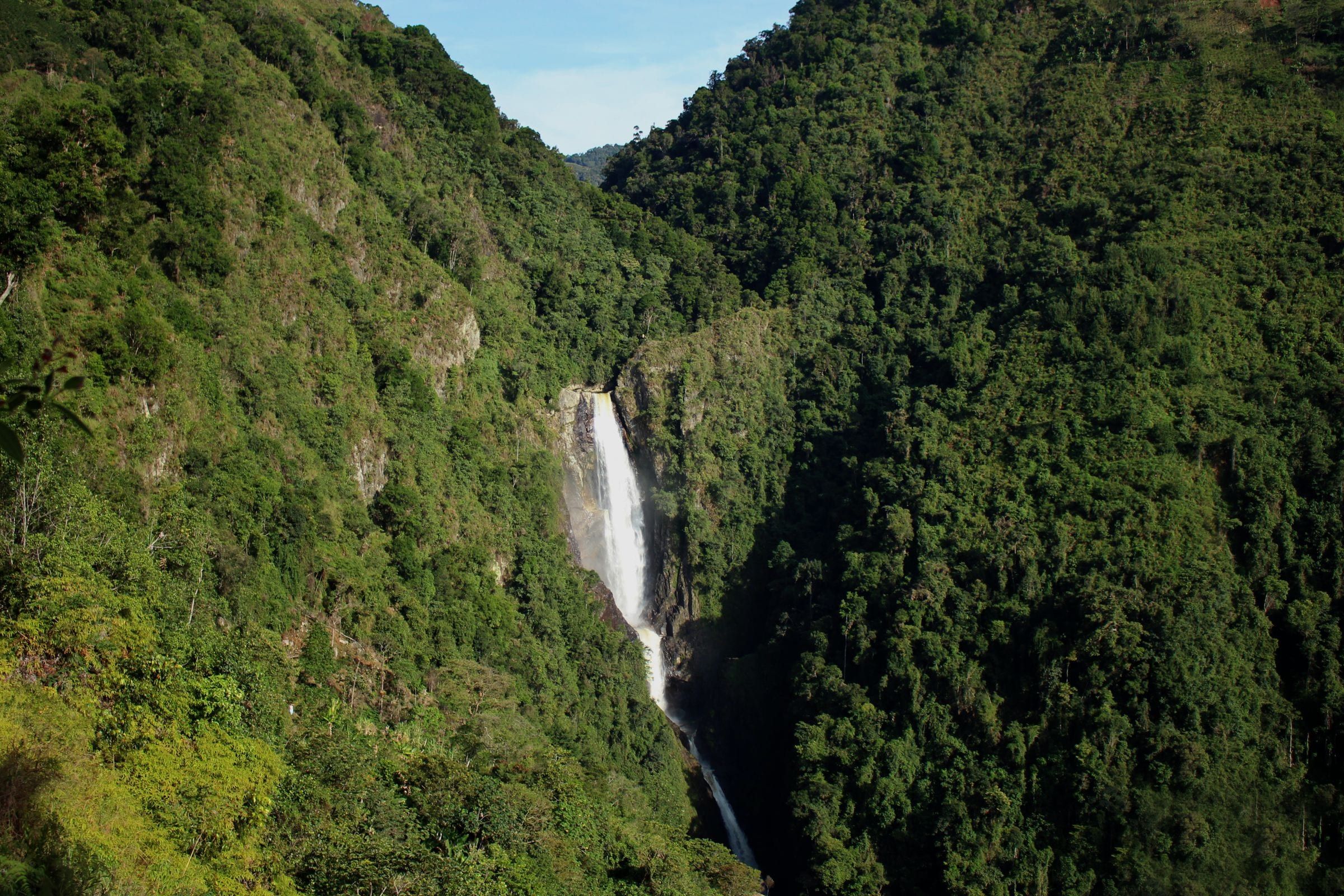
- Salto de Bordones, the waterfall in the photo at the top of this page, drops about 400 metres (1,300 ft). You see it from a viewpoint with a small entry fee, and a steep trail leads down to the base.
- Salto del Mortiño is lower, 170-200 metres depending on the source, and its viewpoint is a few minutes from the road.
- La Chaquira is a rock face with carved figures perched above the Magdalena canyon. You reach it on foot or on the horseback tour, together with El Tablón, La Pelota and El Purutal, where some statues still have their colours.
Tour prices. A shared jeep tour costs 50,000-100,000 pesos per person according to agencies and hotels, usually without entrance fees or lunch; one local agency charges 210,000-380,000 pesos for a private 4x4 for 1-3 people. The horseback tour (4-5 hours) is priced per horse, 45,000-60,000 pesos, plus the guide, about 70,000; some agencies charge 120,000 pesos per person all-in. Always ask what’s included before you pay: waterfall fees, lunch, guide.
Where to stay in San Agustín
Without a car, stay in town, within walking distance of buses, agencies and restaurants. For peace and views, pick a lodge on the road to the park.
| Area | Pros | Cons |
|---|---|---|
| Town centre | bus terminal, agencies and restaurants on foot, cheaper | 2.5 km from the park, little charm, noisy at weekends |
| Road to the park | lodges and farms in the countryside, walk to the park | you need a taxi or mototaxi to eat in town |
| Surrounding countryside | coffee farms and views over the Magdalena canyon | isolated, dirt roads, you rely on your host for transport |
| Pitalito | handy if you land late | busy city, nothing to see, 45 minutes from San Agustín |
Typical prices per night: 40,000-60,000 pesos for a dorm bed, 90,000-180,000 for a double room in a hostal or simple hotel, 200,000-400,000 in eco-lodges. They go up on Colombian long weekends, at Christmas and during Holy Week.
How many days: a 3-day itinerary
Two days cover the main park and the jeep tour; the third is for the horseback ride or a rest before the long journey back. A single day isn’t worth the 9-10 hours of round-trip travel.
- Day 1 – Archaeological park. Go in at 8am, when it’s quiet: museum, Mesitas, Fuente de Lavapatas, Alto de Lavapatas and Bosque de las Estatuas. Keep the afternoon free, as rain often arrives after lunch.
- Day 2 – Jeep tour on the same ticket: Magdalena Gorge, Alto de los Ídolos, Alto de las Piedras, Salto de Bordones and Salto del Mortiño. Back in the late afternoon.
- Day 3 – Horseback ride in the morning to La Chaquira, El Tablón, La Pelota and El Purutal; in the afternoon a coffee farm, or head off.
The one pair of days to avoid for your ticket is Tuesday-Wednesday: the main park closes on Tuesdays and Alto de los Ídolos on Wednesdays. Monday-Tuesday or Wednesday-Thursday, for example, both work.
Coffee and Huila food
Huila is Colombia’s biggest coffee-growing department, and many farms around San Agustín offer tours of their plantations and tastings: a good plan for an afternoon. How the coffee chain works and which beans to bring home are covered in our guide to Colombian coffee. Also try asado huilense, marinated pork roasted in an oven, and achiras, small savoury biscuits made from achira starch, ideal for the bus ride.
How much does San Agustín cost?
| Item | Typical price |
|---|---|
| Ticket for the park, Alto de los Ídolos and Alto de las Piedras (foreigners) | 75,000 pesos |
| Same ticket for Colombians and residents | 50,000 pesos |
| Bordones and Mortiño waterfall fees | 4,000-5,000 pesos each (older figures) |
| Shared jeep tour | 50,000-100,000 pesos per person |
| Private jeep tour | 210,000-380,000 pesos per vehicle |
| Horseback tour | about 120,000 pesos per person, guide included |
| Bus Neiva-San Agustín | 40,000-70,000 pesos |
| Colectivo Pitalito-San Agustín | 10,000-13,000 pesos |
| Dorm bed | 40,000-60,000 pesos |
| Double room | 90,000-180,000 pesos |
Bring cash: guides, horses, jeeps and waterfall fees are almost always paid that way.
Best time to visit San Agustín
San Agustín is mild all year: 23-25 °C (73-77 °F) by day and 13-14 °C (55-57 °F) at night. It rains in every season, mostly in the afternoon; most sources name December to March and July to August as the driest months, while they disagree about June and September. Rain turns the park trails and dirt roads into mud, so pack waterproof shoes and a jacket. If you can, avoid Colombian long weekends and Holy Week, when domestic visitors pour in.
Mistakes to avoid
- Turning up at the main park on a Tuesday or at Alto de los Ídolos on a Wednesday, the closing days.
- Leaving a gap between your two visits: the ticket is valid for two days in a row, not any two days.
- Taking the Paletará road from Popayán: it crosses rural Cauca and the slopes of the Puracé volcano.
- Travelling at night on Route 45 or on the overnight bus from Bogotá, if you can avoid it.
- Going near the edge of the Magdalena Gorge or thinking about a swim.
- Travelling without a yellow fever jab.
- Paying for the jeep tour without asking whether entrance fees, lunch and a guide are included.
- Running out of cash: in the countryside nobody takes cards.
FAQ
How much is the entrance fee for San Agustín Archaeological Park?
In 2026 it’s 75,000 pesos for non-resident foreigners and 50,000 for Colombians. The same ticket also covers Alto de los Ídolos and Alto de las Piedras and, according to most sources, is valid for 2 consecutive days.
How many days do you need in San Agustín?
Two days are enough for the main park and the jeep tour to Alto de los Ídolos and the waterfalls. A third day lets you add the horseback ride to La Chaquira.
How do you get from Bogotá to San Agustín?
The easiest way is a flight to Neiva (about 1 hour) followed by a 4-5 hour bus; the fastest is the Satena flight to Pitalito, about 45 minutes from San Agustín. A direct bus from Bogotá takes 10-12 hours, almost always overnight.
Is San Agustín safe to visit?
Yes, with normal precautions: neither the FCDO nor the US State Department singles out Huila. However, armed groups carried out attacks in other parts of the department in 2026, so travel by day and don’t arrive from Popayán on the Paletará road.
Is San Agustín Archaeological Park open every day?
No: according to ICANH’s calendar it closes on most Tuesdays, while Alto de los Ídolos and Alto de las Piedras close on most Wednesdays. The main park opens from 8am to 3pm, the other two sites from 8am to 4pm.
Some links are affiliate links: if you buy through them I earn a small commission, at no extra cost to you. How it works
Nearby and worth combining
Southwest
Popayán
Things to do in Popayán, Colombia's White City: Holy Week, flights and Puracé volcano ash, where to stay, prices and Cauca safety advice.
Southwest
Cali
Cali, Colombia travel guide: the world's salsa capital, where to dance and learn, best areas to stay, airport transfers, prices and safety after the earthquake.