City · Caribbean coast
Barranquilla
Barranquilla, home of Colombia's biggest carnival: 2027 dates and grandstand tips, the Gran Malecón, museums, where to stay, safety and easy day trips.
In this guide
- Barranquilla Carnival 2027: dates and schedule
- Is Barranquilla safe? The situation in 2026
- How to get to Barranquilla
- Things to do in Barranquilla
- Day trips from Barranquilla
- What to eat in Barranquilla
- Where to stay in Barranquilla
- How many days in Barranquilla: sample itinerary
- Best time to visit Barranquilla
- Practical tips
- How much does Barranquilla cost?
- Mistakes to avoid
- FAQ
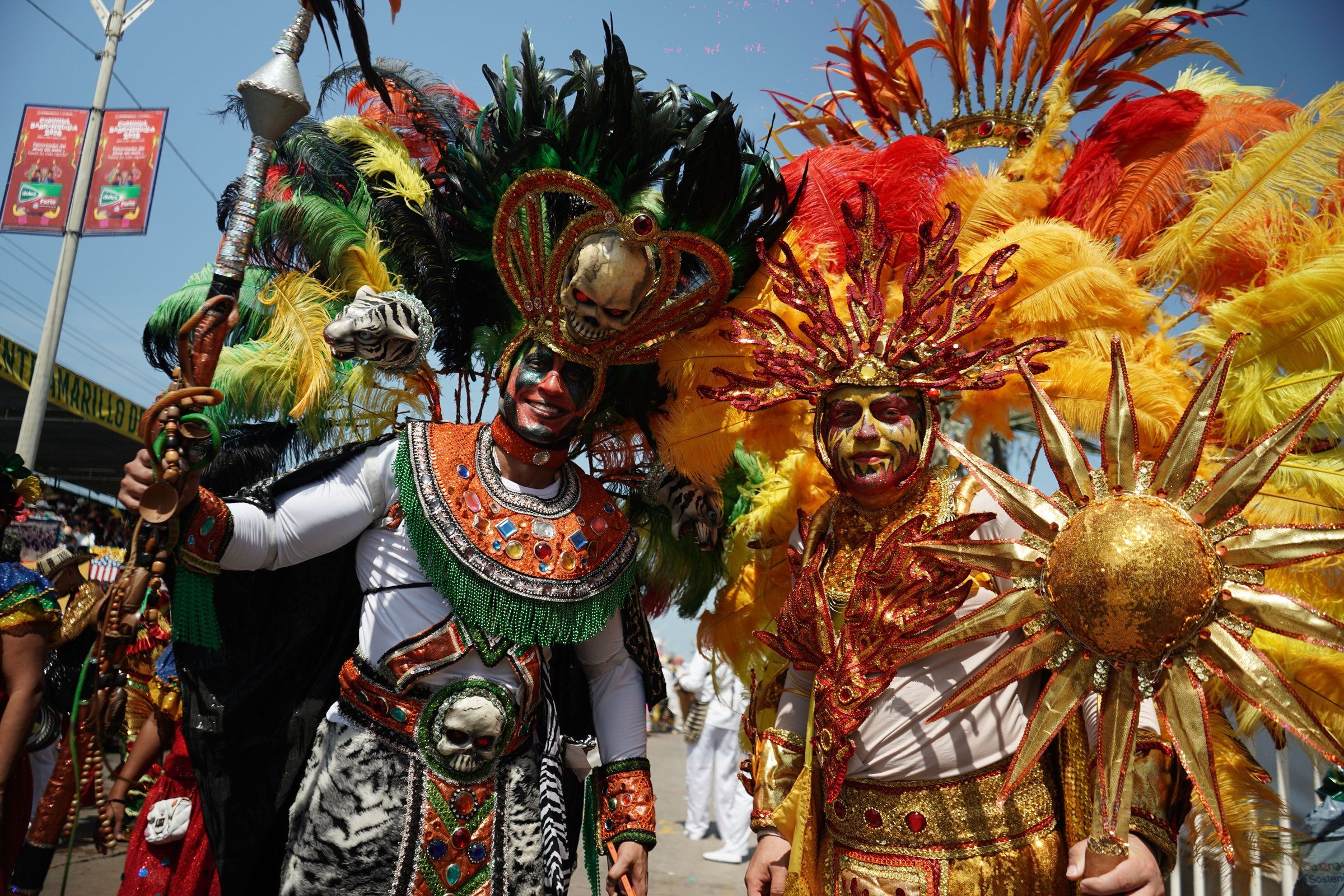
Barranquilla is Colombia’s fourth-largest city and the capital of Atlántico department: a big port on the Magdalena River, a few miles from where it flows into the Caribbean. It has neither the colonial old town of Cartagena nor Santa Marta’s beaches, and many travellers skip it. But this is where Colombia holds its biggest carnival, proclaimed a Masterpiece of the Oral and Intangible Heritage of Humanity by UNESCO in 2003, and the city has a new riverfront, museums on the Caribbean and the carnival, and places linked to García Márquez and to Shakira, who was born here. My advice: come specially for Carnival (4-5 days) and, the rest of the year, spend 1-2 days here between Cartagena and Santa Marta. Below are the 2027 Carnival dates, things to do with prices, where to stay and the safety situation.
Barranquilla Carnival 2027: dates and schedule
Carnival 2027 runs from 6 to 9 February, the four days before Ash Wednesday (10 February 2027). The season starts much earlier, though: according to local press the Lectura del Bando, which officially opens the festivities, is set for 16 January, followed by weekends of neighbourhood parades, dances and concerts. The 2027 Carnival Queen is Salwa Maloof Habib, chosen in August 2026.
| Day | Event | Where |
|---|---|---|
| Saturday 6 February | Batalla de Flores, the float parade that opens Carnival | Vía 40 (Cumbiódromo) |
| Sunday 7 February | Gran Parada de Tradición, with traditional dance groups | Vía 40 |
| Monday 8 February | Gran Parada de Comparsas, with costume groups | Vía 40 |
| Tuesday 9 February | Burial of Joselito Carnaval, the closing event | in the neighbourhood streets |
Several sources confirm the dates of the three big parades, but exact start times are only announced a few weeks before: in 2026 the parades started in late morning (around 10:30-11am), earlier than in previous years. The city is also studying moving the three parades from Vía 40 to the Gran Malecón; for now it’s only a proposal.
Grandstands and tickets
You watch the Vía 40 parades from the palcos, licensed grandstands built along the route. 2027 prices haven’t been published yet: in 2024 a seat for the Batalla de Flores started at about 280,000 pesos, with whole boxes going for several million. Price varies a lot with position, shade and what’s included (drinks, food, toilets).
- Only buy from official sellers or agencies with a National Tourism Register (RNT) number, to avoid fake tickets.
- Choose a covered grandstand: the parades last for hours in full sun.
- There are also stretches of the route without grandstands where you can stand for free, but they’re crowded and shadeless.
Carnival tips
- Cornflour and foam: during the parades everyone throws maicena (cornflour) and spray foam. Wear old clothes, keep your phone in a plastic bag and bring sunglasses.
- Heat: drink plenty of water, wear sunscreen and a hat.
- Pickpockets: crowds mean more theft. Carry only the day’s cash and a copy of your passport, and keep your phone in a zipped front pocket.
- Getting around: Vía 40 is closed during the parades and traffic is gridlocked. Go early and head back with a ride-hailing app, away from the crowds.
Is Barranquilla safe? The situation in 2026
Barranquilla isn’t among the areas foreign governments advise against, but in 2026 organised crime is a serious problem and you should take it seriously, especially at night.
- UK (FCDO): no restrictions for Atlántico, but it warns that pickpocketing, mugging and armed robbery are a problem in major cities and on the Caribbean coast, and that criminals use dating apps to lure foreigners.
- US State Department: Colombia is at Level 3, Reconsider Travel (since 31 March 2026). Atlántico is not one of the Level 4 “Do Not Travel” areas, but the Level 3 warnings about crime and kidnapping apply.
What’s going on: two local gangs, Los Costeños and Los Pepes, are fighting over extortion and drug dealing in the metropolitan area. A truce signed in October 2025 brought murders and extortion down, but violence rose again in 2026: according to El Tiempo, Atlántico had passed 700 violent deaths by the end of July, and in November 2026 there was a run of 41 murders in 18 days across the department, with the Army patrolling Barranquilla’s streets. In the city itself murders are slightly down on 2025, while they’re rising in Soledad and the surrounding municipalities.
The authorities blame most killings on the gang war, in outlying neighbourhoods a tourist has no reason to visit. For you, the main risks are phone snatching and robbery. In practice:
- stay and spend your time in the northern neighbourhoods (El Prado, Alto Prado, Riomar) and on the Gran Malecón, where there’s a strong police presence;
- at night, use ride-hailing apps rather than hailing taxis on the street;
- don’t use your phone while walking along busy roads and don’t wear jewellery;
- don’t go to the southern neighbourhoods or Soledad without a specific reason.
The wider picture is in the guide to safety in Colombia.
How to get to Barranquilla
By air
Ernesto Cortissoz international airport (BAQ) is in Soledad, about 10 km (6 miles) south of the centre, and handled over 3 million passengers in 2025. There are domestic flights from Bogotá (about 1.5 hours), Medellín, Cali and other major cities, plus direct international flights:
- Miami and, since 15 July 2026, Fort Lauderdale, daily with Avianca: handy if you’re flying from the US;
- Madrid, with Air Europa from 18 December 2026, three times a week (Monday, Friday and Sunday): a good one-stop option from the UK;
- Aruba, with Wingo since July 2026.
The airport is undergoing works: it’s run by Colombia’s civil aviation authority (Aerocivil), and in 2026 a new domestic arrivals hall and a new international pier were under construction, with the pier’s delivery pushed back beyond September. Allow extra time for security.
From the airport into the city: 20-40 minutes depending on traffic. At the taxi desk in the baggage hall you get a slip with the expected fare: sources give about 25,000-40,000 pesos to the centre or El Prado, but I couldn’t find an up-to-date official fare table. Ride-hailing apps work too.
By bus from Cartagena and Santa Marta
- From Cartagena: about 2.5 hours, by scheduled bus (Expreso Brasilia, for example) or door-to-door minivan that drops you at your hotel. Prices on ticket sites start at about 25,000 pesos but vary a lot by company and type of service.
- From Santa Marta: about 2 hours, with the same companies.
Barranquilla’s bus station is in Soledad, far from where you’ll stay, which is why I’d go for the door-to-door minivans: they cost a bit more but save you another taxi. The rest of the coast and travel times are covered on the Caribbean coast page.
Getting around the city
Distances are long and the heat is intense: walking only really works within El Prado and on the Malecón. Otherwise use taxis or ride-hailing apps, and agree the fare before you get in if the taxi has no meter. The Transmetro, the bus rapid transit system, links the centre with Soledad and the south, but it’s of little use for the tourist areas in the north.
Things to do in Barranquilla
| What | Time | Approximate price |
|---|---|---|
| Gran Malecón del Río | 2-3 hours, best at sunset | free |
| Carnival Museum and Casa del Carnaval | 1-2 hours | paid (2026 price not published) |
| Museo del Caribe | 2 hours | paid; check it’s open first |
| El Prado and the cathedral | 1-2 hours | free |
| La Cueva | an evening | food and drinks |
| Ciénaga de Mallorquín eco-park | 2-3 hours | to be checked |
| Bocas de Ceniza | half a day | on a tour |
| Puerto Colombia | half a day | pier free |
| Usiacurí | full day | bus or tour |
Gran Malecón del Río
The Gran Malecón is the riverfront promenade built along the Magdalena in recent years: about 5-5.5 km (3-3.4 miles) long, with over twenty attractions including restaurants, a food court, family areas and, since June 2026, the Carrusel del Río, a carousel decorated with images of the city. It’s where locals come to stroll, exercise and eat in the evening when the heat eases, and there’s a constant police presence. In previous years it was open from 5am to 11pm, later during Holy Week and at Christmas.
River trips on the Magdalena organised by the city also leave from the Malecón: ask at the information point for times, as they change with the season.
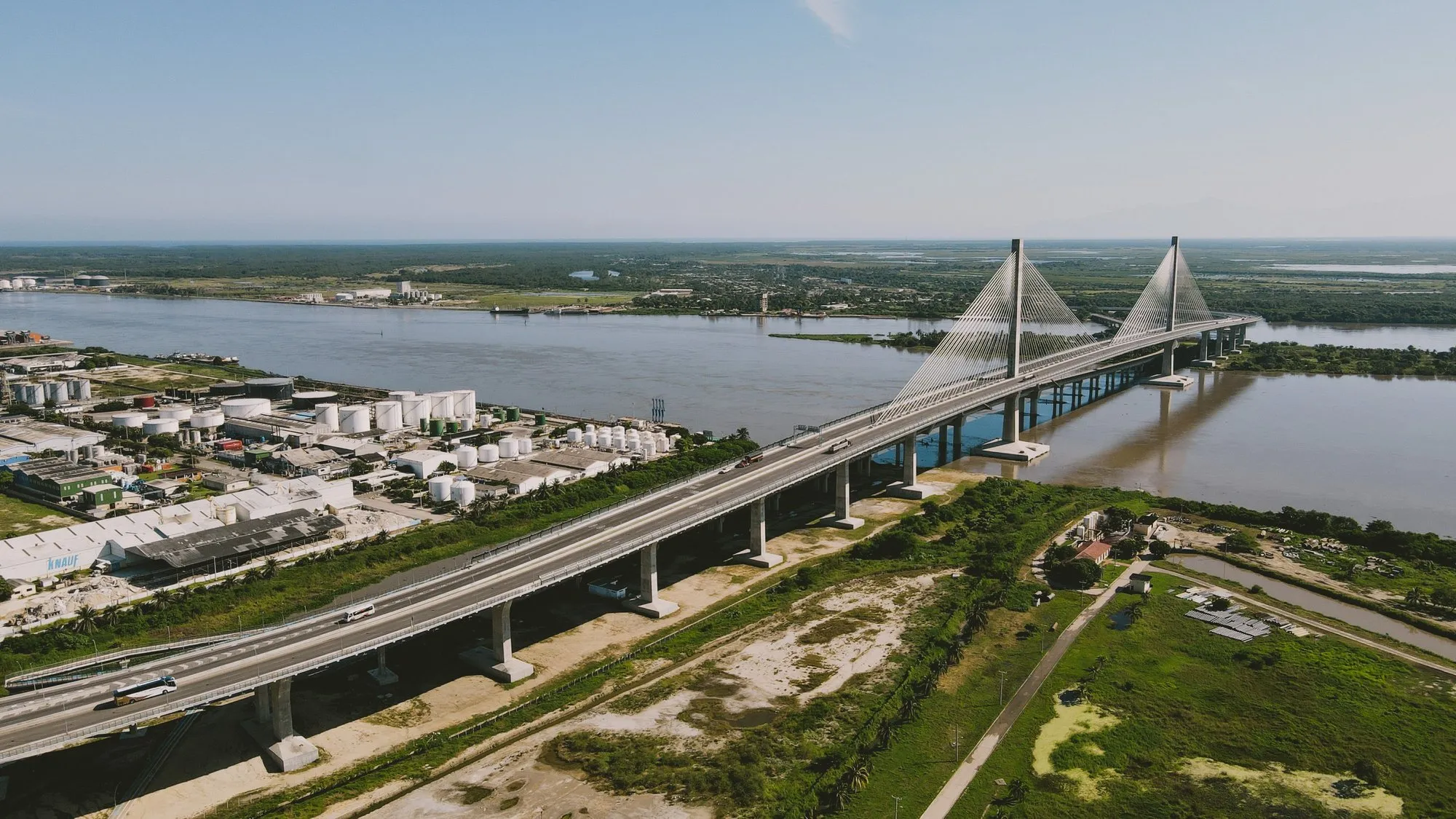
The Pumarejo Bridge over the Magdalena, at the entrance to the city. Photo: Felipe Jiménez / Pexels.
Carnival Museum and Barrio Abajo
If you’re not in Barranquilla in February, the Museo del Carnaval is the best way to understand the festival: costumes, masks, music and the history of traditional groups such as the Congo, the Marimonda and the Garabato. It’s in Barrio Abajo, the working-class neighbourhood where many carnival traditions were born, next to the Casa del Carnaval, the organisers’ headquarters. Opening hours vary with the season (it usually closes on Mondays and takes a lunch break on weekdays), and I couldn’t find 2026 prices: check the official carnival channels.
Museo del Caribe
The Museo del Caribe, in the Parque Cultural del Caribe near the centre, tells the story of Colombia’s Caribbean region over several floors: indigenous peoples, Afro-descendant communities, music, nature and a room devoted to García Márquez. It has closed and reopened several times in recent years, so check opening hours and prices on the Parque Cultural del Caribe website before you go.
El Prado, the centre and the cathedral
El Prado is the neighbourhood built in the 1920s for the city’s wealthy families, with tree-lined avenues, Republican-style mansions and the historic Hotel El Prado: it’s the nicest area to explore on foot. Nearby is the Catedral Metropolitana María Reina, a modern church with a huge bronze Christ by sculptor Rodrigo Arenas Betancourt.
The old centre, around Paseo Bolívar and the Customs House (Edificio de la Aduana), is lively by day but chaotic and unsafe at night: go in daylight and without valuables.
La Cueva and García Márquez’s Barranquilla
La Cueva is the bar-restaurant where, in the 1950s, the Grupo de Barranquilla met: the writers, journalists and painters who were friends of Gabriel García Márquez, who lived and worked as a journalist in Barranquilla. Today it’s a bar-museum with photos and objects from those years and live music on some nights; according to guides it’s open Monday to Saturday. Go for dinner or a cocktail rather than a quick visit.
Football at the Metropolitano
The Metropolitano Roberto Meléndez stadium is home to Junior and to the Colombian national team, which plays its World Cup qualifiers here. Watching a match in Barranquilla’s heat is quite an experience; how to buy tickets and what to know are on the page about football in Colombia.
Ciénaga de Mallorquín eco-park
Northwest of the city, between the Magdalena and the sea, the Ecoparque Ciénaga de Mallorquín protects a lagoon with mangroves and waterbirds, with boardwalks and trails such as the Sendero Estuario (3,220 metres/2 miles). It won Colombia’s National Architecture Prize in 2026. In 2025 it opened Tuesday to Sunday, 6am to 6pm, with last entry at 5pm; food, pets and cigarettes aren’t allowed. It’s the best birdwatching spot in the city, ideally early in the morning.
Bocas de Ceniza
Bocas de Ceniza is where the Magdalena, Colombia’s most important river, meets the sea, north of the city. You reach the tajamar, the long breakwater, on a tour: the old tourist train no longer runs, and on 31 October 2026 work began on a new tourist corridor with a train, trails and a lighthouse. Until the work is finished, only go with an operator who can confirm how you’ll get in.
Day trips from Barranquilla
- Puerto Colombia: the city’s old port, to the northwest, with its historic pier rebuilt and reopened in January 2022 (200 metres/650 feet out to sea) and a few beaches that get busy at weekends. This isn’t postcard Caribbean sea: you come for sunset on the pier and fried fish.
- Usiacurí: a village about an hour inland by bus, known for iraca palm crafts (bags, hats, baskets) and for the Casa Museo Julio Flórez, the poet’s former home. In 2021 the bus cost under 5,000 pesos; it’s probably a little more now. Tours run there too.
- Ciénaga Grande de Santa Marta: the huge lagoon between Barranquilla and Santa Marta, famous for its fishing villages on stilts. Tours from Barranquilla take about 10 hours and include a boat trip through the mangroves and lunch.
- Cartagena and Santa Marta: if you just want to see the city, you can do Barranquilla as a day trip from Santa Marta or Cartagena, but I think it’s worth at least one night to see the Malecón in the evening.
What to eat in Barranquilla
Barranquilla’s food is that of the Caribbean coast, with a few specialities of its own:
- Arepa de huevo: a deep-fried corn arepa with an egg inside, the coast’s classic street food.
- Butifarra: small boiled meat sausages sold on the street with a squeeze of lime, a Barranquilla and Soledad speciality.
- Bollo de yuca and bollo de mazorca: cassava or corn dough steamed in leaves.
- Sancocho de guandú: a soup with pigeon peas, meat and root vegetables.
- Fried fish with coconut rice and patacones (fried green plantain), especially in Puerto Colombia and on the Malecón.
- Raspao (shaved ice) and tropical fruit juices to beat the heat.
At night the city runs on salsa, champeta and vallenato: ask your hotel where to go dancing and take a taxi.
Where to stay in Barranquilla
| Area | Best for | Good to know |
|---|---|---|
| El Prado and Alto Prado | first-timers, museums and La Cueva | historic, leafy, close to the centre and the Malecón |
| Riomar and Villa Country | restaurants, malls and nightlife | modern area in the north, chain hotels and apartments |
| Near the Gran Malecón | evening walks by the river | few hotels; handy if parades move to the Malecón |
| Old centre | not recommended | cheap but unsafe at night |
Barranquilla is a business city with plenty of chain hotels: outside Carnival you’ll find mid-range rooms, mostly priced in dollars on booking sites. During Carnival prices multiply and rooms sell out weeks ahead: if you find one in El Prado or Alto Prado, book it straight away, as Vía 40 is just minutes away.
How many days in Barranquilla: sample itinerary
Outside Carnival you need 1-2 days; for Carnival 4-5 days, from the Friday before the Batalla de Flores to the Tuesday.
Two-day itinerary
- Day 1: morning at the Carnival Museum and in Barrio Abajo, lunch, afternoon in El Prado and at the cathedral, sunset and dinner on the Gran Malecón, then a cocktail at La Cueva.
- Day 2: early morning at the Ciénaga de Mallorquín eco-park for the birds, then Bocas de Ceniza on a tour or Puerto Colombia for the pier and fried fish; or a day trip to Usiacurí.
Fitting it into your trip: Barranquilla sits halfway between Cartagena and Santa Marta. The easiest order is Cartagena (3 days), Barranquilla (1-2 nights), then Santa Marta for Tayrona and Minca, or the other way round. If you fly in on the new direct flight from Madrid, you can start your trip here.
Best time to visit Barranquilla
Barranquilla is hot all year, averaging around 28 °C (82 °F), with highs often above 32 °C (90 °F).
- December-March: the dry season, with trade winds (brisas) that cool things down and sometimes blow very hard. This is the best time, with Carnival in February or early March (6-9 February in 2027).
- April-June and September-November: the two rainy seasons, with short but violent storms. When it pours, many streets turn into arroyos, flash torrents that sweep away cars and people every year: never cross one, on foot or by taxi, and wait for the water to go down.
- July-August: the veranillo, a short, hot and humid break in the rains.
How it compares with the rest of the country is in the guide to the best time to visit Colombia.
Practical tips
- Money: ATMs and card payments everywhere in the northern neighbourhoods and malls. For Carnival, bring cash for grandstands, food and drinks.
- Health: Atlántico has many dengue cases, so use insect repellent, especially in the rainy season. Drink lots of water and protect yourself from the sun.
- Clothing: light clothes, but some restaurants and bars expect long trousers and closed shoes in the evening.
- Taxis: at night stick to apps; if you hail a taxi on the street, agree the fare first.
How much does Barranquilla cost?
| Item | Approximate price |
|---|---|
| Taxi airport-El Prado | about 25,000-40,000 pesos according to sources |
| Bus or minivan from Cartagena | from about 25,000 pesos, more for door-to-door |
| Grandstand seat for the Batalla de Flores | from about 280,000 pesos in 2024; 2027 prices not yet published |
| Gran Malecón | free |
| Bus to Usiacurí | under 5,000 pesos in 2021, a little more now |
| Ciénaga Grande tour | priced in dollars on tour sites |
Mistakes to avoid
- Turning up for Carnival without a room: they sell out weeks before.
- Buying grandstand tickets from strangers: you may pay for a seat that doesn’t exist.
- Keeping your phone and cash on show in the parade crowds.
- Walking around at night outside El Prado, Riomar and the Malecón, or hailing street taxis late at night.
- Crossing an arroyo in a storm: the current sweeps away even cars.
- Expecting another Cartagena: Barranquilla is a modern, commercial city, best enjoyed for its people, music and river.
- Going to Bocas de Ceniza on your own while the tourist corridor works are underway.
FAQ
When is Barranquilla Carnival 2027?
From 6 to 9 February 2027: Batalla de Flores on Saturday 6, Gran Parada de Tradición on Sunday 7, Gran Parada de Comparsas on Monday 8 and the burial of Joselito on Tuesday 9. The pre-carnival season starts in mid-January with the Lectura del Bando.
Is Barranquilla worth visiting outside Carnival?
Yes, for 1-2 days: the Gran Malecón on the Magdalena, the Carnival Museum, El Prado and La Cueva fill one day, and you can spend the second at Bocas de Ceniza, Puerto Colombia or Usiacurí. Don’t expect a colonial old town like Cartagena’s.
Is Barranquilla safe for tourists?
With care, yes: in 2026 the war between Los Costeños and Los Pepes pushed up murders in the metropolitan area, mostly in outlying neighbourhoods and Soledad. Stay in El Prado, Alto Prado or Riomar, use ride-hailing apps at night and keep your phone and jewellery out of sight.
How far is Barranquilla from Cartagena and Santa Marta?
About 2.5 hours by bus or minivan from Cartagena and about 2 hours from Santa Marta. Many minivans run door to door between hotels in the three cities.
Where to stay in Barranquilla?
El Prado or Alto Prado for a first visit, close to the museums and the centre, or Riomar and Villa Country for restaurants and nightlife. Avoid the old centre at night.
Some links are affiliate links: if you buy through them I earn a small commission, at no extra cost to you. How it works
Nearby and worth combining
Caribbean coast
Santa Marta
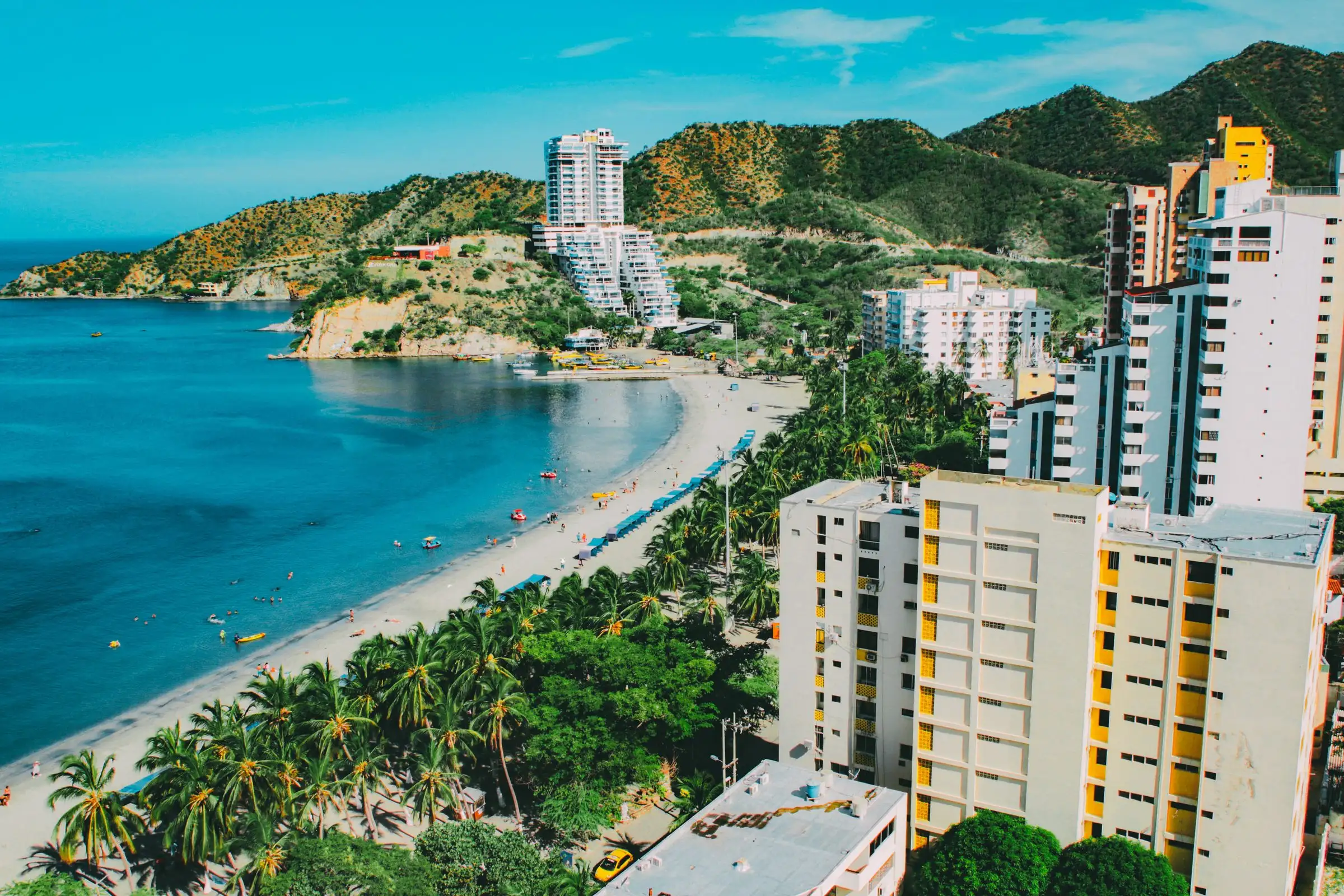
Santa Marta, Colombia as a base for Tayrona, Minca and the Lost City: how many days you need, where to stay, buses and colectivos, and what it all costs.
Caribbean coast
Cartagena de Indias
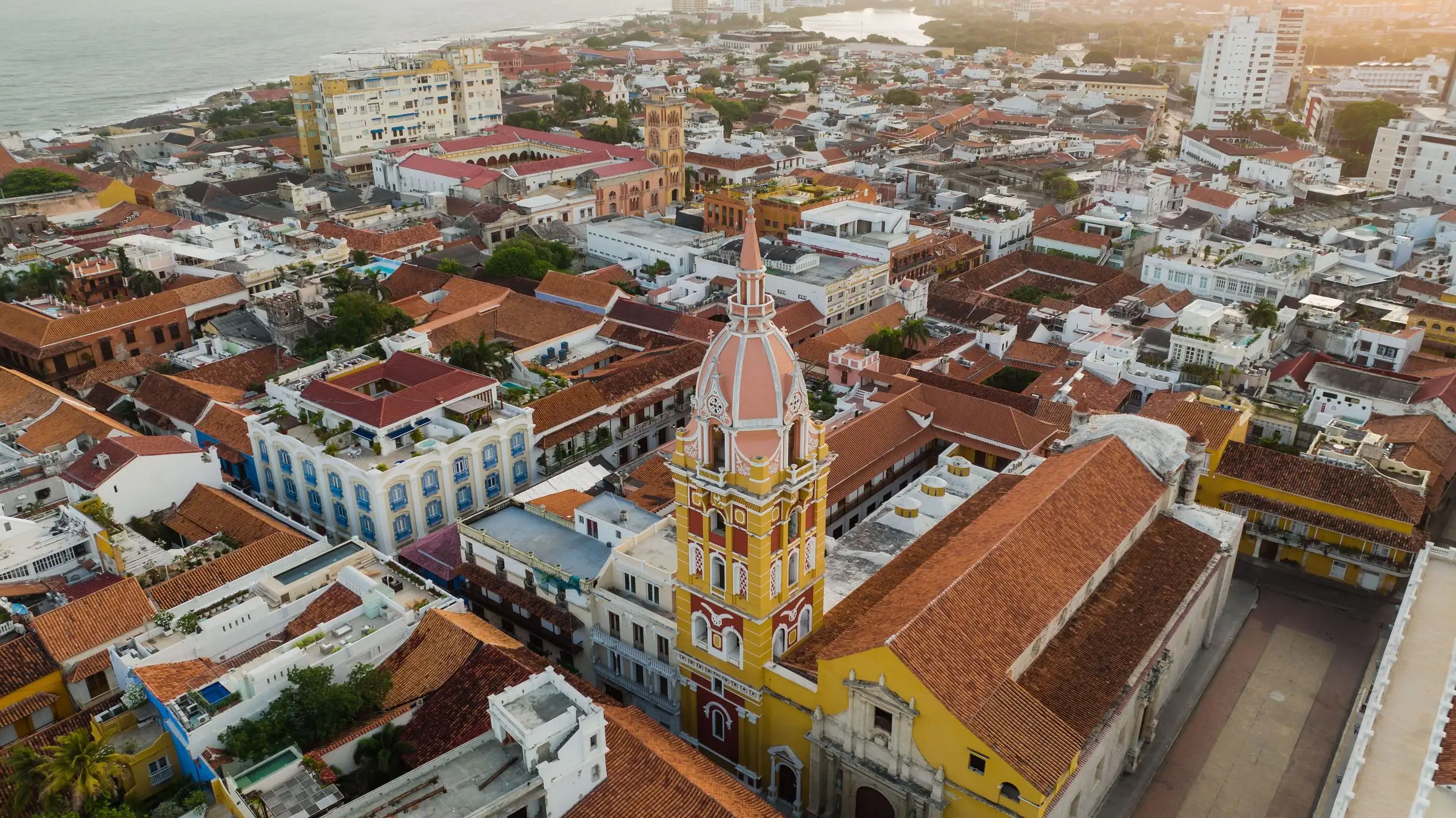
Cartagena, Colombia travel guide: the country's most beautiful colonial city, how many days you need, the best area to stay, airport transfers and costs.