Place · Caribbean coast
Lost City Trek (Ciudad Perdida)
The Lost City trek in Colombia: 2026 prices, 4 or 5 days, licensed operators, closures, a day-by-day itinerary, what to pack and mistakes to avoid.
In this guide
- How the Lost City trek works
- How much does the Lost City trek cost?
- When is the Lost City closed? 2026 closures
- Day-by-day itinerary: the 4-day trek
- How many days do you need in total?
- Where you sleep: the camps on the trail
- How hard is it, and what should you pack?
- When to do the Lost City trek
- Safety: what to know before you go
- Mistakes to avoid
- FAQ
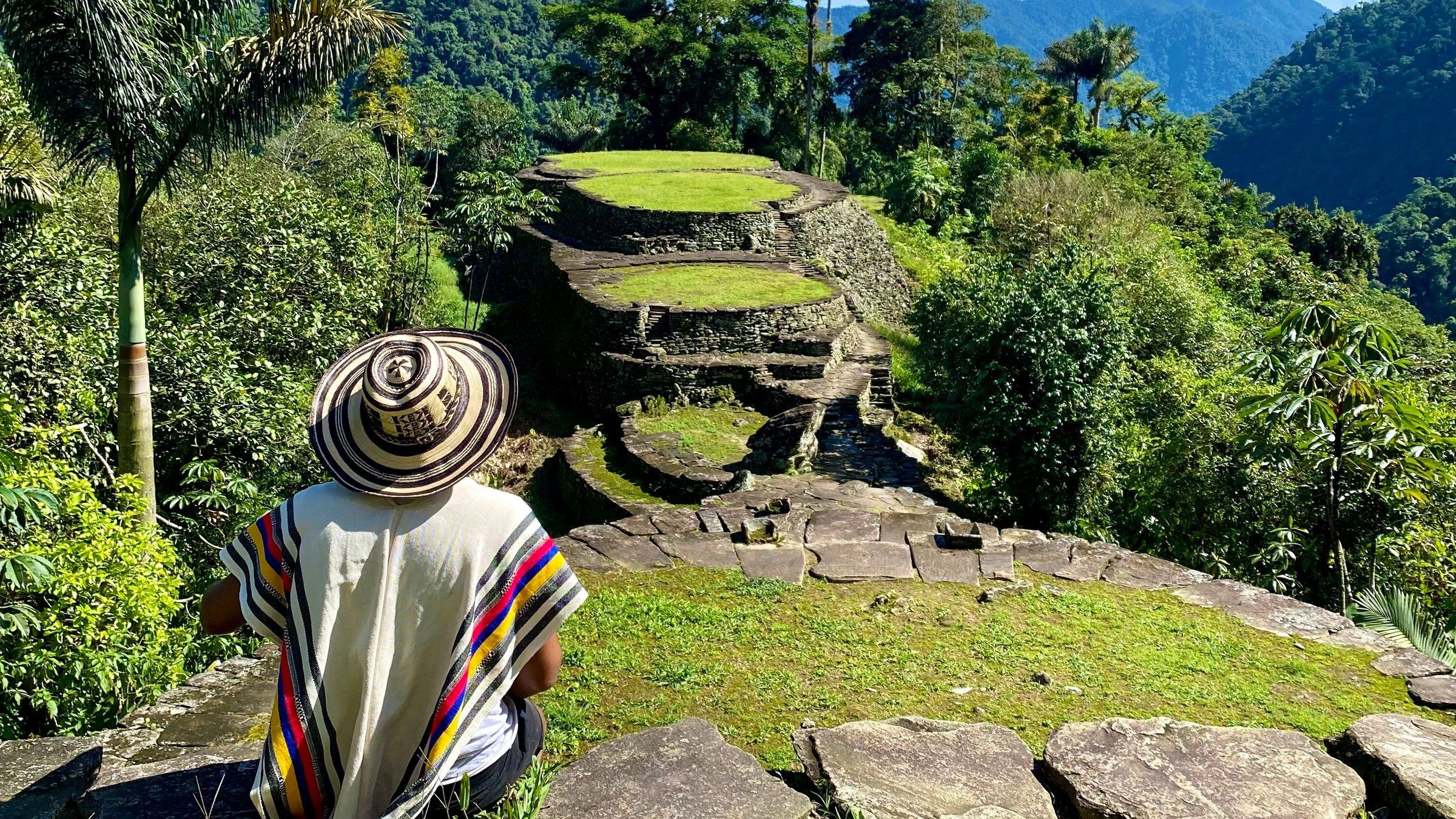
The Lost City, known to the Indigenous peoples of the Sierra Nevada as Teyuna, is an ancient Tayrona city built around 800 AD, centuries before Machu Picchu, and hidden in the forest at about 1,200 metres (3,900 ft). You can only get there on foot, on a 4 or 5-day trek run by a licensed operator from Santa Marta. In my view it’s the best trek in Colombia, but it’s tough: humid heat, mud and river crossings. Here you’ll find prices, closure dates, how to choose an operator and how the trek works, day by day.
How the Lost City trek works
The site is the Teyuna National Archaeological Park, run by the Colombian Institute of Anthropology and History (ICANH) together with the Kogi, Arhuaco, Wiwa and Kankuamo Indigenous communities, for whom it is sacred. You can’t go independently: the trek is only allowed with a licensed agency, which provides the guide, cook, transport, meals, a bed in the camps and park entry.
- Route: out and back on the same trail, about 45-50 km in total (figures vary a little by operator), with constant ups and downs and very little flat ground.
- Start: a 4x4 takes you from Santa Marta to El Mamey (also called Machete Pelao), in the Guachaca area, in about 2-3 hours.
- The finish: the last stretch is a staircase of about 1,200 stone steps, narrow and often wet, climbing to the city’s circular terraces.
- Groups: departures run almost daily; groups usually have a guide plus a translator, or an English-speaking guide.
There are only a handful of licensed agencies and their prices are very similar: the best known include Expotur, Magic Tour, Wiwa Tour (run by members of the Wiwa community) and Turcol. Book directly or through your accommodation, but always get the name of the operator who will actually take you in writing.
How much does the Lost City trek cost?
The shared group trek costs around 1,860,000 pesos for 4 days and 2,150,000 pesos for 5 days per person, according to the 2026 rates published by operators. Some online guides quote lower figures that are probably out of date: get a written quote before booking. Some agencies also offer a 3-day version for very fit hikers at a higher price, and private treks that cost much more.
| Usually included | Usually not included |
|---|---|
| return transport from Santa Marta | drinks, snacks and beers at the camps |
| guide, cook and often a translator | tips for the guide and cook |
| all meals and drinking water | a mule to carry your pack (if available) |
| a bed or hammock with a mosquito net in the camps | travel insurance |
| entry to the Teyuna Archaeological Park | nights in Santa Marta before and after |
Bring cash in small notes: there are no ATMs on the trail and almost everything is paid in cash, so withdraw money in Santa Marta before you leave.
When is the Lost City closed? 2026 closures
The park closes for a few weeks every year to let the land “rest” and for the Indigenous communities’ spiritual work. Until 2024 the closure was in September; since 2025 it has mostly been moved to October. In 2026 ICANH had planned to close for the whole of October, but Resolution 1610 of 7 October shortened the closure: the site was closed from 1 to 15 October and reopened on 16 October, with visiting hours from 7 am to 3 pm.
Some travel sites still give different dates (the whole of October, or reopening in November): go by ICANH’s notices and confirm with your operator. The trail can also close for a few days at short notice because of bad weather, high rivers or decisions by the communities.
Day-by-day itinerary: the 4-day trek
Each agency uses slightly different camps, but the plan is nearly always the same:
- Day 1 – Santa Marta → El Mamey → first camp. 4x4 transfer in the morning, lunch in El Mamey and a first walk of 3-4 hours, with a long climb in the sun. You reach camp in the afternoon and can swim in the river.
- Day 2 – To the base camp. The longest stage, 6-8 hours of climbs, descents and crossings of the Buritaca river. You pass near Indigenous villages such as Mutanyi and sleep at one of the camps closest to the city, such as Paraíso.
- Day 3 – The Lost City. Up at dawn, a river crossing and the climb up the 1,200 or so steps. A 2-3 hour visit of the terraces, with your guide explaining the site’s history and the communities’ view of it. Then you walk back to an intermediate camp.
- Day 4 – Return. A long walk back to El Mamey, lunch and the 4x4 to Santa Marta, arriving in the late afternoon.
The 5-day version follows the same route, but splits the return into two stages: fewer hours a day and less fatigue. If you don’t hike regularly, I’d choose this one.
How many days do you need in total?
On top of the 4-5 days of walking, allow one night in Santa Marta before (departure is early in the morning, with hotel pickup) and one after, to wash everything and rest. In total you need 6-7 days. Many travellers add a couple of days in Minca or at Tayrona National Park: Tayrona works well before the trek, while Minca is perfect afterwards to recover somewhere cooler.
Where you sleep: the camps on the trail
During the trek you sleep in the camps along the route, included in the price: large open-sided shelters with bunk beds or hammocks, all with mosquito nets, shared toilets and cold showers, and a dining area. They’re basic but clean; electricity is limited and there’s almost never phone signal. You don’t need a sleeping bag: sheets or light blankets are provided.
Before and after the trek stay in Santa Marta, ideally in the historic centre, where operators have their offices and pick you up. Areas and prices are in our Santa Marta guide.
How hard is it, and what should you pack?
The trek is demanding but not technical: you need fitness, not mountain experience. The effort comes from the humid heat, steep climbs on dirt and mud, and 5-8 hour stages. River crossings are frequent: in the dry season the water reaches your knees, in the rainy season it can be higher, and the guide may decide to wait or change the plan.
Pack light (25-30 litres is enough):
- Hiking boots you’ve already worn in, plus sandals or water shoes for the crossings.
- Quick-dry technical clothing: in this humidity cotton never dries.
- Strong insect repellent, sunscreen, a hat and a head torch.
- Dry bags for your passport, phone and dry clothes.
- A water bottle of at least 1.5 litres: you can refill at the camps.
- Small notes in cash and your passport, which you need for park entry.
The yellow fever vaccine is recommended for the Sierra Nevada: talk to your doctor or a travel clinic at least ten days before you leave. And check that your travel insurance covers trekking: many basic policies exclude it, and an evacuation from the forest is long and expensive.
When to do the Lost City trek
The best time is December to March, the dry season: a drier trail, lower rivers and fewer mosquitoes. From April to November it rains often, usually in the afternoon, and the trail turns muddy; the wettest months are September, October and November, which is also when the annual closure falls. It’s hot all year, with cooler nights at the camps. To compare with the rest of the country see when to visit Colombia.
Safety: what to know before you go
The trek is done with local guides in organised groups, and travellers walk the trail every day. The Sierra Nevada has had difficult moments, though: in 2026 clashes between armed groups and roadblocks on the Troncal del Caribe, the road from Santa Marta to Guachaca, halted transport for a few days. At the time of writing the UK Foreign Office (GOV.UK) does not advise against travel to Magdalena department, and the US State Department keeps Colombia as a whole at Level 3 (“reconsider travel”); check both before you go and ask your operator about the road. More in our guide to safety in Colombia.
Mistakes to avoid
- Booking through unlicensed middlemen. Ask for the operator’s name and what the price includes, in writing.
- Starting in new boots. Blisters and permanently wet feet are the main problem on this trek.
- Carrying too much. Every extra kilo hurts on the climbs: leave your suitcase in storage in Santa Marta.
- Forgetting cash. Drinks, snacks and tips are paid in cash and there are no ATMs.
- Photographing Indigenous people without asking. Always ask permission; in some places your guide will tell you photos aren’t allowed.
- Not checking closures. Before buying flights check that year’s closure dates and leave a day’s margin.
FAQ
How much does the Lost City trek cost in 2026?
About 1,860,000 pesos per person for the 4-day version and 2,150,000 pesos for the 5-day one, including transport from Santa Marta, guide, meals, a bed and entry. Always ask the operator for a written quote.
Can you do the Lost City trek without a guide?
No. Access is only allowed with a licensed operator, which arranges the guide, transport, camps and entry to the Teyuna Archaeological Park.
Is 4 or 5 days better?
The route is the same. On 4 days the stages are longer, especially on the way back; on 5 days you walk fewer hours a day. If you don’t hike regularly, choose 5 days.
When is the Lost City closed?
The park closes for a few weeks each year at the request of the Indigenous communities. In 2026 it was closed from 1 to 15 October and reopened on 16 October. Always check ICANH’s notices before booking.
How hard is the Lost City trek?
It’s demanding but not technical: about 45-50 km over 4-5 days, with 5-8 hour stages in humid heat, steep climbs, mud, river crossings and about 1,200 steps at the end. With good fitness, people of all ages do it.
Some links are affiliate links: if you buy through them I earn a small commission, at no extra cost to you. How it works
Nearby and worth combining
Caribbean coast
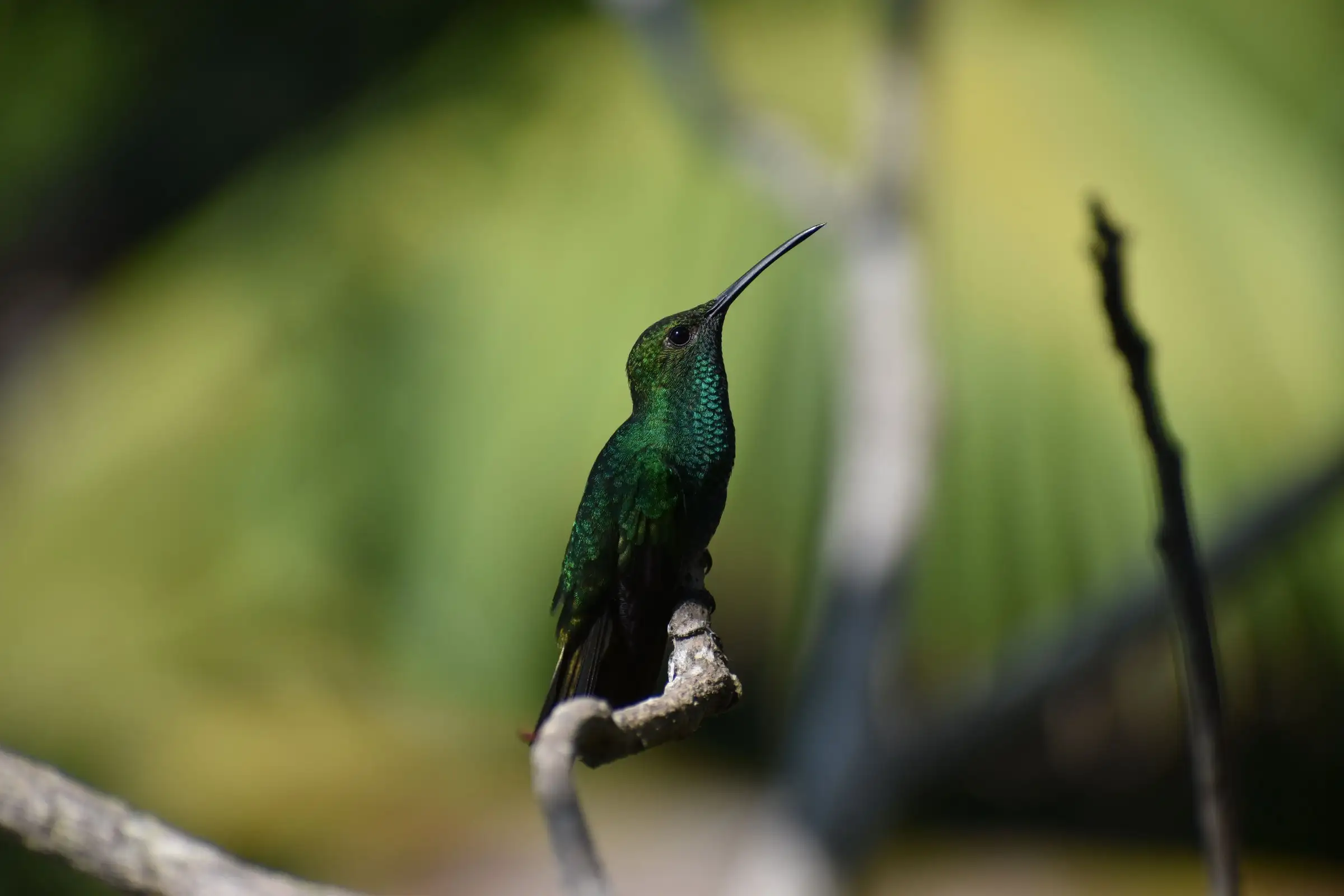
Minca
Minca on your own: the colectivo from Santa Marta, Pozo Azul and Marinka waterfalls with prices, coffee farms, birdwatching, where to stay and a 2-day plan.
Caribbean coast
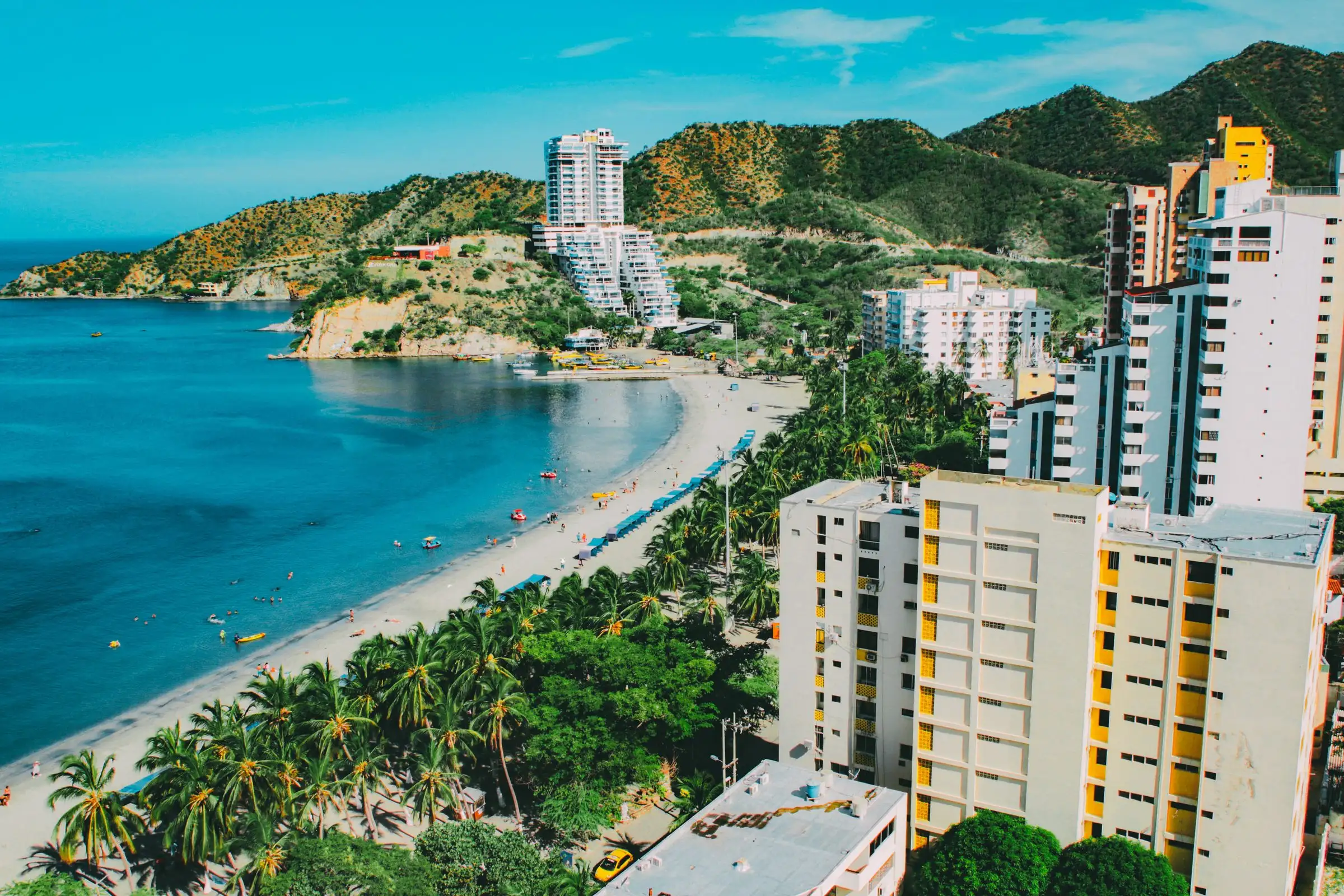
Santa Marta
Santa Marta on your own: how many days you need, where to stay, getting to Tayrona and Minca, the Lost City trek and what it all costs.
Caribbean coast
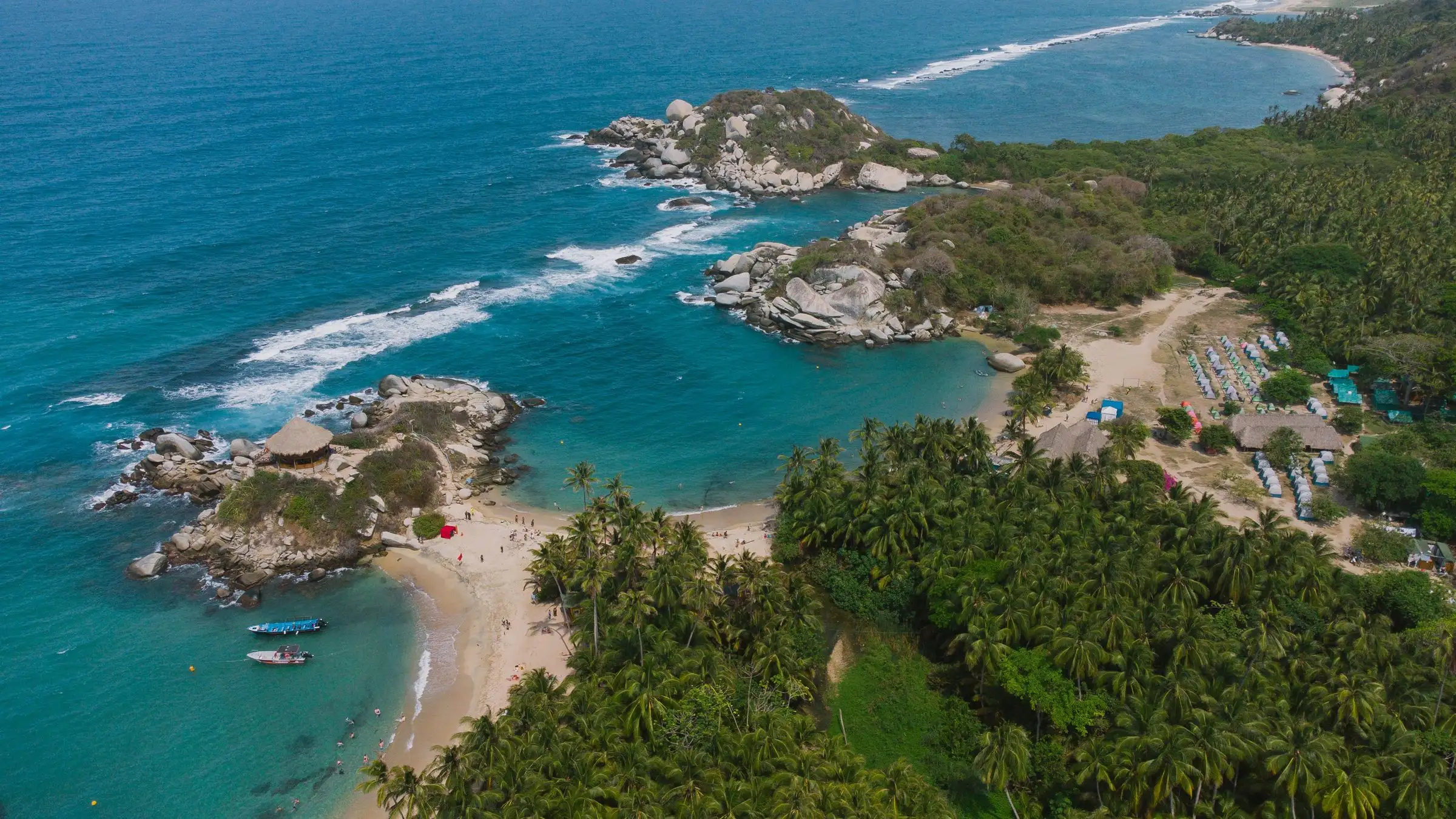
Tayrona National Park
Tayrona National Park on your own: getting there from Santa Marta, 2026 tickets and closures, the trail to Cabo San Juan, where to stay and what to pack.