All about Cartagena de Indias
Things to do in Cartagena de Indias
Things to do in Cartagena de Indias: the walled city, Getsemaní, Castillo de San Felipe, La Popa and museums, with opening hours, ticket prices and visit times.
In this guide
Cartagena’s sights are packed into a few kilometres and almost all of them are walkable: in two days you can comfortably see the walled city, Getsemaní, Castillo de San Felipe, La Popa and the main museums. Here’s what’s really worth your time, how long each place takes and what the tickets cost. If you’re still planning your trip, start with our Cartagena de Indias travel guide.
The walled city
This is the heart of Cartagena and you can explore it in half a day without rushing. You enter through the Clock Tower (Torre del Reloj), the old main gate, and step straight into Plaza de los Coches. From there I suggest this loop:
- Plaza de la Aduana and Plaza de San Pedro Claver, with the church dedicated to the Jesuit who cared for enslaved Africans.
- Plaza de Bolívar, the shadiest square in the old town, with the Palace of the Inquisition and the Zenú Gold Museum.
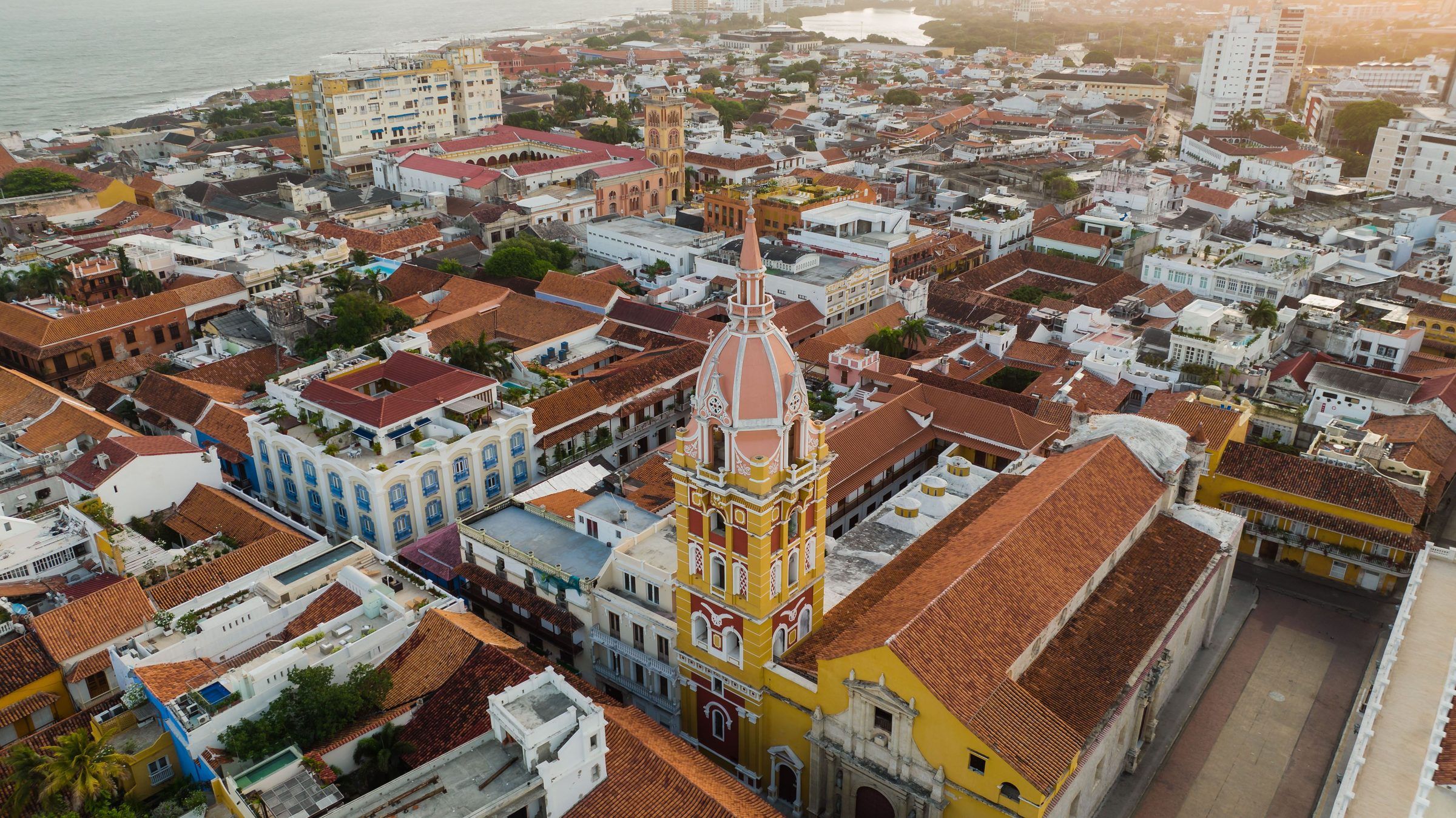
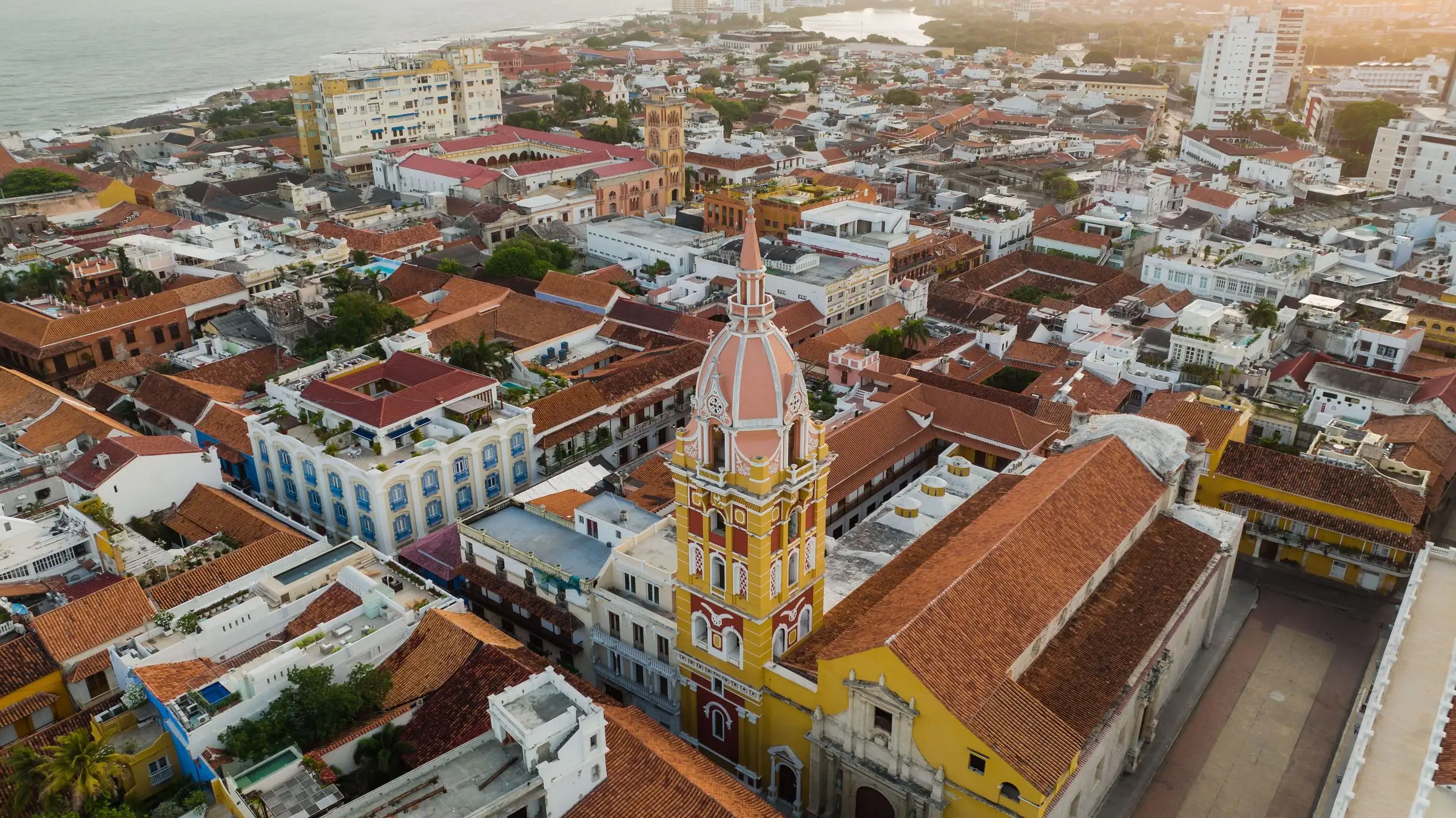
- The Cathedral of Santa Catalina de Alejandría, whose bell tower you can see from all over the city.
- Plaza Santo Domingo, with Fernando Botero’s sculpture Gertrudis and plenty of outdoor tables.
- The San Diego district, quieter, with the Santa Clara convent and Las Bóvedas, old vaults in the walls now turned into craft shops.
To enter churches you need covered shoulders and knees. For some history on a budget, the free walking tours usually start from Plaza de San Pedro Claver: there’s no fixed price and you tip at the end.
Getsemaní
Outside the walls, beyond the Camellón de los Mártires, lies Getsemaní: for centuries the district of craftsmen and labourers, now the liveliest part of Cartagena. 2-3 hours is enough, ideally late in the afternoon so you can stay for dinner.
- By day, wander among murals, colourful bunting and small squares.
- In the evening Plaza de la Trinidad fills up with locals, musicians and food stalls: the perfect spot for an outdoor beer.
- To eat cheaply, try the arepas de huevo, empanadas and fresh fruit juices from the stands around the square.
Castillo de San Felipe de Barajas
The largest fortress the Spanish built in the Americas deserves 1.5-2 hours. Begun in the 16th century and expanded in the 18th, it withstood the British siege of 1741. Besides the bastions you can walk through some of the underground tunnels built to move troops and amplify the enemy’s footsteps.
| Useful information | |
|---|---|
| Opening hours | daily, 7 am to 6 pm |
| Foreign visitors | 38,000 pesos |
| Reduced (children 6-13, students, teachers) | 16,000 pesos |
| Children under 6 | free |
| Getting there | 15-minute walk from Getsemaní, or by taxi |
Go at opening time or after 4 pm: there’s almost no shade. Official guides and audio guides are available at the entrance and really help you understand the fort’s history. On the last Sunday of the month entry is free for Colombians and residents only, so nothing changes for foreign visitors except the crowds: avoid that day if you can.
The walls at sunset
You can walk long stretches of the walls around the old town for free, and this is where Cartagena is at its best at the end of the day. The most famous spot is the Baluarte de Santo Domingo, with bars on the ramparts and sea views; drinks there are expensive, so if you only want the sunset, move a few dozen metres along. For a calmer atmosphere head towards the San Diego or San Ignacio bastions. Arrive at least half an hour before sunset, especially at weekends.
La Popa hill
The highest point in the city is home to the Santa Cruz de la Popa convent, founded in the 17th century. The flowery cloister is lovely, but the real reason to go up is the view over the old town, the bay, Bocagrande and the port. Allow about an hour.
- Go up only by taxi or on a tour, not on foot: the road passes through unsafe neighbourhoods.
- Tickets cost around 15,000 pesos (sources give slightly different figures).
- Ask your taxi driver to wait and take you back down: there are few taxis at the top.
I’d combine it with the Castillo on the same morning: they’re close together and one taxi covers both.
Cartagena’s museums
| Museum | What you’ll see | Ticket | Good to know |
|---|---|---|---|
| Zenú Gold Museum (Plaza de Bolívar) | Zenú goldsmithing | free | Tue-Sat 9 am-5 pm, Sun 9 am-2 pm, closed Mondays |
| Palace of the Inquisition – History Museum (Plaza de Bolívar) | history of the city and the Inquisition tribunal | about 22,000-25,000 pesos | the colonial building alone is worth it |
| Caribbean Naval Museum (near San Pedro Claver) | sieges, forts, maritime history | paid entry | useful before visiting the Castillo |
| Museum of Modern Art (MAMC) (Plaza San Pedro Claver) | 20th-century Colombian artists | paid entry | small, takes under an hour |
The Zenú Gold Museum is the perfect break in the hottest hours: it’s free, air-conditioned and takes 30-45 minutes. Check opening times before you go, as they can change on public holidays.
How to plan your visits over 2 days
- Day 1: the walled city in the morning (7-11 am), the Zenú Gold Museum and the Palace of the Inquisition in the hot hours, Getsemaní in the late afternoon, sunset on the walls and dinner on Plaza de la Trinidad.
- Day 2: Castillo de San Felipe at opening time, then La Popa in the same taxi, and a free afternoon for San Diego, Las Bóvedas and any museums you missed.
If you have a third day, spend it at the sea: you’ll find costs and tips for the Rosario Islands and Playa Blanca in our Cartagena travel guide.
Mistakes to avoid
- Hiring unofficial guides at the Castillo entrance: some claim to be official. Licensed guides are at the ticket office and carry an ID badge.
- Visiting the Castillo at midday: in full sun it’s exhausting and heatstroke is a real risk.
- Walking up to La Popa: the road crosses neighbourhoods best avoided.
- Entering a church in a vest top: keep something in your bag to cover your shoulders.
After Cartagena, many travellers continue to Santa Marta and Tayrona National Park, about 4-5 hours away by road.
Frequently asked questions
What are the must-sees in Cartagena?
The walled city with the Clock Tower and Plaza Santo Domingo, the Getsemaní district, Castillo de San Felipe de Barajas, sunset from the walls and the view from La Popa hill.
How much does Castillo de San Felipe cost?
Foreign visitors pay 38,000 pesos; children aged 6-13, students and teachers pay 16,000 pesos, and children under 6 get in free. The fort is open daily from 7 am to 6 pm.
Is the Zenú Gold Museum in Cartagena free?
Yes, the Zenú Gold Museum on Plaza de Bolívar is free. It’s open Tuesday to Saturday from 9 am to 5 pm and on Sunday from 9 am to 2 pm; it’s closed on Mondays.
How much time do you need to see Cartagena?
Two days are enough for the main sights in the old town, Getsemaní, the Castillo and La Popa. Add a day if you want to visit the Rosario Islands or Playa Blanca.
Can you walk up to La Popa?
It isn’t recommended: the road passes through unsafe neighbourhoods. Take a taxi or a tour and ask the driver to wait for the return trip.
Some links are affiliate links: if you buy through them I earn a small commission, at no extra cost to you. How it works
More on Cartagena de Indias
Caribbean coast
Cartagena de Indias
Plan Cartagena de Indias yourself: getting there, which area to stay in, what to see, how many days you need and what it costs, with practical tips.